KEY POINTS
- Expectant mothers in Lebanon navigate childbirth amidst ongoing regional displacement.
- Local hospitals struggle to provide maternal care during the current crisis.
- Families express deep concern for the future safety of their newborns.
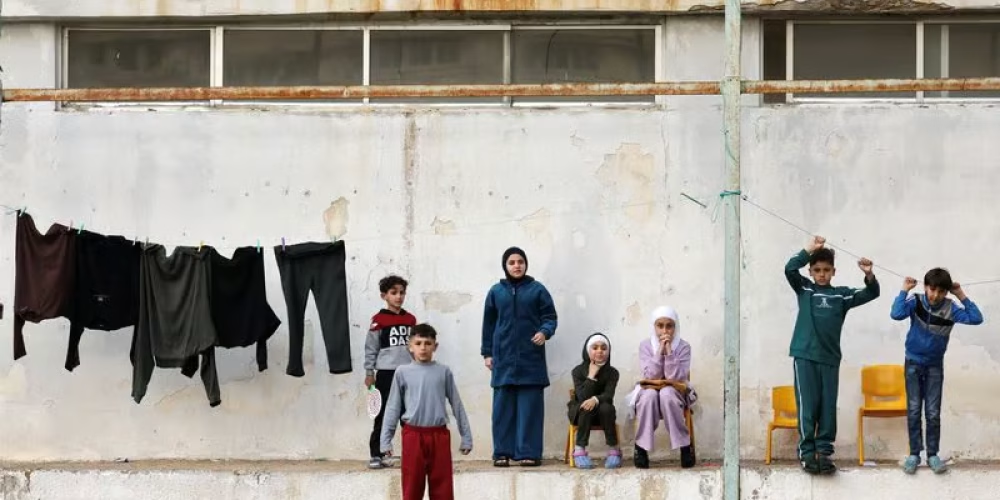
Expectant mothers across Lebanon are experiencing a complex mix of joy and anxiety this week. Many women have fled their homes due to the escalating conflict in the region. They now find themselves giving birth in unfamiliar environments far from their support networks.
One mother shared her story from a crowded shelter in the northern part of the country. She recently welcomed a healthy baby boy despite the difficult circumstances of her displacement. While she feels immense gratitude for his health, she worries about their immediate future.
The healthcare system in Lebanon is under significant pressure from the sudden influx of patients. Many maternity wards are operating at full capacity to accommodate displaced families. Medical staff work long hours to ensure that every newborn receives proper attention.
Basic supplies like diapers and clean water are becoming increasingly difficult to find. Humanitarian organizations are working to distribute essential kits to new parents in temporary housing. These kits contain clothing, blankets, and nutritional supplements for nursing mothers.
The emotional toll of the situation is evident in the stories of these families. Many fathers remain in high-risk areas to protect property or work nearby. This separation adds another layer of stress to the already challenging process of new parenthood.
Some women have reported delayed prenatal checkups because of the dangerous travel conditions. Moving between cities has become a logistical nightmare for those without private transportation. Local clinics are trying to reach these vulnerable populations through mobile medical units.
Despite the hardships, the arrival of new life provides a sense of hope. Small celebrations often break out in shelters when a new baby arrives. These moments offer a brief reprieve from the constant news of the ongoing conflict.
Psychological support for these mothers is a growing priority for international aid groups. Postpartum depression is a major concern given the trauma of displacement and loss. Specialists are being deployed to provide counseling sessions within the larger displacement camps.
The long-term impact on this generation of children remains a central concern for many. Parents wonder if their children will grow up in a stable and peaceful environment. For now, they focus on the immediate task of keeping their infants safe.