KEY POINTS
- A powerful and slow-moving Kona Low system has inundated thousands of acres of agricultural land across the Hawaiian Islands, with Maui and the Big Island facing the most significant damage.
- Governor Josh Green issued emergency proclamations as record-breaking rainfall caused flash floods, landslides, and the failure of critical infrastructure in rural communities.
- Local officials report that more than 20 inches of rain fell in some areas within a 24-hour period, leading to livestock rescues and the destruction of seasonal crops.
Agricultural communities throughout Hawaii are facing a mounting crisis as an exceptionally intense Kona Low system continues to batter the archipelago with relentless downpours. The storm, which intensified over the weekend of March 14, 2026, has transformed vast stretches of fertile farmland into standing lakes and rushing waterways. Farmers and ranchers on Maui, Molokai, and the Big Island have reported devastating losses as saturated soils gave way to landslides and flash floods, sweeping away equipment and submerging high-value crops.
The meteorological driver behind the disaster is a deep low-pressure system that has remained nearly stationary northwest of the islands. This positioning allowed the storm to draw a continuous stream of tropical moisture from the south, creating an atmospheric river effect that delivered rainfall rates of 1 to 3 inches per hour. In Maui County alone, Mayor Richard Bissen confirmed that certain regions received more than 20 inches of rain in a single day. The sheer volume of water overwhelmed natural drainage basins, sending debris-filled runoff through local nurseries and traditional loʻi patches.
Emergency response teams, including members of the Hawaii National Guard, have been deployed to assist with high-water rescues and critical evacuations. In the Kaʻū and Puna districts of the Big Island, several farming families were isolated after rising waters cut off primary access roads and collapsed small bridges. While the immediate focus remains on human safety, the long-term impact on Hawaii’s food security is becoming a major concern. The flooding occurred during a vital growing period for many local producers, and the loss of topsoil in hilly agricultural zones could take years to remediate.
Beyond the direct damage to crops, the storm has caused significant harm to the state’s electrical and water infrastructure. At the height of the weather event, over 50,000 customers were without power, complicating efforts to pump water out of flooded fields and maintain refrigerated storage for surviving produce. In Honolulu, officials even warned of potential dam failures, leading to precautionary evacuations for North Shore farming towns like Waialua and Haleiwa. Although those specific water levels stabilized, the risk of sinkholes and further ground instability remains high as the ground remains completely saturated.
Local agricultural agencies are beginning to assess the scale of the economic fallout. The destruction of fences and the loss of livestock in low-lying pastures have added to the financial burden of the state’s ranchers. Many small-scale operations lack the robust insurance coverage needed to recover from such catastrophic weather events. State officials are expected to seek federal assistance once the damage can be fully quantified. In the meantime, community organizations are coordinating with local food banks to support displaced workers and families whose livelihoods have been washed away by the mud and silt.
The slow-moving nature of this Kona Low is what distinguishes it from typical seasonal storms. While the western islands like Kauai and Oahu saw conditions begin to improve by Monday, the eastern half of the state remains under a flood watch. Forecasters expect the system to finally drift northward and weaken by the middle of the week, but the moisture it leaves behind will keep the threat of landslides active for several days. This event serves as a stark reminder of the vulnerability of island agriculture to extreme weather patterns.
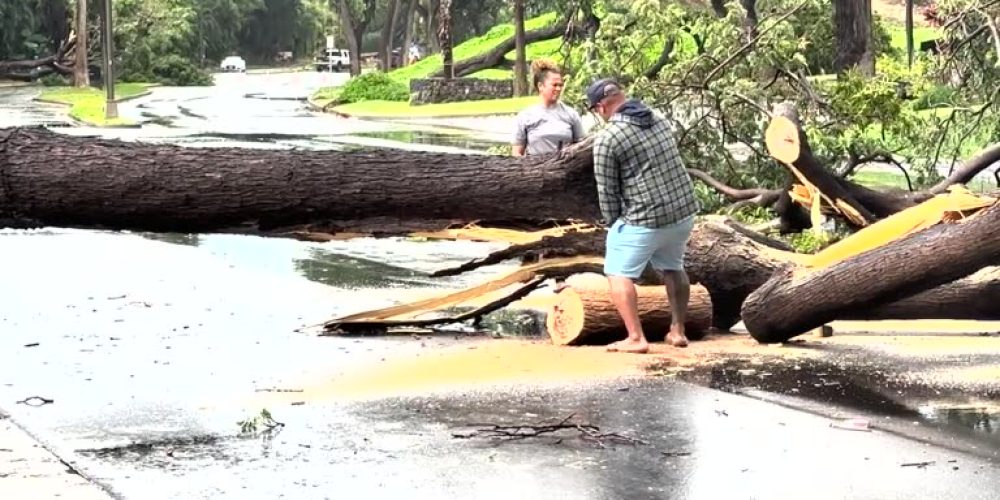
As the floodwaters eventually recede, a massive cleanup effort will be required to clear downed trees, utility poles, and layers of sediment from rural roadways. For the people who work the land in Hawaii, the focus now turns to resilience and rebuilding. The recovery process will likely involve a state-wide conversation about improving drainage infrastructure and protecting vital agricultural zones from the increasing frequency of high-intensity rainfall events in the Pacific.