KEY POINTS
- Modern telescopes captured unprecedented surface fluctuations on the famous star Betelgeuse.
- Scientists identified massive plumes of gas escaping the star’s atmosphere during a dimming phase.
- The latest data provides new clues about how giant stars behave before they eventually explode.
Recent astronomical observations have revealed significant changes in one of the largest stars in our galaxy. Scientists are currently tracking the red supergiant Betelgeuse as it exhibits unusual physical behavior. This star sits in the constellation Orion and remains easily visible to the naked eye. It has long fascinated researchers due to its massive size and unpredictable brightness.
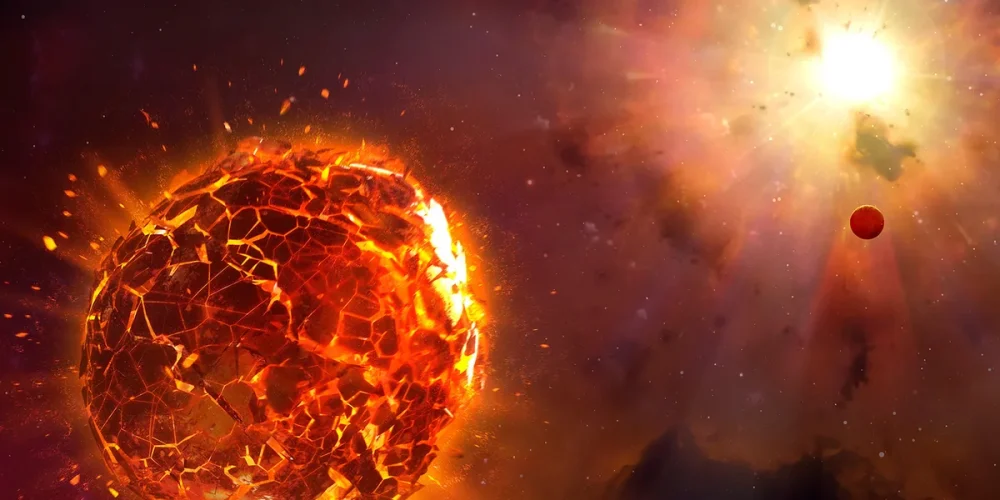
International teams of astronomers used high-resolution imaging to study the stellar surface in detail. They noticed that the star is currently shedding a substantial amount of its mass. This process creates giant clouds of dust and gas that temporarily obscure its light. These events help explain the dramatic dimming episodes witnessed by observers over the last few years.
The latest findings suggest that Betelgeuse is undergoing a complex recovery phase. A massive surface mass ejection likely caused a large cool spot on the star. This cooling allowed solid dust particles to form rapidly in the surrounding space. These particles then blocked a significant portion of the light reaching Earth.
Researchers describe the current activity as a rare opportunity to see stellar evolution in real time. Most stars undergo these transitions over millions of years. However, Betelgeuse is showing measurable changes in just a few months or years. This rapid pace allows scientists to test their theories about the life cycles of massive stars.
The star is approximately 700 times larger than our sun in terms of physical diameter. If placed at the center of our solar system, it would reach beyond Jupiter. Such scale makes its internal movements incredibly violent and influential on the surrounding environment. The escaping gas creates a nebula that expands far into the interstellar medium.
Despite the recent activity, astronomers do not expect a supernova explosion in the immediate future. They believe the star still has thousands of years of life remaining. However, these surface disruptions are precursors to the final collapse that will eventually occur. When it finally explodes, it will appear as bright as a full moon in our sky.
Advanced computer models are helping the team interpret the vast amounts of new data. These simulations show how convection cells move hot material from the core to the surface. The sheer size of these cells contributes to the wobbling appearance of the star’s outer layers. Every new image helps refine these complex mathematical representations of the universe.
The scientific community remains focused on Betelgeuse as a primary target for future space missions. New telescopes will soon provide even clearer views of the turbulent stellar atmosphere. This ongoing research deepens our understanding of how heavy elements are distributed throughout the galaxy. These elements are essential for the formation of new planets and potentially life.