KEY POINTS
- France has officially broken its historical record for the longest consecutive series of rainy days, reaching over 35 days—the most since measurements began in 1959.
- The arrival of Storm Pedro has intensified existing floods, leading to red alerts in western departments and the activation of emergency plans in cities like Bordeaux.
- Emergency responders are searching for a missing 53-year-old man whose boat capsized in the swollen Loire River during the torrential downpours.
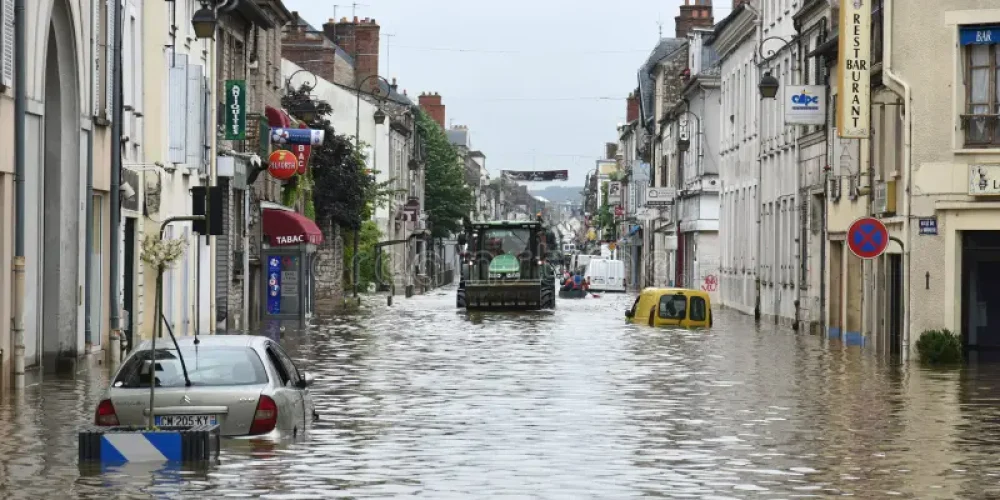
France is currently facing an unprecedented meteorological event, with the national weather service, Météo-France, reporting more than 35 consecutive days of precipitation across the country. This relentless streak surpasses the previous record set in 2023, marking the longest period of sustained rainfall in modern history. The saturated ground has left no room for absorption, causing major river systems to overflow and creating a life-threatening situation for residents in western and southwestern regions.
The situation has reached a critical stage with the arrival of Storm Pedro, which is currently battering Western Europe. The storm’s high-velocity winds and additional rainfall are acting as a catalyst for what experts describe as “fuel for current floods.” In response, authorities have placed four western departments under a red alert—the highest possible level—warning of extreme risk to life and property. Additionally, nine other departments remain on orange alert as the flooding continues to expand into residential and agricultural areas.
Urban centers are also feeling the pressure of the rising tides. In Bordeaux, Mayor Pierre Hurmic has activated the city’s emergency plan for the first time since the devastating floods of 1999. Local infrastructure, including roads and bridges, has been submerged, and in the western town of Chalonnes-sur-Loire, a search is underway for a man whose canoe capsized in the dangerous currents of the Loire River. Despite the efforts of firefighters and specialized divers, the extreme conditions have made the rescue mission particularly difficult.
While weather experts predict a shift toward drier conditions by the end of the week, the director of the flood alert service Vigicrues, Lucie Chadourne-Facon, warned that “the end of the rain does not mean the end of the flooding.” Large volumes of water are still moving through the nation’s river basins, meaning downstream communities may face rising water levels even after the clouds have cleared. The economic impact on the region’s agricultural heartland is expected to be significant, with thousands of hectares of farmland currently underwater.
Government officials are urging citizens to maintain vigilance and strictly follow evacuation orders in red-alert zones. The scale of the crisis has sparked renewed discussions regarding climate resilience and urban planning in a country increasingly plagued by extreme weather patterns. For now, the focus remains on search and rescue operations and providing emergency shelter for the hundreds of families displaced by this historic and relentless deluge.