KEY POINTS
- Four-time world champion Max Verstappen described his 2026 Red Bull as lacking traditional driving enjoyment.
- Verstappen criticised the new regulation-driven emphasis on energy management over driving at full speed.
- Comments came during Bahrain pre-season testing under sweeping 2026 technical changes.
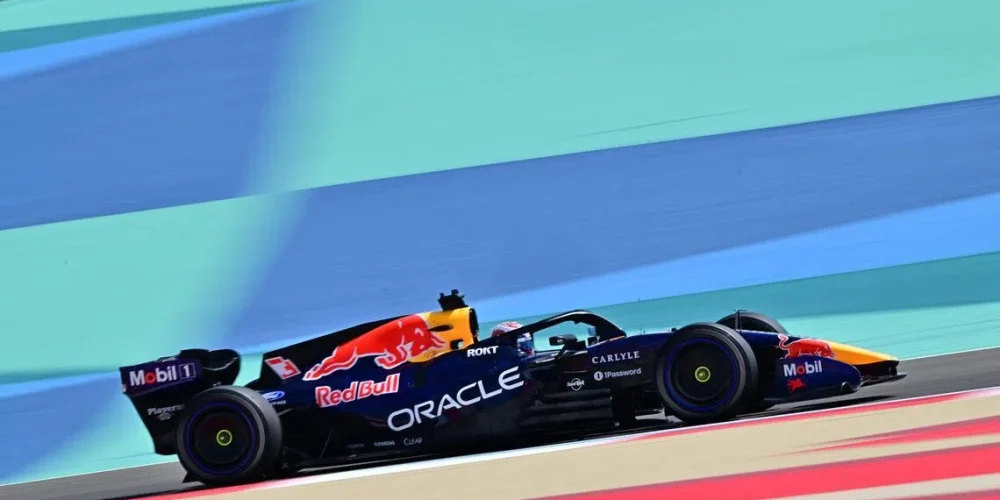
Max Verstappen, four-time Formula 1 world champion, candidly criticised his team’s 2026 challenger, saying the new car is “not much fun to drive” during pre-season testing in Bahrain on Thursday. The Dutch driver’s comments came on the second day of the three-day test at the Bahrain International Circuit.
Verstappen likened the experience behind the wheel to “Formula E on steroids,” emphasising that the new machines prioritise energy management instead of the flat-out driving drivers traditionally relish. Drivers under the fresh technical regulations must balance energy recovery and deployment more than ever, which Verstappen suggests diminishes the thrill of driving.
The remarks highlight friction among top drivers as Formula 1 transitions into a new regulatory era that reshapes aerodynamics, power unit characteristics and overall race strategy. The 2026 framework aims to increase relevance of hybrid systems and sustainability, but for drivers like Verstappen it reduces the pure driving focus that defined earlier generations of cars.
During testing, Verstappen completed a significant number of laps and posted competitive times with the RB22, Red Bull’s 2026 contender powered by a new hybrid power unit. Despite solid performance, his assessment of the car’s driving feel contrasts with its on-track pace, underscoring how regulatory changes have influenced how cars are engineered and driven.
The new technical regulations, introduced for the 2026 season, represent one of the most sweeping updates in Formula 1 history. Teams have redesigned chassis and power systems to comply with rules that increase hybrid electric involvement to about a 50/50 split with traditional combustion engines. This restructuring aims to align F1 with broader environmental goals and technological direction.
Verstappen’s unease with the updated driving dynamics reflects broader debate among drivers and fans about whether the new rules enhance or diminish Formula 1’s core appeal. Some competitors have expressed concern that heavy emphasis on energy harvesting and battery management shifts focus away from outright racing speed and mechanical engagement.
The specific challenge for drivers stems from balancing energy recovery, braking and acceleration within a lap. Under the new system, drivers must carefully modulate inputs to optimise battery recharge and output, which affects overall lap strategy and reduces opportunities to drive at maximum throttle throughout.
Despite his critique, Verstappen acknowledged the significant engineering work behind the RB22. He praised his team’s efforts and accepted that the regulations are universal across the grid, meaning all teams and drivers must adapt to testing conditions and performance trade-offs.
Verstappen’s perspective also hints at personal implications for his future in the sport. Outside comments suggest enjoyment and passion for driving are key factors for his continued commitment to Formula 1. While his competitiveness remains evident, a less satisfying driving experience could influence how he views the remainder of his career under the new rule set.
The 2026 season will officially begin with the Australian Grand Prix in March, and teams will use further test sessions in Bahrain and other venues to refine set-ups and explore performance under the new regulations. How drivers respond to evolving car dynamics may shape narratives throughout the year as competition unfolds.
As pre-season testing progresses, observers will watch whether other competitors share Verstappen’s sentiments or adapt more favourably to the new technical environment. Ferrari, McLaren and Mercedes have each shown competitive pace and reliable running during testing, suggesting varying responses across the grid to the rule overhaul.