KEY POINTS
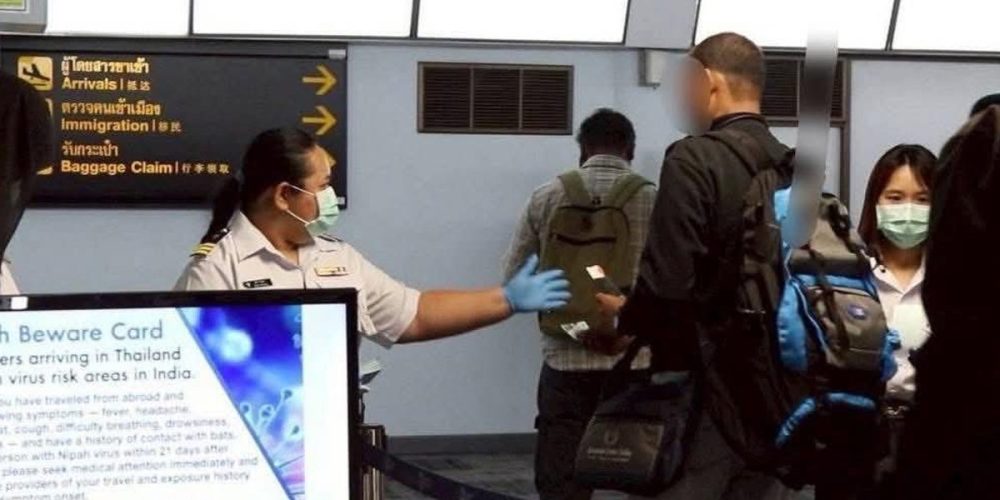
- A Nipah virus outbreak in India’s West Bengal has led multiple Asian countries to restart airport health screenings.
- Thailand, Nepal, Singapore and Malaysia are screening travellers arriving from affected regions for symptoms.
- Two confirmed cases in India involved healthcare workers; hundreds of contacts have tested negative so far.
An outbreak of the deadly Nipah virus in the eastern Indian state of West Bengal has triggered heightened travel health screening measures at airports across Asia, as authorities seek to prevent international spread of the disease.
The Nipah virus is a zoonotic pathogen carried by fruit bats and other animals that can cause severe respiratory illness and brain inflammation in humans. It has one of the highest fatality rates among known viruses, ranging between about 40 % and 75 % in past outbreaks, and there is currently no approved vaccine or specific antiviral treatment available.
Health officials in Thailand have reinstated screening procedures at several major airports, including Suvarnabhumi and Don Mueang in Bangkok as well as Phuket International Airport, where arriving passengers from West Bengal are monitored for fever and symptoms associated with the virus. Similar health checks — including temperature screening and health declaration forms — have been reported at airports in Singapore, Malaysia and Hong Kong, according to detailed reporting on the regional response.
Nepal has also stepped up entry screening at Tribhuvan International Airport in Kathmandu and at land border crossings with India, reflecting concerns about cross-border movement during a highly infectious travel period. Authorities have deployed procedures reminiscent of those used during the COVID-19 pandemic, including visible health checkpoints and additional questioning for passengers arriving from affected areas.
The current situation in India stems from two confirmed cases of Nipah virus infection in West Bengal since late 2025, both among healthcare workers at a private hospital. Indian health authorities traced 196 contacts linked to the cases, and all tested negative during surveillance efforts, offering some reassurance that transmission is being contained.
The incubation period for Nipah virus infection typically spans four to 14 days, during which infected individuals may initially display mild symptoms such as fever, headaches, muscle pain, vomiting and sore throat. In more severe infections, patients can develop neurological symptoms including encephalitis — a dangerous inflammation of the brain — as well as respiratory distress.
Nipah virus is recognized as a significant public health risk by the World Health Organization (WHO) and listed among priority pathogens due to its high mortality rate and potential to cause serious outbreaks. Although human-to-human transmission is possible, it is thought to require close and prolonged contact, making widespread dissemination less likely than diseases spread through airborne transmission.
Health officials emphasise that current screening and surveillance measures are precautionary and aimed at early identification of symptomatic travellers. The WHO has advised countries not to impose travel and trade restrictions at this stage but supports robust monitoring and public health readiness to respond quickly should cases be detected beyond India.
Public health messaging in the region has focused on increased vigilance without generating undue alarm. Governments and airport authorities have urged travellers to report symptoms promptly and cooperate with health screening staff. Enhanced awareness campaigns also emphasise general preventive practices, such as avoiding contact with bats and sick animals and ensuring proper hygiene.
Although Nipah outbreaks have occurred sporadically in South Asia over recent decades, including in Bangladesh and other Indian states, the re-emergence in West Bengal underscores the importance of continuous surveillance and rapid response frameworks in a region with high population mobility.
With travel volumes expected to remain high in the coming weeks, health authorities across Asia continue to monitor airport arrival halls closely, balancing public health preparedness with efforts to maintain normal travel operations.