KEY POINTS
- The White House has announced plans to break up the National Center for Atmospheric Research (NCAR) in Boulder, citing concerns over “climate alarmism.”
- Stewardship of the NCAR Wyoming Supercomputing Center will transition to an undisclosed third-party operator, sparking fears among 2,000 scientists who rely on its data.
- State leaders and climate experts warn that dismantling the “mothership” of atmospheric research could cripple the nation’s ability to predict wildfires, floods, and hurricanes.
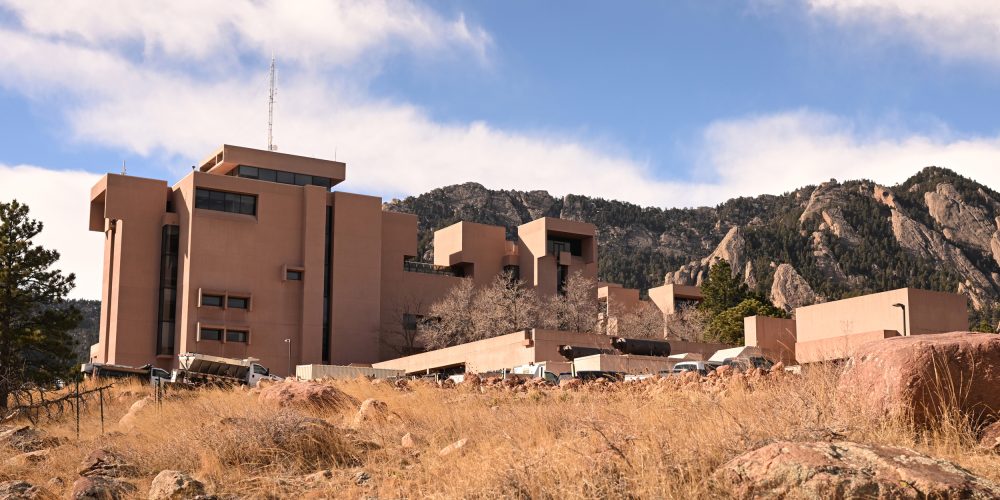
The Trump administration is moving to dismantle the National Center for Atmospheric Research (NCAR) in Boulder, Colorado, a facility long considered the “crown jewel” of American climate and weather science. White House budget director Russ Vought announced the directive, labeling the laboratory one of the nation’s primary sources of “climate alarmism.” Under the new plan, the National Science Foundation (NSF) will begin “breaking up” the institution, shifting vital weather research activities to other locations or entities.
A central component of this transition involves the NCAR Wyoming Supercomputing Center in Cheyenne. The NSF confirmed that management of the supercomputer—used by thousands of researchers to run complex climate models—will be transferred to an undisclosed third party. While officials stated the move is intended to “review the structure” of the nation’s observational capabilities, the decision to keep the new operator’s identity secret has caused significant anxiety within the scientific community. Experts fear that separating climate and weather modeling will degrade the accuracy of critical forecasts.
The directive comes amid a visible political feud between the White House and Colorado Governor Jared Polis. The administration has criticized NCAR for moving in a “woke direction,” specifically targeting programs that integrate Indigenous knowledge with Earth science. In addition to the supercomputer, the administration plans to transfer ownership of two research aircraft used to study atmospheric patterns. Critics argue these actions are retaliatory, potentially linked to the state’s refusal to release a former county clerk currently serving a prison sentence.
Public safety advocates warn that the loss of NCAR’s integrated research will have devastating consequences. The facility provides the essential data used to predict severe weather events like wildfires and floods, which help protect lives and property. Governor Polis emphasized that NCAR’s contributions go far beyond climate science, acting as a keystone for understanding the planet’s systems. By dismantling the lab, opponents say the United States risks losing its competitive advantage in scientific discovery and disaster resilience.
As the March deadline for public comment approaches, scientists nationwide are rallying to defend the institution. They argue that NCAR is not just a collection of assets but a unified entity whose synergy cannot be replicated by fragmented agencies. While the administration claims it is restoring the lab to its “original purpose,” the scientific community views the move as a sledgehammer to decades of public investment and progress in atmospheric science.