KEY POINTS
- Thick ice on the Navesink River allowed the return of historic ice boat racing for the first time in 20 years.
- These unique vessels can reach speeds exceeding 100 mph using only wind power on frozen surfaces.
- Local historians and sailors celebrated the event as a rare triumph over decades of milder winter temperatures.
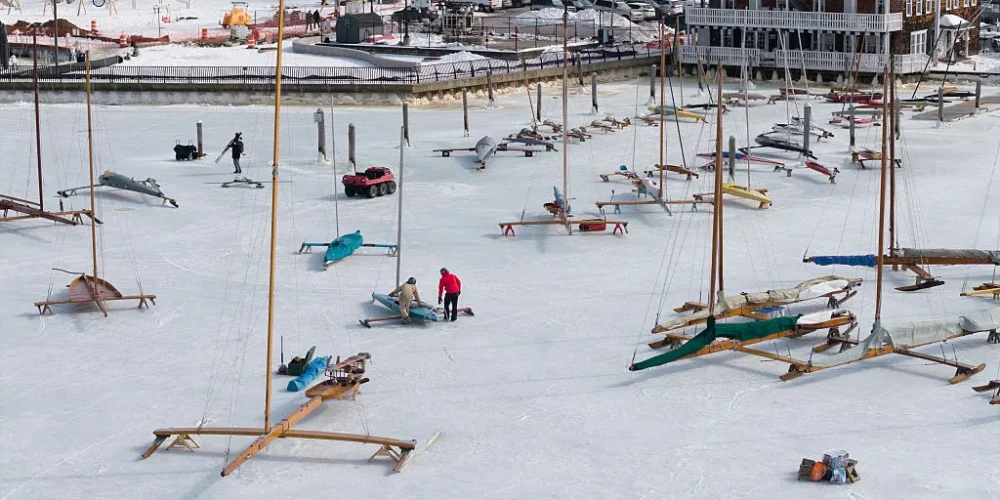
A rare meteorological alignment has brought a long-lost tradition back to the North Shrewsbury River in New Jersey. For the first time in twenty years, the ice reached the necessary thickness to support the weight of massive, historic ice boats. This event revived a competitive culture that dates back to the late 19th century. Local enthusiasts gathered to watch these “wind-powered rockets” glide across the frozen surface.
Ice boating is a sport defined by extreme speed and environmental dependence. The boats are essentially sailboats mounted on metal runners. Because there is minimal friction on the ice, they can travel several times faster than the wind itself. Some of the antique vessels featured in this week’s race have been maintained by families for over a hundred years. They represent a unique era of American craftsmanship and winter recreation.
The return of the races required very specific conditions. The ice must be at least six inches thick and free of heavy snow. Recent sustained freezing temperatures provided the perfect window for the North Shrewsbury Ice Boat and Yacht Club. This club is one of the oldest of its kind in the United States. Members had been waiting since the early 2000s for the river to freeze deeply enough for safe competition.
Spectators were treated to the sight of the “Rocket,” one of the largest ice boats in existence. These vessels are notoriously difficult to handle and require significant skill to steer at high velocities. The sailors navigate by “reading the ice,” looking for cracks or soft spots that could prove dangerous. Despite the inherent risks, the community viewed the day as a celebration of local maritime history.
The twenty-year gap between races highlights the impact of changing climate patterns in the Northeast. Warmer winters have made consistent river freezing a rarity in New Jersey. Many younger residents had never seen these boats in action before this week. The event served as a bridge between generations, as veteran sailors taught newcomers about the physics and history of the sport.
While the racing window is often short, the impact on the local community is profound. Residents from across the region traveled to the riverbanks to witness the spectacle. The success of this year’s race has sparked hope that more frequent cold spells might keep the tradition alive. For now, the sailors are enjoying every moment on the ice while the temperatures remain low.