KEY POINTS
- Global crude prices remained steady following a series of maritime incidents in the Middle East.
- New sanctions on Iranian oil exports have tightened global supply expectations.
- Traders are balancing geopolitical risks against signs of weakening fuel demand in major economies.
International oil prices held their ground on Wednesday as escalating friction between the United States and Iran countered concerns about a slowing global economy. Market participants are closely monitoring the Middle East, where recent naval confrontations have raised the premium for geopolitical risk. These tensions serve as a floor for prices, preventing a significant sell-off despite bearish economic data from other sectors.
The primary driver for the current market stability is the renewed focus on Iranian energy exports. The U.S. government recently implemented a fresh wave of sanctions targeting the “shadow fleet” used to transport sanctioned crude. Analysts suggest these measures could remove significant volumes from the daily global supply. This supply-side pressure comes at a time when OPEC+ continues to maintain strict production quotas to support valuation.
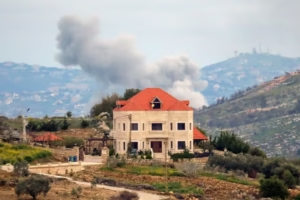
In addition to sanctions, recent activity in the Persian Gulf has kept energy markets on edge. Reports of intercepted vessels and increased military presence in vital shipping lanes have heightened fears of a broader conflict. Such disruptions in the Strait of Hormuz could threaten the transit of millions of barrels of oil per day. Consequently, investors are hesitant to bet against higher prices while the threat of supply chain interference remains.
However, the upward momentum is being checked by lackluster demand signals from the world’s two largest economies. In the United States, recent data showed a larger-than-expected build in domestic gasoline inventories. This suggests that high fuel prices may finally be curbing consumer driving habits. Similarly, industrial growth in China remains sluggish, leading to lower-than-projected crude imports for the start of the year.
The interplay between these factors has left crude benchmarks trading within a narrow range. While the threat of war provides support, the reality of high interest rates and cooling inflation is dampening the long-term outlook for energy consumption. Financial institutions have recently adjusted their year-end price targets downward, reflecting a more cautious view of the global recovery.
Looking forward, the market remains hypersensitive to any official communications from Washington or Tehran. Any sign of diplomatic de-escalation could lead to a rapid price correction as the geopolitical premium fades. Conversely, a direct military incident would likely send prices surging toward the $100 mark. For now, the energy sector remains in a state of watchful waiting as political and economic forces pull in opposite directions.