KEY POINTS
- Fincantieri has launched a four-year partnership with startup Generative Bionics to develop advanced humanoid robots for shipbuilding.
- The AI-powered robots are designed to work alongside human shipbuilders to handle complex and physically demanding welding tasks.
- Pilot testing for the new technology is scheduled to begin at the Sestri Ponente shipyard in Genoa by late 2026.
Italian shipbuilding giant Fincantieri is embracing the future of manufacturing through a new strategic alliance with deep-tech firm Generative Bionics. The two companies have entered a four-year agreement to develop and integrate humanoid robots into the shipbuilding process. This initiative represents a significant push into “Physical AI,” where artificial intelligence directly interacts with the physical world.
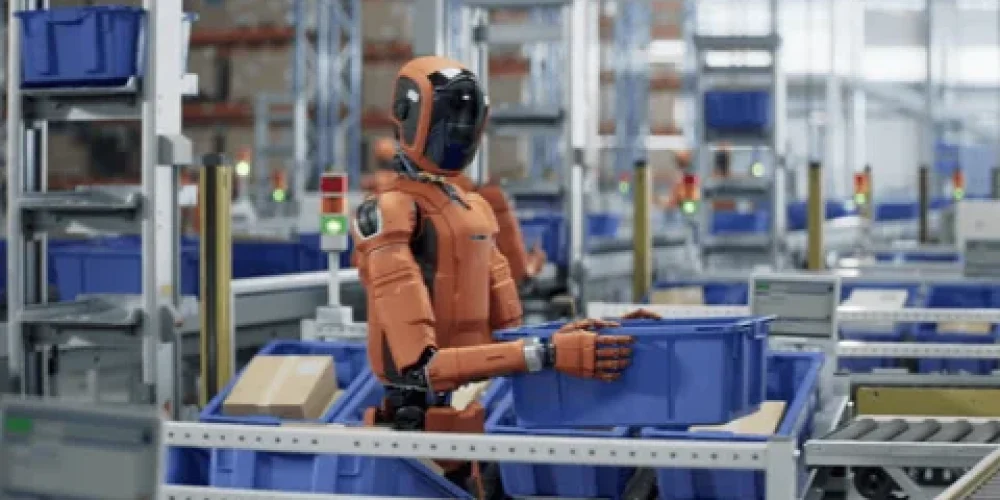
The project focuses on creating a humanoid robot specifically tailored for industrial welding. Unlike traditional stationary robotic arms, these humanoids are designed to move and operate in environments originally built for people. This flexibility is essential for navigating the complex and often cramped internal structures of large naval vessels.
Shipbuilding remains a highly labor-intensive industry that currently faces a global shortage of skilled welders. Fincantieri Chief Executive Pierroberto Folgiero noted that advanced robotics serves as a strategic lever to maintain European industrial competitiveness. By automating repetitive and high-risk tasks, the company aims to improve production efficiency while ensuring higher safety standards for its workforce.
The technical development will leverage decades of research from the Italian Institute of Technology, where Generative Bionics originated. The startup recently secured €70 million in funding from major investors, including the Italian state-backed Artificial Intelligence Fund. This capital is fueling the creation of “made in Italy” robots capable of handling lifting and hauling tasks that stymie conventional automation.
Tests for the new humanoid welders are expected to start at the Sestri Ponente shipyard in Genoa by the end of 2026. These trials will evaluate how effectively the machines can collaborate with human colleagues in real-world production settings. The ultimate goal is to create a seamless integration between human expertise and robotic precision.
Fincantieri’s industrial plan heavily prioritizes the digitalization of its yards to counter rising production complexities. The company views the adoption of humanoid technology as a necessary evolution for the maritime sector. As naval designs become more sophisticated, the precision offered by AI-controlled welding becomes increasingly valuable.
Beyond welding, the humanoid platform being developed by Generative Bionics has potential applications in logistics and healthcare. However, the heavy industry validation provided by Fincantieri will serve as a critical proving ground for the technology. Successful implementation could redefine standard manufacturing protocols across the entire maritime industry.
As the four-year project progresses, the eyes of the global manufacturing community will be on Italy. The successful deployment of these robots could solve chronic labor issues while pushing the boundaries of what is possible in large-scale construction. Fincantieri continues to position itself as a leader in the next generation of smart industrial systems.