KEY POINTS
- European stocks showed mixed performance as investors braced for upcoming interest rate announcements from major central banks.
- Ongoing discussions regarding international trade tariffs continue to weigh on market sentiment across the continent.
- Corporate earnings reports from several blue-chip companies provided a slight boost to specific industrial sectors.
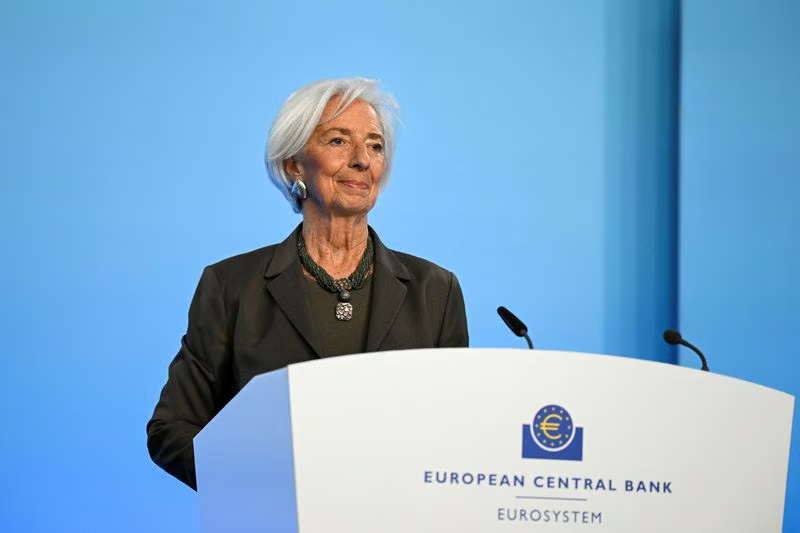
European financial markets experienced a period of cautious trading this week. Investors are focused on the next moves by the European Central Bank and the Federal Reserve. Anticipation of interest rate decisions has led to a wait-and-see approach among many professional traders. Most major indices fluctuated within a narrow range as the market looked for clear direction.
Economic data from the region suggests a cooling inflationary environment. However, central bank officials remain cautious about declaring a total victory over rising prices. Many analysts believe that rates will stay higher for longer than previously expected. This perspective has impacted the valuation of growth-oriented technology stocks across Europe.
Trade policy remains another significant factor influencing market behavior. Potential changes in global tariff structures have caused concern for major European exporters. Automotive and manufacturing sectors are particularly sensitive to these shifts in international relations. Any disruption in trade flow could significantly impact the region’s overall economic recovery.
Despite these macro concerns, some individual sectors reported positive news. The banking industry continues to benefit from high interest margins, leading to strong quarterly results. Meanwhile, luxury goods companies are seeing a slow but steady rebound in consumer spending. These pockets of strength helped prevent a broader market sell-off.
Currency markets also reflected the general atmosphere of uncertainty. The euro remained relatively stable against the dollar as traders weighed the economic outlook of both regions. Any unexpected signals from policymakers could trigger sharp movements in exchange rates. Market participants are closely watching official statements for hints of future policy shifts.
Bond yields have seen slight adjustments as investors reposition their portfolios. There is a visible rotation toward safer assets in response to geopolitical headlines. This movement indicates a general desire to minimize risk during a period of high political sensitivity. The interplay between bond and equity markets remains a critical focus for analysts.
Looking ahead, the remainder of the week will be dominated by key economic indicators. Industrial production figures and employment data will provide more clarity on the health of the economy. These reports often serve as a catalyst for significant market movements. Investors are prepared for potential spikes in volatility following these releases.
The general mood in the financial community is one of disciplined observation. While the long-term outlook for European equities remains positive for some, short-term hurdles are clear. Navigating the current environment requires a careful balance of risk management and strategic asset allocation.