KEY POINTS
- Singapore holds the top ranking in the 2026 Henley Passport Index, with visa-free access to 192 destinations.
- Japan and South Korea share second place, each offering access to 188 countries.
- European nations dominate the upper rankings, while the United States ranks 10th in global mobility.
The 2026 Henley Passport Index reveals the most globally powerful passports based on visa-free or visa-on-arrival access.
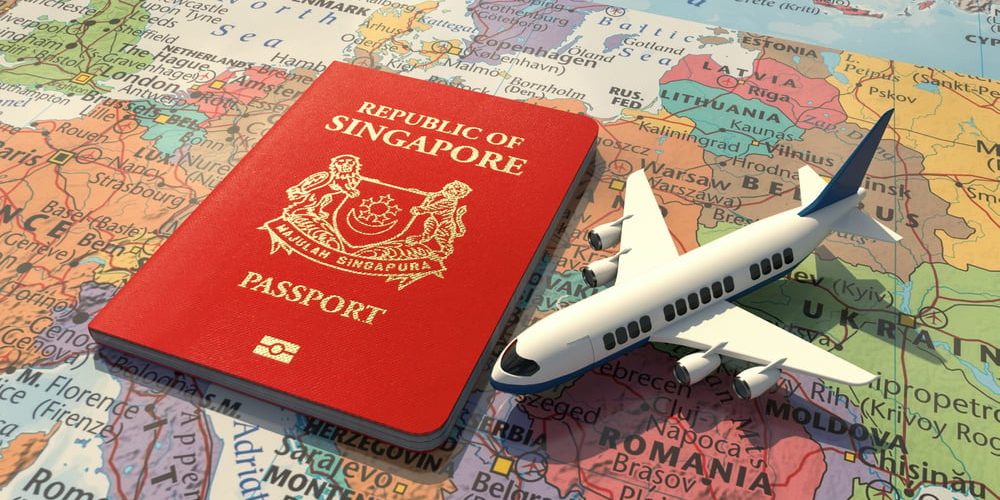
Singapore tops the list for the second consecutive year, enabling citizens to travel to 192 countries and territories without a prior visa.
Japan and South Korea are ranked joint second, each offering access to 188 destinations worldwide.
This places three Asian nations at the forefront of global travel mobility.
Following closely, five European countries — Denmark, Luxembourg, Spain, Sweden, and Switzerland — tie for third place.
Citizens of these nations can enter 186 destinations without visas.
A wider group of European countries occupy subsequent positions with slightly lower scores.
Austria, Belgium, Finland, France, Germany, Greece, Ireland, Italy, the Netherlands, and Norway all permit visa-free travel to 185 countries.
Further down the ranking, Hungary, Portugal, Slovakia, Slovenia, and the United Arab Emirates tie with 184 destinations.
Other strong passports include those from Croatia and New Zealand, with access to 183 destinations.
Australia, Latvia, Liechtenstein, and the United Kingdom are among nations with access to 182 countries.
Canada, Iceland, and Lithuania follow with 181-destination access.
Malaysia ranks high as well, with holders able to travel visa-free to 180 countries.
Meanwhile, the United States passport allows visa-free or visa-on-arrival travel to 179 destinations, placing it 10th globally.
The Henley Passport Index uses data from the International Air Transport Association to tally visa-free entry options for each passport.
It tracks access to 227 countries and territories, providing an annual comparative snapshot of global mobility.
Singapore’s leading position largely reflects sustained diplomatic engagement and reciprocal visa arrangements with many countries.
Japan and South Korea maintain high mobility largely through longstanding international partnerships.
European nations continue to dominate entries among the top 20 passports, highlighting regional integration and travel agreements.
These passports offer broad access across Europe, North America, and key global destinations.
The UAE’s rise in the rankings underscores the influence of diplomatic expansion and visa liberalisation policies.
Arab news reports note that the UAE climbed to fifth place, marking a strong position among global passport rankings.
At the lower end of the mobility spectrum, passports from countries with more restrictive visa access remain much weaker in travel freedom.
For example, Afghanistan continues to rank among the least powerful passports with access to fewer than 30 destinations.
The ranking updates reflect both geopolitical shifts and evolving travel policies.
Changes in visa agreements and international relations can influence ranking movements year to year.
The Henley Passport Index also celebrates its 20th anniversary in 2026, offering two decades of comparative mobility data.
Analysts say strong passports often correlate with economic stability, diplomatic ties, and geopolitical influence.
As global travel demand grows, passport strength remains an important indicator of international access and citizen mobility.