KEY POINTS
- Rare red weather warnings prompted emergency alerts as record-breaking gusts reached 99mph in the southwest.
- Over 65,000 homes lost power after the severe “weather bomb” brought down lines and damaged critical infrastructure.
- Heavy snowfall and violent winds caused hundreds of school closures and suspended major rail and air services.
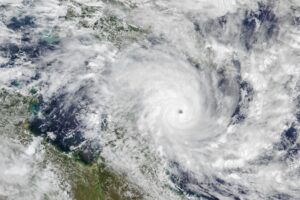
Storm Goretti unleashed a powerful multi-hazard event across the United Kingdom on January 8 and 9, 2026. The Met Office issued a rare red weather warning for parts of Cornwall and the Isles of Scilly. This highest alert level indicated a significant risk to life and property from dangerous winds. Residents in the path of the storm received emergency alerts on their mobile devices as the system approached.
Data from St Mary’s Airport on the Isles of Scilly confirmed peak gusts of 99mph. This measurement marked the highest wind speed recorded at that location in nearly five decades. Other coastal areas in Cornwall reported gusts exceeding 90mph, causing widespread damage to roofs and trees. Tragically, local authorities reported at least one fatality linked to falling debris during the height of the storm.
The intense low-pressure system, described by meteorologists as a “weather bomb,” triggered massive utility disruptions. Over 65,000 properties across the southwest and Midlands lost electricity as power lines collapsed under the strain. National Grid engineers worked through treacherous conditions to restore service to thousands of affected customers. Some rural communities also faced water supply interruptions and the loss of mobile phone signals.
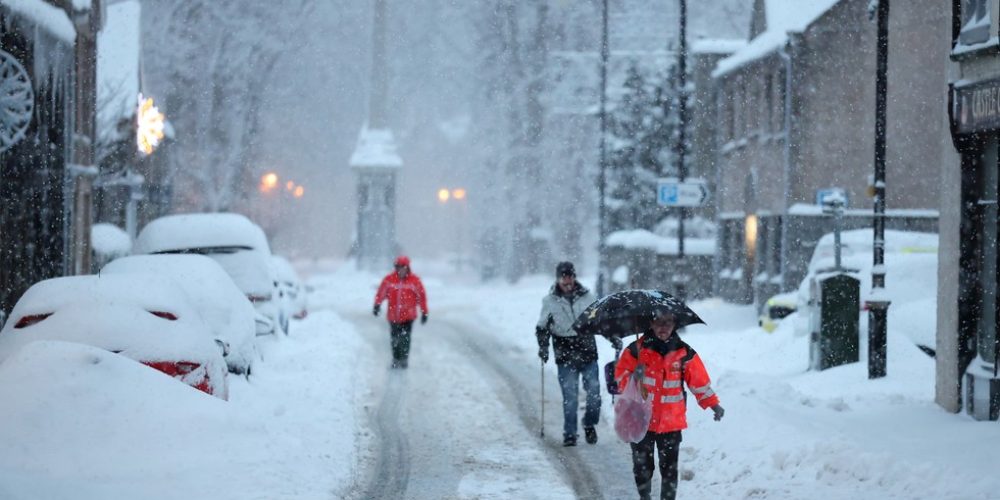
In addition to violent winds, Storm Goretti delivered significant snowfall to Wales, northern England, and the Midlands. Several areas recorded over 15cm of snow, creating hazardous drifting on high-altitude roads. The combination of ice and snow led to the closure of more than 500 schools. Public transport networks suffered immensely, with many train operators suspending services entirely between major western hubs.
Aviation also faced severe challenges as the storm moved across the country. Birmingham and East Midlands airports temporarily suspended runway operations to clear accumulating snow. Meanwhile, London’s Heathrow Airport saw dozens of flight cancellations due to the volatile weather conditions. Transport officials urged the public to avoid all unnecessary travel until the storm fully cleared the region.
Coastal regions dealt with very large waves and the threat of localized flooding from heavy rainfall. While the worst of the storm passed by the weekend, authorities warned of lingering ice and freezing fog. The Met Office continued to monitor a secondary system that could bring further wintry weather to Scotland. Recovery efforts are currently ongoing as communities assess the full extent of the structural damage.