Key Points:
- Hyundai Motor’s South Korean labor union issued a formal warning against the company’s plan to deploy humanoid robots.
- Workers fear the introduction of advanced automation will lead to massive layoffs and the erosion of labor rights.
- The dispute highlights growing global tension between traditional manufacturing workforces and the rise of artificial intelligence.
The labor union representing Hyundai Motor workers in South Korea has officially challenged the company’s latest automation strategy. This confrontation centers on the automaker’s ambitious plan to integrate humanoid robots into its primary production lines. Labor leaders argue that this technological shift poses an existential threat to thousands of human employees.
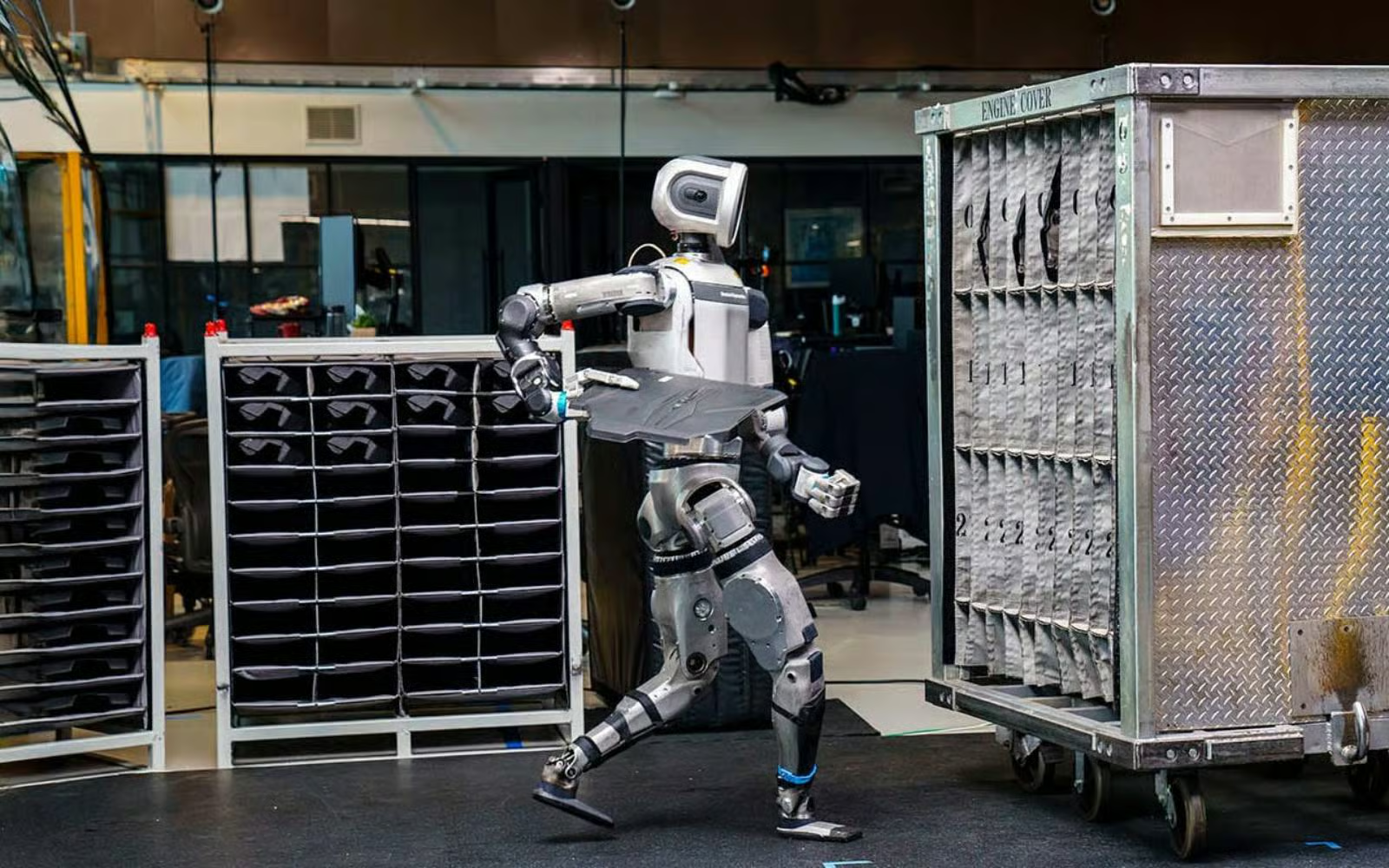
Hyundai recently signaled its intent to use advanced robotics to streamline assembly and reduce operational costs. The company views these machines as a solution to labor shortages and rising wages in the domestic market. However, the union views the move as a direct violation of existing employment stability agreements.
Union representatives held a press conference to voice their deep concerns regarding the future of manufacturing. They claim that the company is prioritizing robotic efficiency over the livelihoods of its long-standing workforce. The group warned that they would take industrial action if the company ignores their demands for job security.
The tension at Hyundai reflects a broader global struggle within the automotive industry. Manufacturers everywhere are racing to adopt artificial intelligence and robotics to remain competitive. South Korea remains at the forefront of this trend due to its high density of industrial robots.
Labor advocates worry that humanoid robots are fundamentally different from traditional stationary machinery. These new systems can perform complex tasks that previously required human dexterity and decision-making. This versatility makes them a much more direct substitute for human labor on the factory floor.
Hyundai executives maintain that the robots will handle dangerous or repetitive tasks that humans find difficult. They argue that automation actually improves workplace safety and overall plant productivity. The company insists that technology will complement human workers rather than completely replacing them in the long term.
Despite these assurances, the union remains skeptical of the corporate narrative. They point to the declining number of entry-level positions available for younger generations in South Korea. The union demands that any new technology must undergo a joint review process before implementation begins.
Economists warn that this dispute could have significant implications for the global supply chain. Hyundai is a major player in the international electric vehicle market. Any prolonged labor strike in South Korea would likely disrupt deliveries to dealerships across Europe and North America.
The outcome of this standoff may set a precedent for other major industrial sectors. If the union successfully limits robot deployment, other labor groups may follow suit. Conversely, a victory for Hyundai could accelerate the adoption of humanoid workers across the globe.
Both sides now face a difficult period of negotiation to find a middle ground. The union wants guaranteed retirement ages and protections against forced early exits. Meanwhile, the company needs to modernize its facilities to keep pace with rivals like Tesla and BYD.
This conflict underscores the complex social challenges created by the fourth industrial revolution. As machines become more lifelike, the definition of work continues to change. The world is watching to see how one of the world’s largest automakers balances innovation with human dignity.