Key Points:
- An international trial is testing a low-cost finger-prick test that detects Alzheimer’s biomarkers up to 15 years before symptoms appear.
- The study utilizes a simple plasma separation card, allowing patients to collect samples at home and mail them to labs without refrigeration.
- Successful validation could replace expensive PET scans and invasive spinal taps, making dementia screening accessible and equitable for millions.
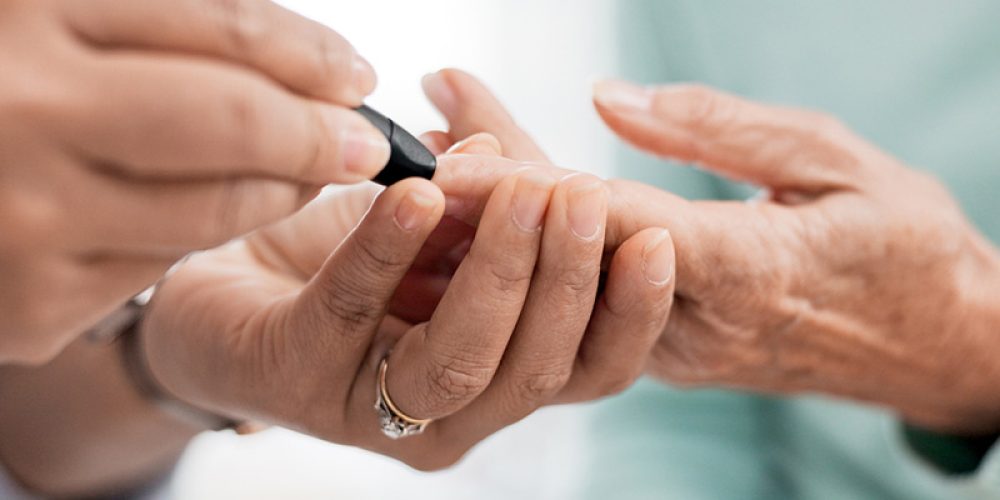
A global clinical trial is currently investigating whether a basic finger-prick blood test can accurately diagnose Alzheimer’s disease. The Bio-Hermes-002 study involves 1,000 participants across the UK, United States, and Canada. By detecting specific biological markers, scientists hope to identify individuals at risk long before they experience significant memory loss.
The research focuses on the presence of three specific proteins known to be linked to the condition. These blood-based biomarkers act as early warning signs for the accumulation of amyloid and tau in the brain.
Studies confirm these “rogue” proteins can begin building up more than a decade before a patient shows any outward symptoms of dementia.
Currently, the most accurate ways to diagnose the disease involve specialized PET scans or lumbar punctures to extract cerebrospinal fluid. These procedures are notoriously expensive, time-consuming, and highly invasive. Because of these barriers, only a tiny fraction of patients currently receive such a definitive diagnosis. The finger-prick test offers a far more accessible alternative that could be performed in a patient’s own home.
One of the most significant advantages of this new method is its simplicity and stability. Unlike traditional blood draws that require needles and syringes, the finger-prick sample does not need refrigeration. This allows patients to mail their samples directly to a laboratory for analysis. Such a ubiquitous test would remove the need for complicated hospital visits and expensive imaging infrastructure.
The trial includes a diverse range of volunteers, including those with normal cognitive function and individuals in the early stages of the disease. At least a quarter of the participants come from under-represented groups to ensure the test works effectively for everyone. So far, hundreds of volunteers have completed the testing protocol, which includes comparing the new blood test against traditional gold-standard scans.