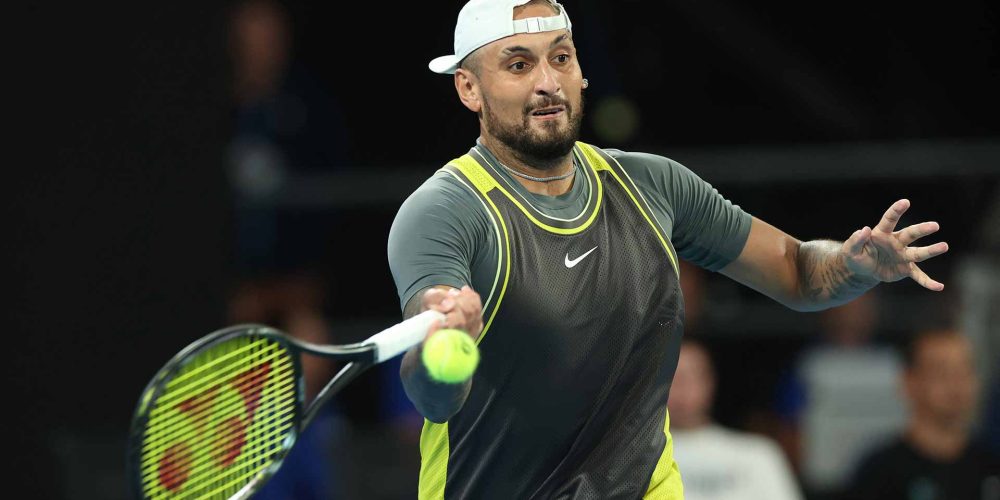
Key Points:
• Nick Kyrgios confirmed he will not compete in singles at the 2026 Australian Open due to ongoing fitness concerns.
• The decision raises new questions about his long-term future in elite singles competition.
• Kyrgios remains open to limited formats but prioritises health over rushed tournament returns.
Australian tennis star Nick Kyrgios has confirmed he will not play singles at the 2026 Australian Open. The announcement ends months of speculation about his comeback at his home Grand Slam. Kyrgios cited ongoing physical limitations and readiness concerns as the main reasons behind his decision.
The 28-year-old has struggled with injuries in recent seasons, limiting his appearances on tour. Knee and wrist issues disrupted his training schedule and reduced match fitness. Although rehabilitation progressed, Kyrgios admitted his body cannot yet handle the demands of five-set singles matches.
Kyrgios explained that singles competition requires sustained physical intensity across consecutive days. He acknowledged that pushing too early could trigger setbacks and prolong recovery. Medical advice and personal experience influenced his decision to step back from singles play at Melbourne Park.
The Australian Open has long been a stage where Kyrgios draws massive local attention. Fans expected his return after encouraging practice sessions late last year. However, the player stressed that short-term excitement cannot outweigh long-term health considerations at this stage of his career.
While singles participation is off the table, Kyrgios has not ruled out other formats. Doubles or exhibition appearances remain possible if his body responds well. These formats place less strain on movement and recovery, offering a controlled pathway back into competitive tennis.
Tournament organisers will miss one of the event’s most polarising figures. Kyrgios brings flair, unpredictability, and television appeal rarely matched on the men’s tour. His absence removes a major drawcard, especially for Australian audiences eager to see a homegrown star compete.
From a rankings perspective, the decision carries limited impact. Kyrgios has already slipped down the standings after extended inactivity. Missing another singles Grand Slam delays any meaningful climb but preserves the possibility of a healthier return later in the season.
The announcement also highlights broader challenges facing injury-prone players. Modern tennis schedules demand constant travel and high physical output. Kyrgios joins a growing list of athletes choosing selective participation over full calendars to extend careers and protect wellbeing.
Former players and analysts offered mixed reactions. Some praised the honesty and restraint shown by Kyrgios. Others questioned whether sustained singles competition remains realistic for him at the highest level, given repeated interruptions to his conditioning.
Kyrgios addressed those doubts by keeping future options open. He avoided committing to a specific comeback timeline and focused instead on gradual progress. The message signalled a shift from past approaches that often prioritised rapid returns.
For Australian tennis, the focus now shifts to younger contenders and established stars to carry home hopes. Kyrgios remains a prominent figure off court, but his role as a singles competitor continues to evolve.
As the Australian Open approaches, Kyrgios’ decision reflects a growing emphasis on athlete health. Whether this marks a temporary pause or a longer transition away from singles remains uncertain. What is clear is that his recovery now takes precedence over expectations.