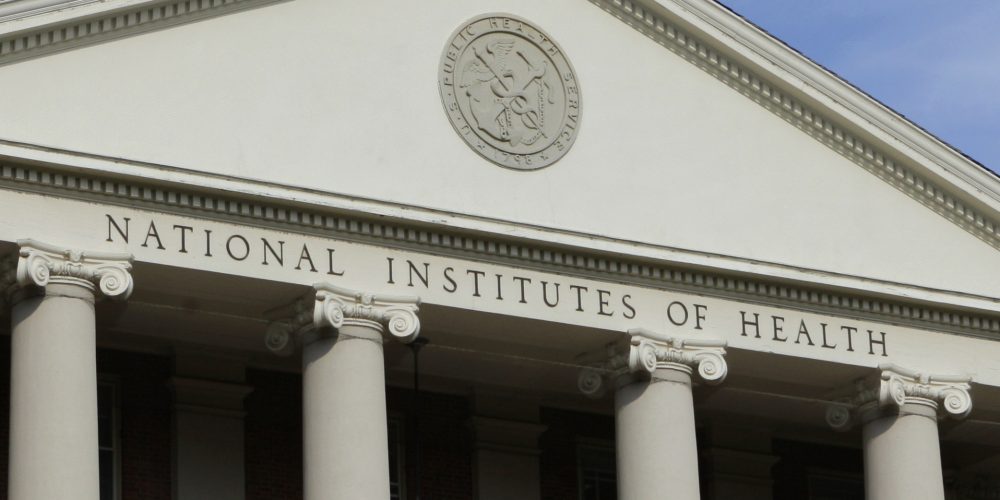
The Trump administration has agreed to review hundreds of National Institutes of Health research grant applications that were stalled or rejected amid a legal dispute over diversity-related funding policies. The move follows a lawsuit filed by researchers and Democratic-led states challenging the cancellation of grants tied to diversity, equity, and inclusion initiatives.
The agreement, reached on Monday, marks a partial resolution in a high-profile legal battle over how federal research funding is administered. Under the deal, the government will conduct fresh reviews of grant applications that were frozen, denied, or withdrawn after new funding restrictions were introduced. However, the arrangement does not guarantee that any specific proposal will ultimately receive funding.
The dispute centers on actions taken by the National Institutes of Health, which had halted or canceled grants it believed were linked to diversity-focused research priorities. A federal judge in Boston previously ruled that the agency acted unlawfully when it terminated hundreds of millions of dollars in research funding on that basis.
That ruling found the NIH’s actions violated federal law by cutting grants due to their perceived association with diversity initiatives rather than scientific merit. The decision temporarily blocked the policy and required the agency to resume normal grant processing.
However, the case took a complex turn when the U.S. Supreme Court intervened in August. The court partially paused the lower court’s ruling, directing that disputes over the terminated grants be handled by a specialized court that hears monetary claims against the federal government. Importantly, the Supreme Court left unresolved a separate issue related to how the NIH handled applications for future funding.
Monday’s agreement focuses on that unresolved portion of the case. The government has committed to re-evaluating applications that were stalled during the policy shift, allowing them to move forward through the NIH’s standard review process. The deal does not force the agency to restore canceled grants or approve any proposals automatically.
Researchers involved in the lawsuit welcomed the development, saying it restores a measure of fairness and transparency to the funding process. They argue the affected grants address major public health challenges, including HIV prevention, Alzheimer’s disease, LGBTQ health, and the prevention of sexual violence.
One of the plaintiffs, a postdoctoral researcher studying Alzheimer’s disease and alcohol use in aging populations, said the agreement allows important research to be reconsidered after what she described as an arbitrary funding freeze. Supporters of the lawsuit say the policy disruptions delayed work that could have delivered real-world health benefits.
Despite the agreement, the broader legal fight is far from over. The deal does not affect the earlier ruling that blocked the NIH from enforcing its policy of ending diversity-related research funding. That decision is currently under appeal by the U.S. Department of Health and Human Services, which oversees the NIH.
HHS officials have defended the funding changes, arguing that research dollars should prioritize scientific rigor and measurable outcomes rather than what they describe as ideological goals. The department has said it stands by its original decision to shift funding priorities, even as it complies with the court-ordered review process.
For now, the agreement offers a path forward for researchers whose work was caught in the legal crossfire. While uncertainty remains around the final outcome of the grants, the renewed review process could help restart projects that have been on hold for months. The case continues to highlight tensions between federal research policy, public health priorities, and the role of diversity-focused studies in government-funded science.