The United States government has reversed course on a key technology restriction. President Donald Trump announced that the US will now allow the export of Nvidia H200 artificial intelligence processors to “approved customers” in China. This decision, initially reported by Semafor, resolves an ongoing debate regarding American chip makers’ access to the massive Chinese market.
The move comes with several significant conditions. The most prominent new rule involves a substantial 25% fee on the sales proceeds. This revenue share will be paid to the US government. The President confirmed this figure, which is considerably higher than the 15% rate previously discussed with chipmakers like Nvidia and Advanced Micro Devices. White House officials stated the fee will be collected as an import tax. The chips will travel from their manufacturing hub in Taiwan to the US for security review before continuing on to China.
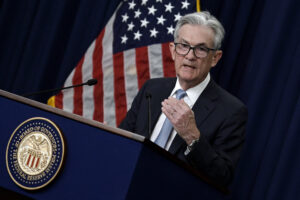
President Trump shared the decision on his social media platform, Truth Social. He stressed that the policy would support American jobs and maintain the nation’s lead in artificial intelligence. He also stated that he had personally informed Chinese President Xi Jinping, who reportedly responded positively to the arrangement. The US Commerce Department is currently finalizing the specific details of this new policy. The same approach will reportedly apply to other leading American chip companies, including AMD and Intel.
The H200 is Nvidia’s second-most advanced AI chip. It is significantly less powerful than the company’s latest, top-of-the-line Blackwell and upcoming Rubin processors. Crucially, those most advanced systems remain barred from export to China. This compromise aims to strike a balance. It supports the revenue and manufacturing base of US technology companies. At the same time, it maintains controls over the most sensitive technology for national security reasons. Allowing H200 sales also aims to counter the growing influence of domestic Chinese chipmakers, notably Huawei.
Washington’s decision has drawn immediate and sharp criticism from security experts and many lawmakers. Several Democratic senators jointly described the decision as a “colossal economic and national security failure.” Critics fear providing chips with the H200’s capabilities will significantly strengthen China’s military and surveillance infrastructure. Analysts noted the H200 is nearly six times more powerful than the H20. The H20 was the previous, less powerful chip designed by Nvidia for the Chinese market that US regulators ultimately restricted.
Despite the US approval, uncertainty remains over the actual volume of sales. China has recently encouraged its major tech firms to reduce their reliance on foreign semiconductors. Beijing previously cautioned domestic companies against purchasing Nvidia’s specifically downgraded chips, citing potential security risks. However, industry experts suggest Chinese firms will likely still purchase the H200 chips. The superior performance of the H200 significantly outweighs the capabilities of currently available domestic Chinese alternatives.
Nvidia welcomed the policy shift. The company released a statement applauding the decision to let American chip manufacturers compete globally. They emphasized that the chips will only go to commercial customers who the Commerce Department has thoroughly vetted. This major policy change marks a significant attempt to manage the complex relationship between global trade, technological leadership, and national security interests.