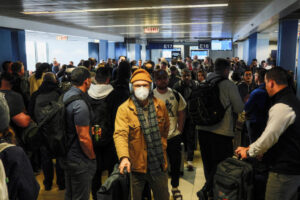
Scotland is currently grappling with a severe and unusually early flu season. Recent data reveals a massive surge in influenza cases across the country. Public Health Scotland (PHS) confirmed that laboratory-confirmed cases jumped significantly in a single week. The infection rate now sits at a medium activity level. This spike arrives several weeks earlier than health officials typically observe. This early surge immediately strains the National Health Service (NHS).
The key factor driving this rapid increase is a new mutation of the Influenza A(H3N2) strain. This variant is notorious for causing more severe illness. It poses a particular threat to the most vulnerable groups. These include older adults and people with underlying health conditions. Experts warn that the UK is following a trajectory similar to Australia. Australia recently experienced its worst flu season in many years.
The impact is immediately visible in hospital admissions. PHS figures show a sharp rise in the number of patients hospitalized with flu. The increase in admissions reflects the virus’s increased severity and high transmissibility. This crisis arrives as many health boards already face severe winter pressures. Staff absences are also rising in certain healthcare and education sectors.
Hospitals nationwide are struggling to cope with the influx of respiratory illness. In response, some NHS boards have implemented strict measures. Certain hospitals have reintroduced visitor restrictions. Staff members are also resuming the use of face masks in clinical areas. In some regions, like Dumfries and Galloway, wards have been forced to close entirely to new admissions. Health officials are now urging the public to use common sense. They ask patients to avoid Accident & Emergency departments for mild or moderate symptoms.
General practitioners (GPs) report seeing a dramatically higher volume of flu patients. Some clinics have experienced triple the number of presentations compared to last year. This rapid spread affects all age groups. It shows a particularly high intensity among school-aged children. These children are known as highly effective transmitters of the virus. High pupil absence rates are being reported in some local councils.
Another serious concern involves the effectiveness of this year’s vaccine. Initial data suggests the existing flu vaccine may be less effective against the new H3N2 mutation. This reduced efficacy further compounds the transmission and severity risks. The Scottish government insists that adequate vaccine stocks are available. Yet, opposition leaders raise concerns over lower-than-expected uptake rates among eligible adults.
The situation remains fluid and concerning. Officials emphasize the need for vaccination among all eligible groups. They also strongly recommend practicing good hand hygiene and limiting contact when feeling unwell. The medical community must focus on managing the current patient surge. They must also prepare for what could be one of the most challenging winter seasons in recent memory. The rapid and early spike serves as a powerful warning about the severity of this year’s flu strain.