Artificial intelligence is driving a new era of space innovation, and one of its latest breakthroughs aims to solve a long-standing challenge in lunar exploration: reliable power during the moon’s harsh nights. Blue Origin revealed a prototype device that uses lunar soil to generate energy, with key technology developed by AI engineering startup Istari Digital.
The device, described as a “moon vacuum,” is designed to collect lunar dust and convert it into heat that can be stored and used as a power source. Istari CEO Will Roper explained that the system effectively turns moon dust into a battery, offering a novel way to store energy using readily available surface material. He compared it to vacuuming at home while generating electricity at the same time.
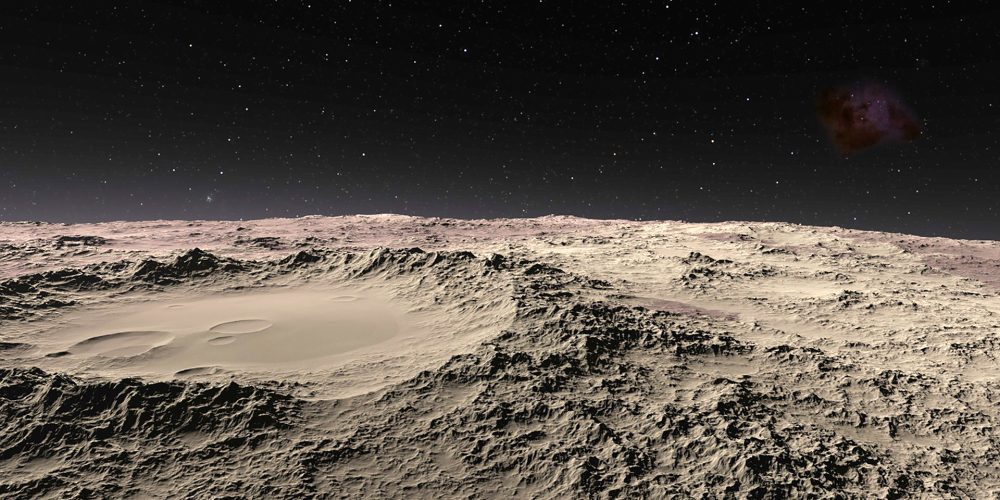
Power reliability is one of the biggest barriers to operating spacecraft on the moon. Every 28 days, the lunar surface enters a prolonged “night” that lasts two weeks, plunging temperatures and disabling unprotected equipment. Hardware that survives must rely on durable, long-lasting energy systems, which are often heavy, complex, or expensive. A battery built from lunar dust could help reduce mass, cost, and dependency on Earth-delivered resources.
What makes the innovation notable is that it was entirely designed by artificial intelligence. Istari created the system with an approach meant to minimize AI “hallucinations,” a common failure where models produce inaccurate or unsupported information. Roper described their process as establishing strict boundaries around design requirements, ensuring the AI operates within validated engineering constraints.
Within those constraints, the AI is allowed to generate diverse ideas and iterate rapidly. The platform doesn’t judge whether the design is optimal, Roper noted, but it guarantees that all technical specifications and safety standards are satisfied. That approach gives engineers confidence that the resulting designs meet operational requirements and can advance to testing.
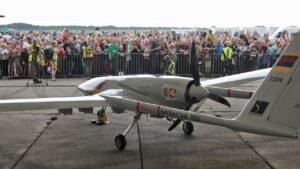
Istari’s engineering technology has attracted significant investment, including backing from former Google CEO Eric Schmidt. The company already works with U.S. defense agencies and aerospace contractors, and currently serves as a prime contractor with Lockheed Martin on an experimental unmanned aircraft.
Blue Origin did not disclose a deployment timeline, but the demonstration highlights a growing trend in aerospace: using AI to accelerate material design, reduce development time, and rethink how space systems operate. If successful, an energy-generating device powered by moon dust could support lunar habitats, robotics, or mining operations, paving the way for more continuous presence on the moon.
The announcement follows renewed interest in the moon from both government agencies and private space companies. As firms race to build infrastructure for sustained lunar activity, the ability to generate power from local resources could be a transformative advantage.
AI-driven engineering allows companies to compress years of research into months, but it also raises questions about reliability and verification in mission-critical systems. Roper acknowledged that speed alone isn’t enough, and that strict constraints are necessary to ensure the technology meets its performance targets.
With lunar exploration rapidly expanding, the “moon dust battery” represents a scalable energy concept that uses materials already present on the surface. If refined and proven reliable, it could help solve one of space exploration’s most persistent engineering challenges and demonstrate the value of AI-built systems in extreme environments.