Italian aerospace and defense group Leonardo has introduced a new artificial intelligence–powered protection system known as the Michelangelo Dome, marking a major step forward in automated threat detection technology. The system, revealed during the company’s latest showcase, aims to help governments and critical infrastructure operators respond faster and more accurately to rapidly evolving airborne risks.
The Michelangelo Dome uses AI to track, analyze, and classify potential threats in real time. According to Leonardo, the platform can identify drones, missiles, aircraft, and other fast-moving hazards within seconds. Its machine-learning models allow the system to filter out harmless objects, reduce false alarms, and prioritize genuine threats. This capability is becoming increasingly important as both military and civilian airspace grow more crowded and complex.
The company highlighted that the system functions like a digital shield. It combines radar, electro-optical sensors, infrared detection, and predictive analytics to create a 360-degree monitoring structure. If the platform identifies suspicious activity, it can alert operators instantly or trigger automated responses, depending on a client’s security protocols. Leonardo positioned the Dome as a tool suitable for national defense forces, airport authorities, energy companies, and any sector needing strong perimeter protection.
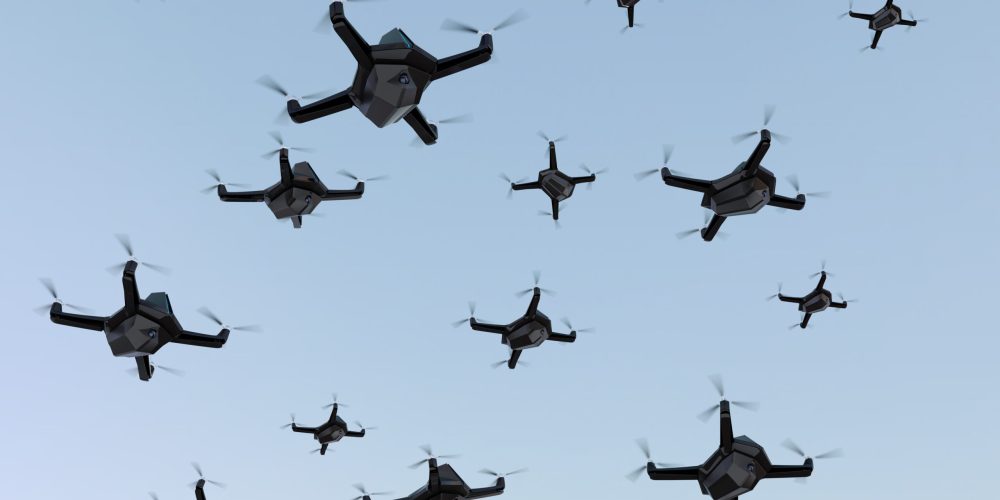
A growing number of defense organizations have expressed concern over the rise in drone-related incidents and the difficulty of identifying small, low-flying devices. Leonardo’s solution aims to address that challenge by offering a multi-layered surveillance network that adapts and improves over time. The company claims the system becomes more accurate as it processes new data, allowing it to respond to emerging threat patterns without manual recalibration.
More News : Europe’s New Defense and Aerospace Merger Driven by Fear of Missing Out on Global Market
Leonardo also emphasized that the Dome aligns with Europe’s broader push toward digital defense modernization. Many countries across the region are investing heavily in AI-enabled systems to keep pace with global competitors. The platform’s launch signals Leonardo’s intention to remain a leading technological force in the sector, particularly as geopolitical tensions continue to drive demand for robust defense tools.
The system’s name, Michelangelo Dome, reflects Leonardo’s branding strategy of linking advanced technology with Italian cultural heritage. The company described the Dome as “inspired by the precision and protection found in classic architecture,” a symbolic reference to both strength and innovation.
Although the product is still in early deployment phases, industry analysts expect significant interest from governments seeking faster, more resilient security capabilities. Automated threat detection is becoming a key priority as modern conflicts increasingly involve drones and other unmanned aerial systems. Leonardo’s system attempts to bridge that gap by offering operators greater situational awareness and decision-making support in real time.
The platform’s flexibility also stands out. It can integrate with existing defense infrastructure, scale across different environments, and function as part of broader command-and-control networks. This adaptability may become one of its strongest selling points as governments look for systems that can evolve with future technological demands.
With the launch of the Michelangelo Dome, Leonardo is signaling its commitment to pushing AI deeper into the defense ecosystem. As threats become more unpredictable, solutions like this one could shape how nations protect borders, critical facilities, and civilians in the years ahead.