

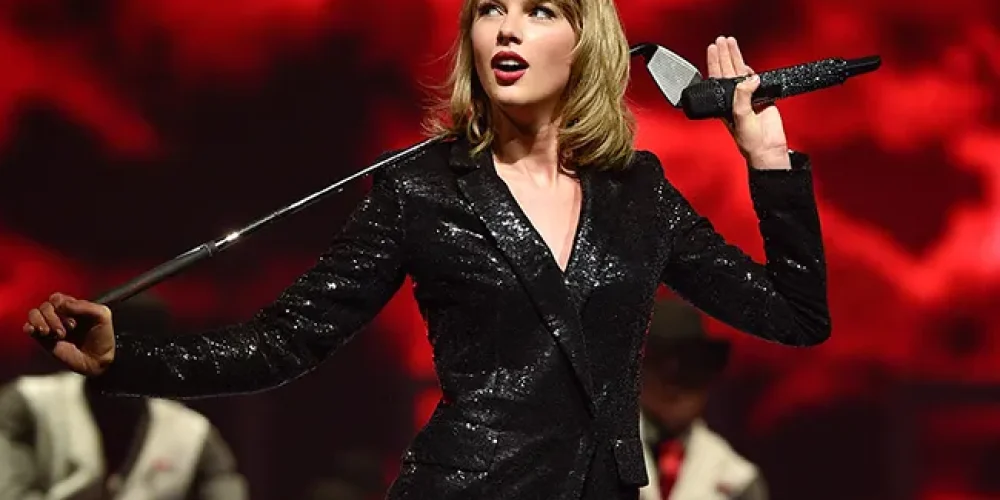
New York — Taylor Swift’s latest album, The Life of a Showgirl, may be dividing critics, but from a business standpoint, it’s proving to be another shrewd move in her billion-dollar empire.
While music reviewers have labeled Swift’s 12th studio album as one of her weaker releases, analysts say Showgirl is part of a larger marketing play — one that keeps her entire catalog in rotation and her name dominating the cultural conversation.
A Business Move Disguised As Art
Some have compared Showgirl to a “novelty Oreo” — a creative experiment that draws attention to the core product. Just as the cookie brand’s wild flavors like “Piña Colada” or “Root Beer Float” help boost sales of the classic Oreo, Swift’s riskier albums have a similar effect: they drive listeners back to her earlier, beloved records.
In a 2019 New York Times analysis, journalist Jonah E. Bromwich described how novelty Oreos sold modestly but made consumers nostalgic for the original, boosting its sales by more than 20%.
Applied to Swift, Showgirl functions in much the same way. Fans who try it — even if they don’t love it — are reminded why they adored albums like Evermore and 1989. That nostalgia translates into streams, downloads, and merchandise revenue, all of which now flow directly to Swift herself.
Swift’s Ownership Strategy Pays Off
Earlier this year, Taylor Swift achieved full ownership of her master recordings after reclaiming them from Shamrock Capital, which had purchased her early catalog from her first label.
That milestone means every stream and sale, from her debut album to her Taylor’s Version rerecordings, feeds directly into her business empire. It’s a rare position in the music industry — one that transforms even mixed reviews into financial success.
“Unlike most celebrities, Swift has made lucrative business dealings a part of her persona,” writes journalist Ramishah Maruf. “She’s rewritten the story of artists being sidelined by their own labels.”
Every new album she releases triggers a surge in streaming for her earlier work — the musical equivalent of customers buying “Double Stuf” after trying a novelty flavor.
Commercial Triumph Despite Mixed Reviews
Despite its polarizing reception, The Life of a Showgirl is far from a commercial disappointment. By Thursday, the album was nearing the modern-era record for first-week sales, potentially surpassing Adele’s 2015 album 25, according to Billboard.
While critics have been unsparing — The Standard called it “a parody album hallucinated by some porn-addled AI” and Pitchfork said it “sounds like much of the pop music you’ve heard for the past decade” — Swift’s fans remain fiercely loyal.
To them, Showgirl is less about artistic reinvention and more about reaffirming the Swift brand: self-aware, theatrical, and impervious to criticism.
“All Press Is Good Press”
Swift herself has leaned into the media storm, embracing the chaos as part of the performance. Speaking on Zane Lowe’s podcast, she said:
“The rule of show business is, if it’s the first week of my album release and you’re saying either my name or my album title, you’re helping.”
Her remarks reflect a seasoned understanding of publicity economics — that controversy fuels attention, and attention sells music.
At this stage in her career, Swift no longer needs unanimous praise. Each headline, review, and online debate reinforces her dominance in both pop culture and business.
Even if Showgirl doesn’t please every listener, it serves a strategic purpose: to remind the world that Taylor Swift is not just an artist but a brand — one that can turn even “Millennial cringe” into market gold.









