

Key Points:
- Iga Swiatek rejected calls for a battle-of-the-sexes format, citing fairness and competitive balance concerns.
- She strongly endorsed mixed team tennis as a better way to showcase equality and collaboration.
- Her stance reflects a broader shift in tennis toward inclusive formats that respect differences without forcing direct comparisons.
World tennis continues to debate how best to promote equality, and Iga Swiatek has offered a clear perspective. Speaking ahead of the new season, the former world number one dismissed the idea of reviving battle-of-the-sexes matches. She argued such contests oversimplify complex differences between men’s and women’s tennis.
Swiatek emphasized that direct gender-based competition risks creating misleading narratives. She explained that men’s and women’s games differ in physical dynamics, scheduling demands, and competitive structures. Comparing them head-to-head, she suggested, often fuels controversy rather than appreciation. Her comments resonated with many players who prefer progress without spectacle-driven experiments.
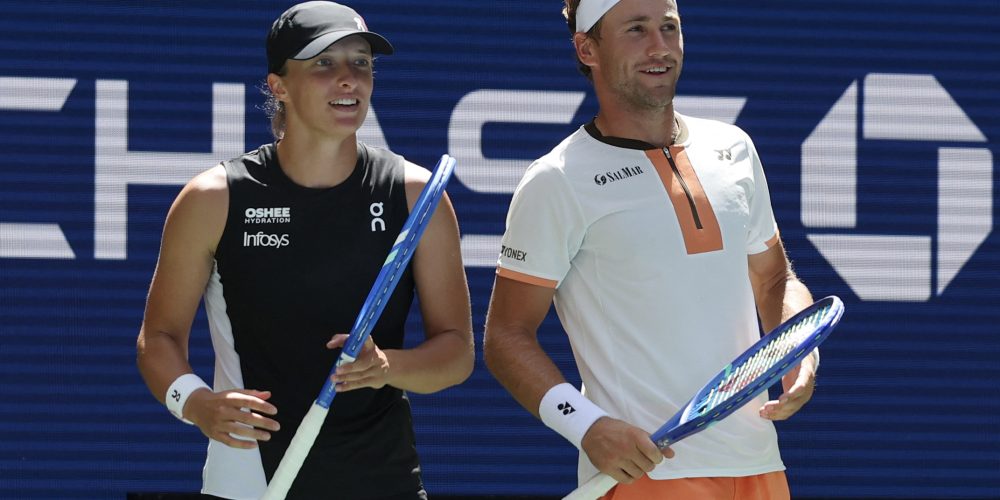
Instead, Swiatek expressed strong support for mixed team events. She described these formats as exciting, respectful, and representative of modern tennis values. Mixed competitions allow male and female players to compete side by side while maintaining separate singles matches. This structure highlights skill, teamwork, and shared goals without forcing unequal comparisons.
She pointed to recent mixed team tournaments that have drawn strong fan interest. These events combine men’s and women’s matches into a single narrative, creating balance and inclusivity. Swiatek noted that players often enjoy the collaborative atmosphere, which differs from the intense isolation of traditional singles tournaments.
Her position aligns with tennis administrators exploring new formats to grow the sport. Organizers see mixed team competitions as a way to attract younger audiences and boost global engagement. These events also offer broadcasters a more varied product, blending personalities and playing styles into one cohesive competition.
Swiatek also highlighted the importance of respecting each tour’s achievements independently. She stressed that women’s tennis does not need validation through direct comparison with men. Grand Slam titles, rankings, and records already demonstrate excellence. In her view, equality means equal respect, not forced competition.
The discussion arrives as tennis faces broader questions about innovation. With packed calendars and player welfare concerns, new formats must add value without increasing strain. Mixed team events, Swiatek suggested, strike that balance by offering novelty while fitting within existing competitive frameworks.
Her comments also reflect her growing influence beyond the court. As one of the sport’s most consistent champions, Swiatek increasingly shapes conversations about tennis culture. Fans and fellow players listen closely when she speaks about the game’s future direction.
As tennis evolves, Swiatek’s stance may guide decision-makers. Her rejection of battle-of-the-sexes matches and support for mixed teams underline a preference for unity over provocation. The message remains clear: progress works best when it celebrates differences while bringing players together.









