

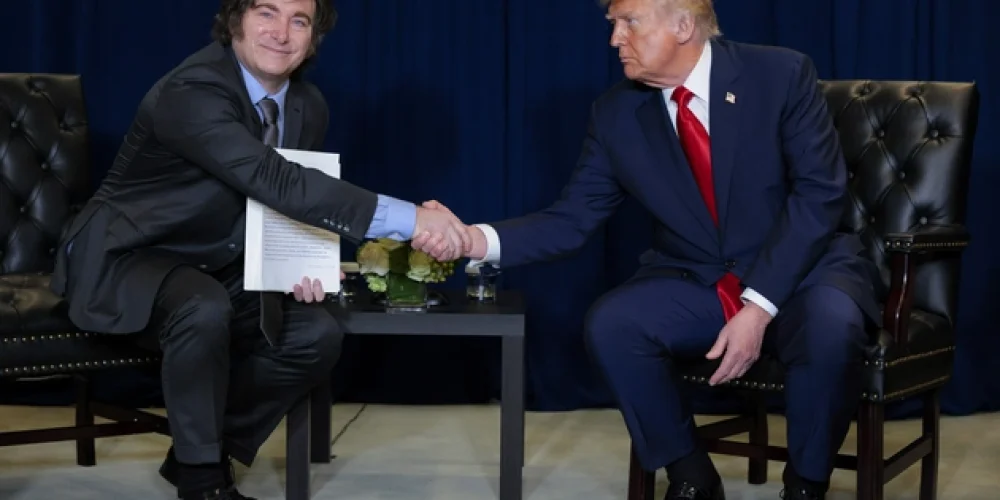
The United States has stepped in to support Argentina’s struggling economy, purchasing Argentine pesos as part of a $20 billion financial rescue package aimed at stabilizing the South American nation’s currency and markets.
The plan, confirmed by US Treasury Secretary Scott Bessent, marks a bold and politically charged effort to shore up Argentina’s economy ahead of its national midterm elections later this month.
“The US Treasury is prepared, immediately, to take whatever exceptional measures are warranted,” Bessent said in a statement on social media announcing the purchase.
The move briefly boosted the peso and Argentine debt markets but reignited debate in Washington, where critics questioned the wisdom of aiding a foreign ally while Americans face economic strain at home.
A Political And Economic Gamble
The rescue plan is the latest twist in the close relationship between President Donald Trump and Argentina’s libertarian leader Javier Milei, who has styled himself as a political ally of Trump and a champion of free-market economics.
Milei’s government has battled a sharp currency decline and evaporating reserves as investors lose confidence in his austerity-driven reform agenda. Analysts estimate Argentina is just months away from major debt repayments and faces rising risks of default.
Bessent, a former hedge-fund manager known for his role in the 1992 “Black Wednesday” sterling crisis, said Argentina’s reforms were of “systemic importance” to regional stability.
“A strong, stable Argentina which helps anchor a prosperous Western Hemisphere is in the strategic interest of the United States,” he said, calling Milei’s success a “bipartisan priority.”
The Treasury has not disclosed the scale of its peso purchase or the terms of the $20 billion swap line, which allows Argentina to exchange pesos for US dollars. Bessent later told Fox News that the program was not a bailout, insisting the peso was “undervalued” and the move aimed to prevent wider economic contagion.
Political Backlash In Washington
The plan has drawn sharp criticism from Democratic lawmakers, who argue that the funds should be used domestically rather than to stabilize a foreign currency.
“Instead of using our dollars to buy Argentine pesos, Donald Trump should help Americans afford health care,” Senator Elizabeth Warren wrote on social media, highlighting the political divide as Congress continues to debate spending cuts to avert a government shutdown.
Republican voices have also questioned the initiative — particularly among farm-state lawmakers concerned about trade competition. Senator Chuck Grassley of Iowa criticized the plan last month, noting that Argentina has gained Chinese soybean market share once dominated by US farmers.
“Why would USA help bail out Argentina while they take American soybean producers’ biggest market?” Grassley wrote.
Argentina’s Economic Crossroads
Argentina has defaulted three times since 2001, most recently in 2020. Since taking office in 2023, Milei has implemented aggressive austerity measures, slashing government spending and deregulating key industries to curb runaway inflation.
While these reforms have won praise from international investors and the International Monetary Fund, they have sparked public anger at home, with inflation still high and purchasing power eroding.
The US intervention comes amid fears that continued instability could undermine Argentina’s fragile recovery and ripple through regional economies.
Following Bessent’s announcement, Milei thanked the US for its support, writing online:
“Together, as the closest of allies, we will make a hemisphere of economic freedom and prosperity.”
Still, questions remain over whether the rescue plan will calm markets — or inflame political tensions both in Buenos Aires and Washington.









