

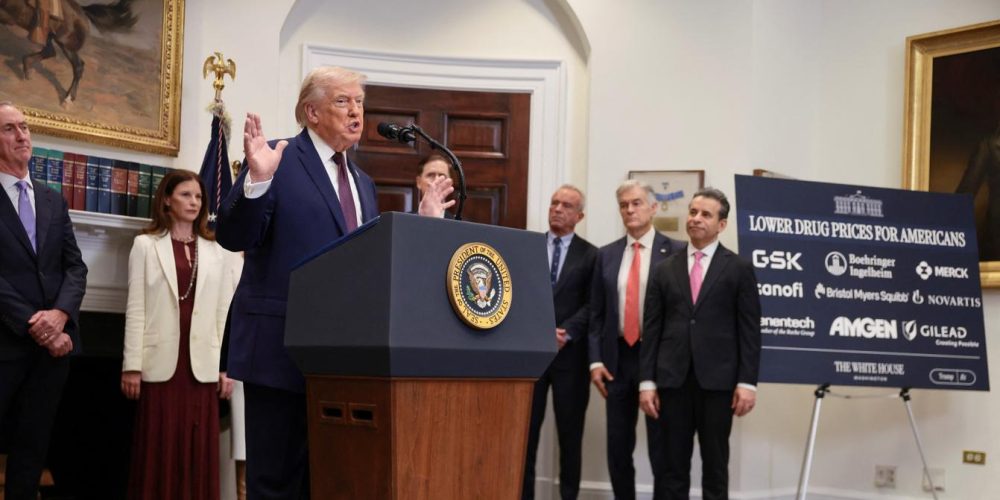
President Donald Trump announced a significant set of agreements with leading pharmaceutical companies that aim to lower the cost of prescription medicines for the U.S. government’s Medicaid health program and for uninsured patients. The initiative, unveiled on December 19, 2025, represents one of the widest drug price negotiation efforts by his administration so far.
At a White House event, senior administration officials said nine major drugmakers committed to cutting the prices they charge Medicaid to levels comparable with what other developed countries pay — a strategy known as most-favored-nation pricing. These companies include Amgen, Bristol Myers Squibb, Gilead Sciences, Merck, Novartis, Sanofi, GSK, Boehringer Ingelheim and Genentech.
The deals cover a wide range of medicines used to treat chronic and widespread conditions such as diabetes, asthma, hepatitis, HIV, autoimmune disorders and heart disease. In many cases, prices for specific drugs could fall by a significant margin, with some cuts reaching around 70% off list prices in direct sales channels.
Under the agreements, several companies also pledged to expand direct-to-consumer pricing through a new government-backed platform known as TrumpRx. This site is designed to connect patients directly to manufacturers for discounted drug purchases, bypassing some traditional pricing intermediaries. The platform is expected to launch in early 2026.
In addition to drug price commitments, the pharmaceutical firms agreed to invest heavily in U.S. research, development, and manufacturing, promising over $150 billion in new domestic investment collectively. This aspect of the deals highlights how the administration is tying pricing concessions to broader economic and industrial goals.
Some of the most notable proposed savings include steep reductions for diabetes medication and multiple sclerosis treatments. A planned price drop for a flu medicine could take the cost from well over $150 to under $60 when sold through the TrumpRx channel. Medicaid patients could benefit directly from these changes as the lower pricing takes effect in coming months.
One of the companies involved, Bristol Myers Squibb, also agreed to donate critical medicines — including popular anticoagulants — to Medicaid at no cost. These donations underline the administration’s push for broader access to essential drugs while pressuring manufacturers with the possibility of tariffs to keep prices down.
Experts say that while these deals could translate to meaningful savings for some patients and state Medicaid programs, they may not dramatically alter U.S. drug pricing across the entire healthcare system. Medicaid already negotiates discounts that are often deeper than commercial insurance. As a result, the real impact will depend on how agreements are implemented and how quickly the new pricing mechanisms are adopted nationwide.
Healthcare analysts point to a shift in strategy from previous years. Rather than relying solely on federal negotiation programs under the Affordable Care Act, this approach uses negotiated deals with individual companies to achieve price reductions. The direct-to-consumer pricing model TrumpRx is also a novel component, aimed at serving uninsured patients who typically pay the highest out-of-pocket costs for medications.
Trump’s push comes amid ongoing political debate over drug pricing policy, and these latest moves are likely to shape discussions about healthcare affordability and government intervention in pharmaceutical markets in the run-up to the 2026 election cycle.









