

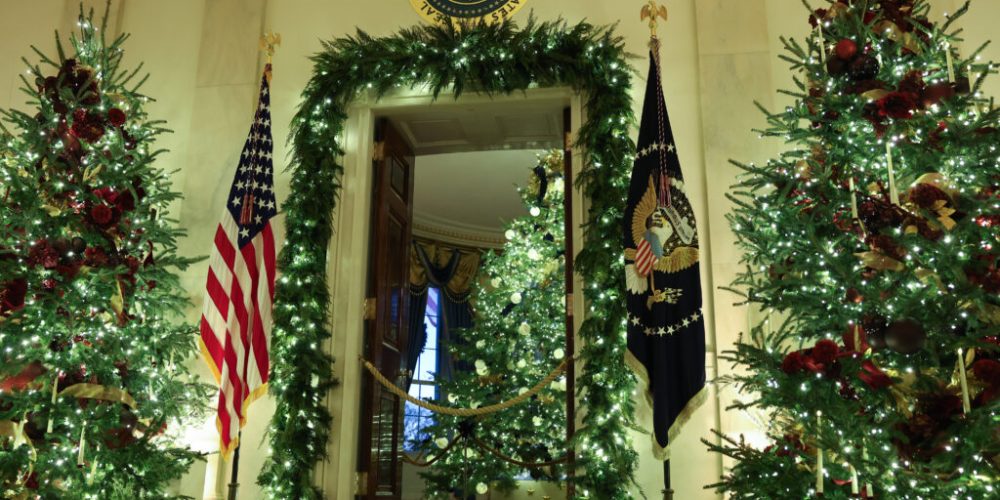
The annual display of White House Christmas decorations provides a powerful visual for the nation. These seasonal photographs are more than mere holiday cheer. They offer a unique, vibrant timeline of American presidential history. The evolution of the decorations reflects changing national culture and the public role of the First Family.
The earliest celebrations in the Executive Mansion were simple and private affairs. President John Adams and First Lady Abigail Adams hosted the first recorded Christmas party in 1800. These early observances were intimate gatherings with only family and close staff. Decorations were modest, typically using simple greenery. The Christmas tree, a custom popular in Europe, did not immediately find a place in the White House.
The tradition of the indoor Christmas tree started much later in the century. President Benjamin Harrison is credited with installing the first one in 1889. His family placed the tree in the second-floor oval room. It was then used as a library or family parlor. That tree was lit with candles and decorated with small toys. A few years later, technology joined the festivities. President Grover Cleveland’s family delighted in the first use of electric lights on the White House tree in 1894.
The holiday transitioned from a private event to a national spectacle in the early 20th century. President Calvin Coolidge established a major public tradition in 1923. He became the first chief executive to preside over the National Christmas Tree Lighting ceremony. This act cemented the holiday as a shared public ritual in Washington.
One popular historical myth concerns President Theodore Roosevelt. Many people mistakenly believe he banned Christmas trees due to his conservationist beliefs. Historical evidence contradicts this notion. The Roosevelt family simply did not observe the holiday with a large indoor tree. His son Archie famously smuggled a small tree into an upstairs closet in 1902.
The role of the First Lady truly modernized the tradition. Jacqueline Kennedy dramatically expanded the public scope of the decorating. She began the practice of selecting an official theme for the Blue Room Christmas tree in 1961. Her first theme honored the Nutcracker Suite ballet. This tradition transformed the décor into a national artistic statement.
Other customs quickly followed, cementing the iconic visual elements captured in holiday photos. First Lady Pat Nixon introduced the annual gingerbread house display in 1972. The elaborate construction sits prominently in the State Dining Room every year. These decorative photos now highlight the First Lady’s charitable causes and current patriotic themes. They serve as a powerful public message. Each set of decorations links the present-day administration to the nation’s rich and complicated history.









