

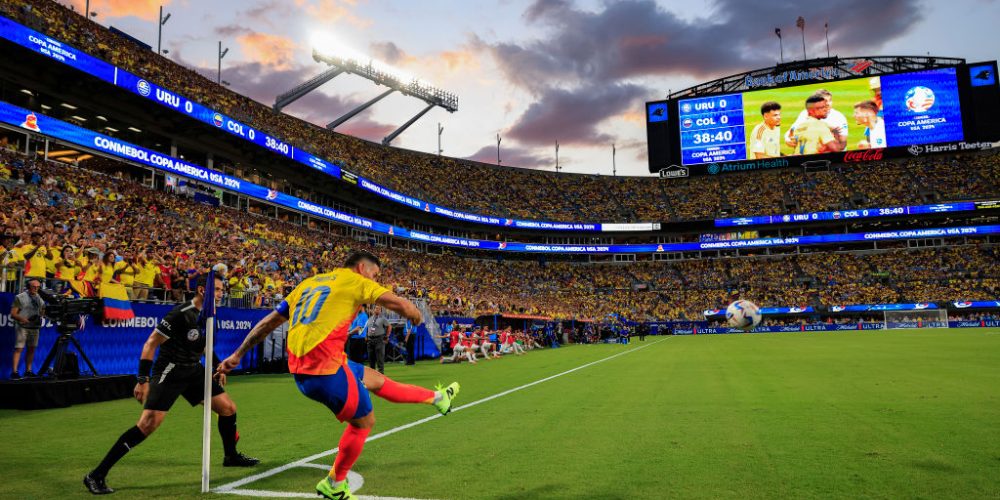
The United States is reportedly in discussions to host the 2028 edition of the Copa América, the premier tournament for South American national soccer teams. The move could mark a significant shift in the tournament’s traditional hosting geography and reflect evolving strategies by organizers to broaden the competition’s reach and commercial potential.
Officials from U.S. soccer authorities have reportedly initiated informal talks with the tournament’s governing body, exploring whether the U.S. can meet hosting requirements — including venue standards, logistics, and fan engagement. If successful, the U.S. could deliver a Copa América that leverages its established stadium infrastructure and broad North American fan base.
In recent years, the U.S. has proven it can host large international competitions, from the World Cup to regional tournaments. Supporters argue that staging Copa América in America could attract larger crowds and greater revenue due to the significant presence of Latin American communities, and the country’s capacity to handle high-profile events. Organizers would likely aim to maximize attendance, media coverage, and sponsorship opportunities.
The discussions reflect broader trends in global soccer. Football’s governing bodies are increasingly open to holding regional competitions outside their traditional territories to expand brand reach and commercial returns. For the U.S., the proposal could strengthen its standing in global soccer, boost the sport’s profile domestically, and drive further development at the grassroots and professional levels.
Explore Jim Cramer Urges Investors to Split AI Bets — Don’t Put All Eggs in One Basket
Potential challenges include regulatory approval, scheduling, and ensuring access for fans across multiple countries. Soccer authorities must choose between tradition and growth. Some purists argue that taking the tournament outside South America risks undermining its heritage. Meanwhile, fans and analysts worry about travel logistics for South American teams and supporters, which might dampen atmosphere and authenticity that come with traditional venues.
If the U.S. hosts, it could also influence future planning. Success in 2028 might lead to more international tournaments being held in nontraditional locations, reshaping how regional soccer events are scheduled and marketed around the world. It may provide a blueprint for collaborations between confederations seeking to tap into global fanbases.
Soccer officials reportedly view the talks as preliminary but promising. The next steps involve formal bid submission, evaluation of infrastructure readiness, and alignment with tournament scheduling. No final decision has been made yet, and sources caution that several hurdles remain.
If accepted, the U.S.-hosted Copa América 2028 could electrify South American soccer fans and introduce a new era of cross-continental collaboration. For now, the world watches as soccer’s next chapter unfolds.









