

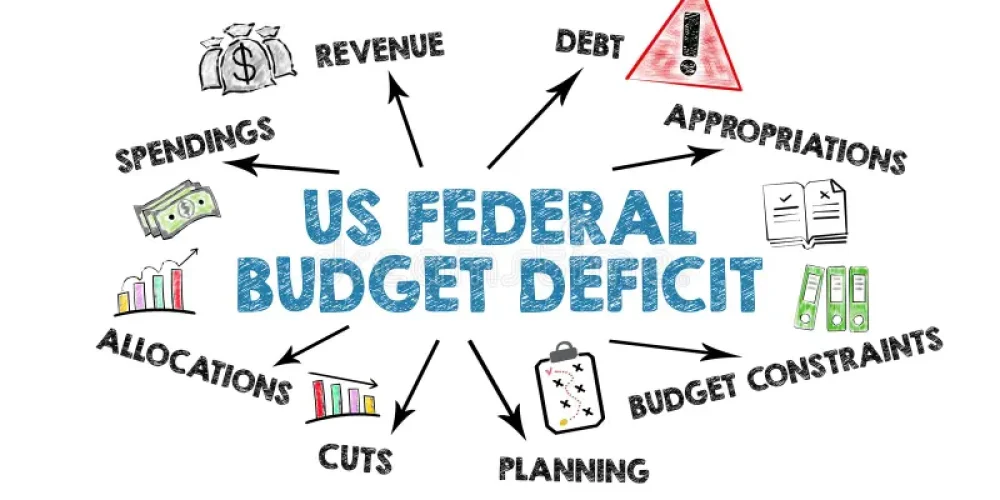
The United States reported a sharp increase in its October budget deficit, reaching $284 billion, as both spending and accounting delays tied to the recent government shutdown pushed the federal ledger deeper into the red. The Treasury Department’s monthly report revealed one of the largest early-fiscal-year shortfalls on record, highlighting ongoing strain on federal finances.
The jump in the deficit came as the government processed payments that were stalled during the brief but disruptive shutdown. Several mandatory programs, including health and social services, recorded higher-than-usual outflows in October because agencies released backlogged payments once operations resumed. This produced a temporary spike in spending that widened the monthly gap between revenue and expenses.
Overall government spending rose more than 18% compared to the same period last year. Outlays increased across several major categories, including Social Security, Medicare, and interest payments on the national debt. The cost of servicing debt continues to grow as higher interest rates raise the government’s borrowing burden. Treasury data shows that interest payments alone jumped by billions of dollars in October, adding additional pressure on the deficit.
Federal revenue also declined, falling by about 4% year-over-year. Lower personal and corporate tax receipts played a major role in the drop, reflecting a cooling labor market and reduced corporate profits. While revenue typically fluctuates early in the fiscal year, analysts note that the slowdown aligns with broader concerns about softening economic momentum.
The resulting deficit marked a significant increase from October 2024, when the shortfall totaled around $66 billion. This year’s figure ranks among the largest October deficits ever recorded, underscoring the widening fiscal imbalance at a time when policymakers already face heightened scrutiny over federal spending.
Economists say the shutdown’s impact magnified October’s numbers, but the underlying trend remains worrying. Federal spending has been climbing faster than revenue for several years, and rising interest rates have intensified the long-term challenge. Many expect deficits to remain elevated unless legislative action addresses the widening gap.
The timing of the report is also politically sensitive. Lawmakers are locked in debates over funding measures and future budget priorities. The latest deficit figures are likely to fuel discussions about entitlement reform, defense spending, and potential tax adjustments. Both parties have expressed concerns about the growing national debt, but consensus on specific solutions remains elusive.
Despite the alarming deficit figure, Treasury officials encouraged caution in interpreting the month’s results. They emphasized that the shutdown caused distortions that will likely smooth out in later reports. Still, independent analysts warn that even after adjusting for shutdown effects, structural pressures—including demographic shifts and rising healthcare costs—will keep deficits large in the near term.
As the fiscal year progresses, markets and policymakers will closely watch how revenue trends respond to economic conditions and whether Congress can avoid further funding disruptions. For now, October’s report underscores the significant financial challenges ahead for the federal government.
More News : AI Ad Budget: Oreo Maker Mondelez to Slash Marketing Costs Using New Generative AI Tool









