

KEY POINTS
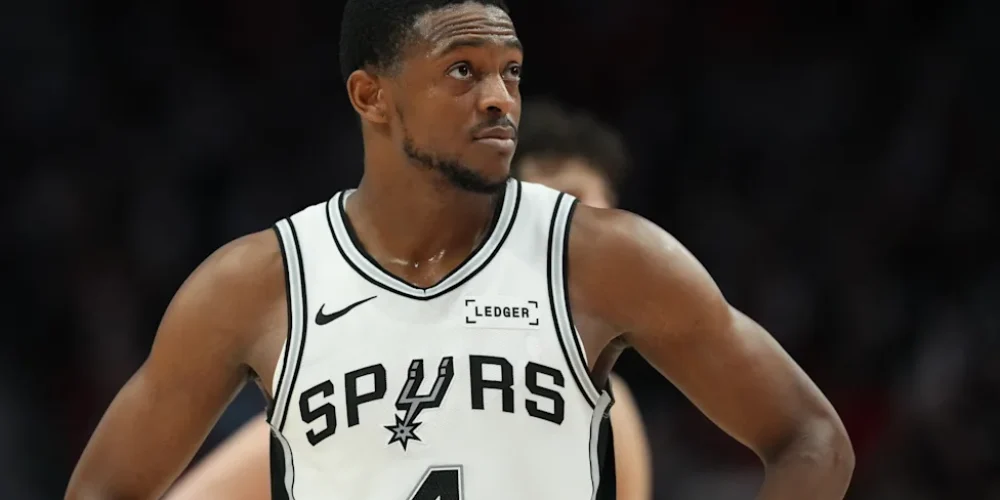
- San Antonio Spurs All-Star point guard De’Aaron Fox was ruled out of Game 1 due to persistent right ankle soreness.
- The franchise turned to a youth-driven rotation to manage the backcourt absence in the series opener against Oklahoma City.
- Team medical staff remains optimistic that the veteran playmaker can return to action later in the series.
The San Antonio Spurs suffered a significant setback just hours before the opening tip of the Western Conference Finals as All-Star point guard De’Aaron Fox was officially ruled out of Game 1 against the Oklahoma City Thunder. The dynamic playmaker has been battling lingering right ankle soreness, an ailment that ultimately forced him to the sidelines following an unsuccessful pre-game warmup session. For a team aiming to secure an early advantage on the road in this highly anticipated postseason matchup, the sudden loss of their primary backcourt orchestrator presents an immediate test of roster depth.
What You Need to Know
The origins of the injury trace back to the physical second-round playoff battle against the Minnesota Timberwolves. During Game 4 of that intense series, Fox experienced significant trauma when an opposing player inadvertently rolled onto his right ankle during a aggressive scramble for a loose ball. Although the resilient guard managed to finish out the series and help guide San Antonio to a decisive Game 6 victory, the underlying soreness intensified during the brief transition period leading into the conference finals.
Leading up to the series opener in Oklahoma City, the coaching staff maintained a cautious but hopeful outlook regarding their star’s availability. Fox participated in the team’s morning shootaround and was initially characterized as a game-time decision by head coach Mitch Johnson. However, after testing the joint under the supervision of medical trainers approximately 90 minutes before game time, the decision was made to prioritize long-term physical sustainability and hold him out of the contest.
The statistical impact of losing the veteran guard cannot be overstated for the postseason rotation. Through 11 playoff appearances this year, the 28-year-old standout has been a reliable secondary scoring threat and perimeter defender, averaging 18.8 points, 5.8 assists, and 1.1 steals per contest. His ability to initiate half-court sets, distribute effectively, and collapse opposing defenses has been central to the franchise’s offensive efficiency throughout their deep spring run.
Next Man Up Philosophy Tested in Oklahoma City
To fill the massive void left by the injured All-Star, the coaching staff thrust rookie Dylan Harper into the starting lineup for Game 1. This tactical adjustment placed the first-year player alongside sophomore Stephon Castle, Devin Vassell, Julian Champagnie, and franchise centerpiece Victor Wembanyama. The bold youth movement resulted in a historical milestone, establishing the youngest starting lineup ever deployed in the history of the NBA’s conference finals.
The tactical dynamic shifted dramatically, forcing Castle to assume the vast majority of primary ball-handling and distribution duties against a relentless Oklahoma City defense. The Thunder presents a particularly daunting challenge for an inexperienced backcourt, featuring a perimeter defensive rotation anchored by elite lockdown defenders like Lu Dort and Alex Caruso. Despite the steep developmental curve, the young replacement players stepped up admirably under intense pressure, helping the squad navigate the administrative and tactical chaos of a high-stakes road environment.
Fortunately for the Silver and Black, their structural foundation remained perfectly intact through the dominant presence of Wembanyama. With the backcourt compromised, the offense ran almost entirely through the generational big man, who anchored both ends of the floor. The collective resilience of the group was on full display as they battled through a grueling double-overtime thriller, proving that the organization’s developmental system can withstand the sudden absence of key components.
Why This Matters
For basketball fans and sports business observers across North America, the management of this injury highlights the delicate balancing act between immediate postseason success and long-term asset protection. In the modern NBA, franchises invest hundreds of millions of dollars in elite tier talent, making player health optimization a paramount corporate priority. Rushing a franchise cornerstone back onto the floor with an unstable joint risks catastrophic structural damage that could impact the organization’s competitive window for years to come.
Additionally, this scenario provides a fascinating case study in organizational adaptability and depth management under extreme public pressure. Corporate leaders and sports analysts frequently evaluate how top-tier organizations respond when primary leadership assets are suddenly removed from operation. The Spurs’ ability to pivot toward historical levels of youth in a high-stakes environment serves as a testament to strategic drafting, comprehensive player development, and robust internal preparation.
NCN Analysis
From our perspective at NextClickNews, the decision to sit Fox for the opening game of the series was a necessary exercise in risk mitigation. While conceding the tactical advantage in an opening road game is never an ideal scenario, the realities of an extended seven-game series dictate that having a healthier version of your primary playmaker for Games 2 through 7 is far more valuable than a heavily limited appearance in Game 1. Coach Johnson’s public admission that the soreness is an issue that will likely persist for the remainder of the postseason indicates that careful minute management will remain a defining narrative moving forward.
Looking ahead, the long-term prognosis for this series will depend entirely on how quickly the medical staff can reduce the inflammation in the joint before the next contest on Wednesday. The historic performance of the supporting cast in the series opener provides a massive psychological boost, proving that the squad can remain highly competitive even when short-handed. However, to ultimately overcome a deep and disciplined squad like Oklahoma City over a full series, the veteran poise and steady execution that only an elite guard can provide will be absolutely essential.
The ultimate trajectory of San Antonio’s championship ambitions now hinges on how effectively their star playmaker’s body responds to intensive around-the-clock physical therapy.
Reported by the NCN Editorial Team









