

KEY POINTS
- Philadelphia 76ers center Joel Embiid has publicly urged local season ticket holders not to resell their seats to opposing fans for the upcoming series finale.
- The plea comes after a noticeable presence of rival supporters at the Wells Fargo Center during earlier matchups, which the team believes compromised their home-court advantage.
- Embiid emphasized that a unified and hostile environment is essential for the 76ers as they prepare for a winner-take-all Game 7 to determine their postseason fate.
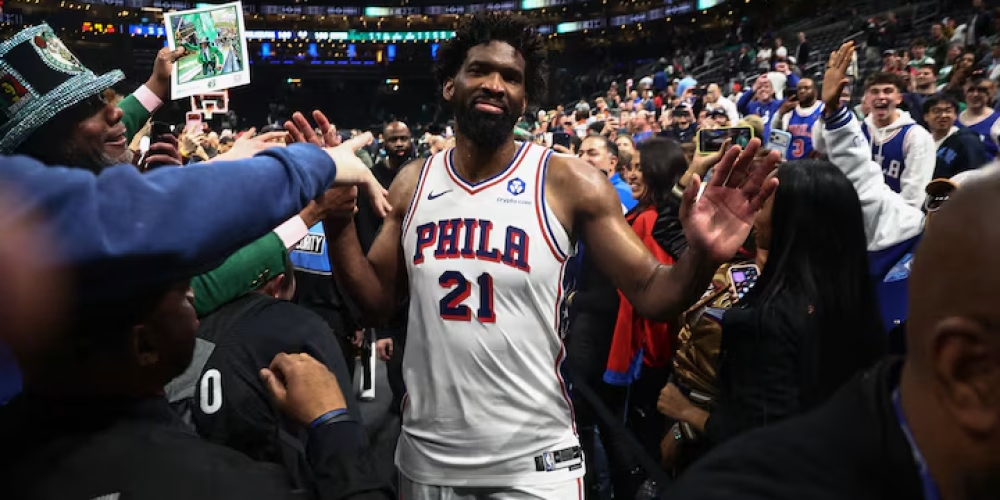
The Philadelphia 76ers are making a strategic push to reclaim their home-court dominance before the most important game of their season. Facing a decisive Game 7, superstar Joel Embiid took the unusual step of addressing the team’s fan base directly, requesting that they prioritize team loyalty over the high profits available on the secondary ticket market. For the Philadelphia faithful, the message is clear: the energy in the arena could be the difference between a championship run and a summer of disappointment.
What You Need to Know
Philadelphia has long been recognized as one of the most intense and demanding sports markets in the United States. However, recent trends in the ticket industry have seen a surge in “takeover” efforts by visiting fans, particularly from neighboring East Coast cities. High resale prices on platforms like StubHub and SeatGeek have tempted many local fans to cash in on their seats, occasionally leading to a diluted home atmosphere during critical playoff moments.
The 76ers organization has been proactive in trying to prevent this phenomenon, including ticket buyback programs and specific outreach to season ticket holders. Despite these efforts, the roar of the opposing crowd was audible during Game 4 and Game 6, a fact that did not go unnoticed by the players. For a team like Philadelphia, which builds much of its identity on the “Philly Tough” persona, having rival jerseys in the lower bowl is seen as a psychological disadvantage.
The stakes for this Game 7 are exceptionally high for the 76ers’ current era. With the roster built around Embiid’s prime years, every postseason exit is scrutinized heavily. The 76ers have faced numerous second-round exits in the past decade, and the pressure to break through to the Conference Finals has reached a boiling point. Embiid’s call to action reflects a leader who understands that in a game of inches, the psychological impact of a deafening, supportive crowd can influence officiating, momentum, and player energy.
The Battle for the Wells Fargo Center
Embiid’s comments were delivered with a mix of humor and serious intent during a post-practice media session on Sunday. He noted that while he understands the financial temptation of selling tickets for three or four times their face value, the “vibe” of the arena is a tangible factor for the players on the hardwood. He challenged the city to show the same grit on the ticket exchanges that they expect from the players on the court.
The team’s ownership group has reportedly joined this effort, allegedly purchasing thousands of tickets to distribute to local first responders and community groups to ensure the “sea of blue” remains intact. This defensive maneuver against visiting fan invasions has become a growing trend in professional sports, but it is rarely discussed so openly by the athletes themselves. The move has sparked a wider conversation in Philadelphia sports radio about the “cost of loyalty” in an era of skyrocketing ticket prices.
On the court, the 76ers will need every bit of that home energy. Embiid has been playing through various minor ailments, and the lift provided by a partisan crowd is often cited as a natural painkiller in the heat of competition. The team’s role players, in particular, tend to shoot better percentages at home, fueled by the rhythmic chants and traditional hostility that Philadelphia fans reserve for the opposition.
Why This Matters
This situation highlights a growing tension in the American sports economy: the conflict between the “fan experience” and the “investor reality” of season ticket ownership. For many families, selling a pair of high-demand playoff tickets can cover the cost of their entire regular-season package. As sports become increasingly expensive for the average consumer, teams are finding it harder to maintain a “pure” home-court environment without direct intervention or emotional appeals from stars like Embiid.
Furthermore, this story reflects the evolving relationship between superstar athletes and their local communities. By speaking out, Embiid is leveraging his personal brand to influence the local economy of the team’s ticket market. For global readers and sports business analysts, this serves as a fascinating case study in how “home-court advantage” is no longer just about geography, but about active market management and brand loyalty in the digital age.
NCN Analysis
Joel Embiid’s plea is a double-edged sword. While it serves to galvanize the local fans, it also signals to the opposition that the 76ers are feeling the pressure of the external environment. If the 76ers start the game slowly and the crowd turns quiet—or worse, if the opposing fans are still loud—it could amplify the anxiety within the Wells Fargo Center. However, if the stadium is truly “locked down” by Philadelphia fans, it creates one of the most intimidating atmospheres in all of professional sports.
Expect the 76ers to come out with an aggressive defensive scheme to reward the fans’ loyalty early. The “NCN” outlook suggests that the first six minutes of the game will determine if Embiid’s gambit worked. If the crowd is engaged, the 76ers’ defensive intensity usually rises to a level that few teams can match. All eyes will be on the stands just as much as the court when the ball is tipped on Monday night.
The city of Philadelphia has been challenged to protect its house, and the response will set the tone for the 76ers’ most important night of the year.
Reported by the NCN Editorial Team









