

KEY POINTS
- Newcastle manager Eddie Howe has reaffirmed that the Saudi-led ownership group remains fully dedicated to the club’s upward trajectory.
- Despite external speculation regarding shifting priorities, internal communications suggest a steadfast desire to compete at the highest levels of global football.
- The club continues to balance ambitious growth plans with the logistical and financial regulations governing the English Premier League.
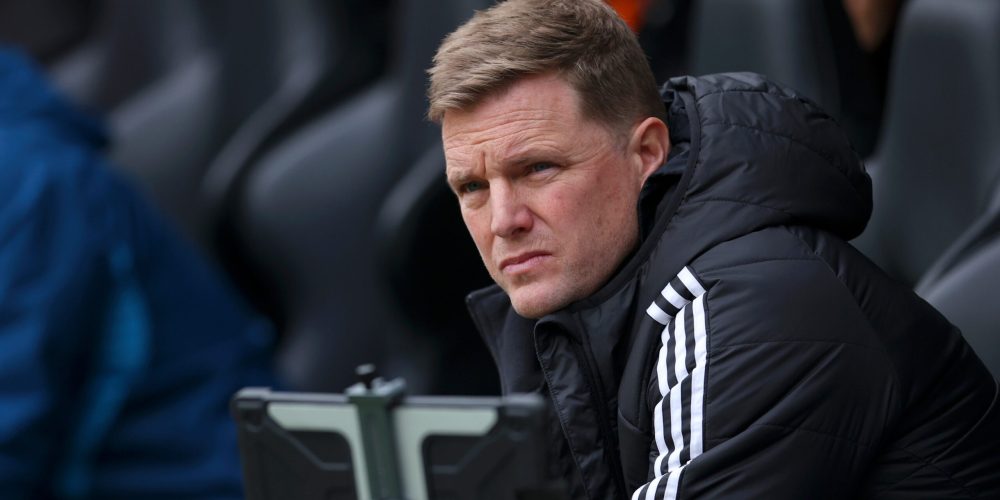
Newcastle United manager Eddie Howe has dismissed suggestions that the club’s ownership is wavering in its commitment to transforming the Magpies into a perennial powerhouse. Speaking ahead of the final stretch of the 2025/26 season, Howe emphasized that the ambition of the Public Investment Fund (PIF) remains as potent as it was during the initial takeover. The manager’s comments serve as a strategic rebuttal to rumors that the ownership’s focus might be pivoting toward other international sporting ventures or domestic projects.
What You Need to Know
Since the landmark acquisition of Newcastle United in October 2021, the club has undergone a radical transformation both on and off the pitch. The takeover ended the tenure of Mike Ashley and introduced a new era of financial potential that briefly made Newcastle the “wealthiest club in the world” by proxy. This shift in power dynamics initially sent shockwaves through the Premier League’s established “Big Six,” as the Tyneside club rapidly moved from a relegation battle to Champions League qualification within a few short seasons.
However, the path to the summit of English football has become increasingly complex due to the Premier League’s Profit and Sustainability Rules (PSR). These regulations limit how much an ownership group can spend relative to the revenue the club generates. Consequently, Newcastle has had to move away from the “scattergun” spending approach often seen in previous decades of football takeovers, opting instead for a more calculated, incremental build-up of the squad and infrastructure.
The recent discourse surrounding the club has focused on whether the PIF’s broader portfolio—which includes massive investments in professional golf, tennis, and the Saudi Pro League—would result in a diminished appetite for the rigorous, daily demands of competing in the Premier League. Howe’s latest intervention is designed to reassure a global fanbase that the long-term project at St. James’ Park is still the priority for the board.
Building a Sustainable Contender in Tyneside
The strategy deployed by the Newcastle hierarchy has shifted toward sustainable excellence rather than overnight dominance. Eddie Howe has been central to this philosophy, focusing on improving the existing squad while integrating high-value signings that fit a specific tactical profile. The manager noted that his regular dialogues with the club’s directors consistently highlight a shared vision of winning trophies and establishing a legacy in the North East of England.
A major pillar of this commitment is the ongoing investment in the club’s infrastructure. Plans for a modernized training ground and the potential expansion of St. James’ Park are frequently cited as evidence of a “bricks and mortar” commitment that transcends player transfers. By improving the academy and the commercial reach of the club, the ownership is attempting to boost Newcastle’s organic revenue, which in turn allows for greater flexibility in the transfer market under PSR constraints.
The timeline of Newcastle’s growth has reached a critical juncture. After the initial “honeymoon phase” of the takeover, the club is now facing the reality of competing against established giants like Manchester City and Arsenal, who have decades of commercial development behind them. Howe acknowledged that while the desire for success is unchanged, the method of achieving it requires patience and a meticulous approach to recruitment.
Internal morale remains high despite the intense scrutiny that follows any club with sovereign wealth backing. The players and coaching staff are reportedly aligned with the owners’ objectives, viewing the current challenges as necessary hurdles on the way to becoming a consistent title challenger. Howe’s leadership has been credited with maintaining this focus, shielding the locker room from the noise of the global sports-wash debate and financial speculation.
Why This Matters
For the global sports audience, including a significant and growing fanbase in the United States, Newcastle United represents a fascinating case study in sports management and geopolitics. As American investors continue to purchase stakes in European football clubs, the “Newcastle model” provides a blueprint—and a warning—regarding the limitations of wealth in a regulated market. U.S. fans of the Premier League are watching closely to see if a club can truly break the glass ceiling of the traditional elite through disciplined investment.
Furthermore, the stability of Newcastle’s ownership is a key indicator for the broader sports economy. If a group with the resources of the PIF remains committed to a long-term project despite regulatory headwinds, it signals that the Premier League remains the premier destination for global capital. For viewers in Ireland, Sweden, and beyond, a competitive Newcastle adds a layer of unpredictability to the league, ensuring that the title race and European qualification battles remain diverse and engaging.
NCN Analysis
The insistence that the ownership’s desire is “unchanged” is a calculated piece of PR, but it also reflects a pragmatic reality. The PIF has already invested too much capital and prestige into Newcastle United to allow the project to stagnate. However, the next phase of their ownership will be significantly harder than the first. The “easy wins” of upgrading a neglected squad are over; now, they must find the marginal gains necessary to leapfrog clubs with much higher commercial turnovers.
We expect Newcastle to be very active in the upcoming summer transfer window, but with a focus on “smart” acquisitions—players with high sell-on value or those who fill very specific tactical voids. Fans should watch for further commercial partnerships being announced, particularly in the Middle East and North America, as the club races to increase its revenue. The commitment is there, but the “Newcastle era” will likely be characterized by a slow burn rather than a sudden explosion of dominance.
Reported by the NCN Editorial Team









