

KEY POINTS
- Kielder Forest holds the Gold Tier status from the International Dark-Sky Association, the highest accolade for night sky quality in the world.
- The Kielder Observatory serves as a unique cultural hub, offering accessible astronomy programs that connect the public with deep-space observation.
- Preserving the night sky is vital for local biodiversity and human health, protecting the natural rhythms of both the wildlife and the visitors who travel there.
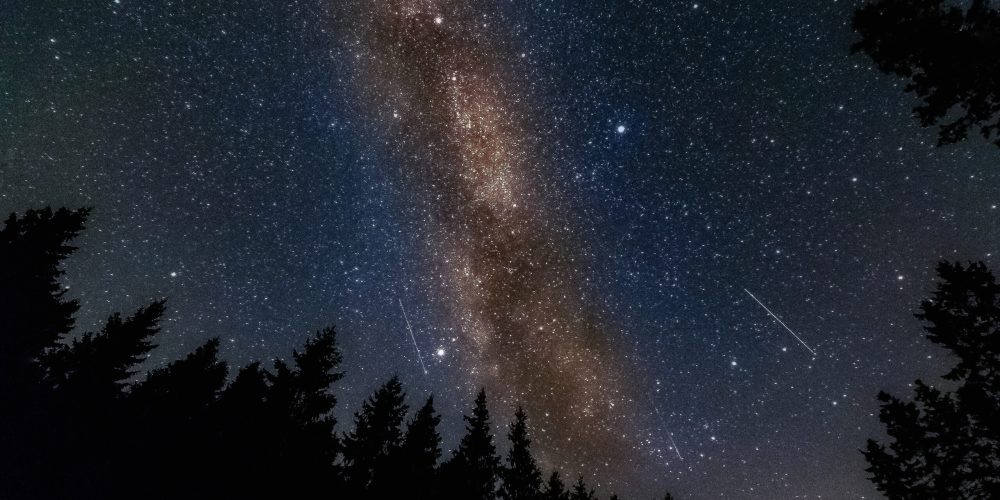
Deep in the remote reaches of Northern England, Kielder Forest has established itself as one of the few places on the planet where the Milky Way is visible in its full, staggering brilliance. For the average American traveler accustomed to the persistent orange glow of suburban light pollution, this 250-square-mile wilderness offers a rare encounter with “true darkness.” As global interest in astro-tourism surges, this corner of Northumberland is no longer just a timber resource; it has become a sanctuary for the human spirit and a window into the deep cosmos.
What You Need to Know
Kielder Forest is an engineering and ecological marvel. Located in the county of Northumberland, just south of the Scottish border, it is the largest man-made woodland in England. The area was originally developed in the early 20th century to provide a strategic timber reserve, but it has since evolved into a complex ecosystem featuring the massive Kielder Water reservoir and a thriving population of rare wildlife, including red squirrels and ospreys. However, its most significant modern designation came in 2013, when it was awarded “Gold Tier” status by the International Dark-Sky Association (IDA).
A Dark Sky Park is a land possessing an exceptional or distinguished quality of starry nights and a nocturnal environment that is specifically protected for its scientific, natural, educational, or cultural heritage. The “Gold Tier” is the highest possible rating, indicating a sky so dark that celestial features like the Andromeda Galaxy and the Orion Nebula can be seen with the naked eye. Kielder sits at the heart of the Northumberland International Dark Sky Park, which covers nearly 600 square miles, making it the largest protected dark sky zone in Europe.
To understand why this designation is so rare, one must look at the Bortle Scale, which measures the night sky’s brightness of a particular location. Most major American cities rank as a Class 8 or 9 on the scale, where the sky is so bright that only a handful of stars are visible. Kielder frequently records a Class 1 or 2, representing a truly natural night sky.
The Rise of Astro-Tourism in Northumberland
At the center of this movement is the Kielder Observatory, a stunning piece of modern architecture perched on a hillside overlooking the forest. Unlike traditional research observatories, this facility was built specifically for public outreach and education. Its timber structure, designed to resemble a ship’s hull, houses powerful telescopes and a team of astronomers who guide visitors through the mysteries of the universe. The observatory has become so popular that events often sell out months in advance, drawing travelers from across the globe who are eager to witness the rings of Saturn or distant supernovae.
The experience of a Kielder Forest dark sky visit is defined by the absolute absence of urban noise. The forest creates a physical and psychological buffer, shielding the observer from the frantic pace of modern life. During the winter months, when the nights are longest, the “seeing” conditions are at their peak. It is during this time that the Aurora Borealis occasionally dances across the northern horizon, providing a light show that rivaled those found in Scandinavia. The forest’s design, characterized by dense sitka spruce and quiet glades, ensures that even when the observatory is busy, a sense of profound solitude remains available to anyone willing to walk a few hundred yards into the trees.
Beyond astronomy, the forest has integrated art into the darkness. Installations like “Silvas Capitalis,” a giant timber head that visitors can walk inside, or the “Skyspace” by artist James Turrell, are designed to play with light and shadow. These sculptures encourage a meditative approach to nature, asking visitors to slow down and observe the shifting colors of the sky as twilight fades into the deep indigo of a Northumberland night. This intersection of science, art, and nature has turned Kielder into a multi-dimensional destination that appeals to more than just amateur astronomers.
The local economy has shifted significantly to support this celestial interest. Nearby villages like Otterburn and Bellingham now feature “Dark Sky Friendly” accommodations, equipped with red-light torches and stargazing kits for guests. This grassroots support for darkness is essential; it requires a collective commitment from residents to shield their lights and minimize upward glare. By treating darkness as a natural resource—much like clean water or fresh air—the community has ensured that the “Kielder Forest dark sky” remains a permanent fixture of the region’s identity.
Why This Matters
For Americans, the story of Kielder Forest serves as a powerful reminder of what is being lost in the name of progress. Current data suggests that nearly 80% of North Americans cannot see the Milky Way from their homes. This is not merely an aesthetic loss; the “disappearance of the night” has profound biological consequences. Excessive artificial light at night (ALAN) disrupts human circadian rhythms, leading to increased risks of sleep disorders, obesity, and depression. By preserving places like Kielder, we maintain a baseline for what a healthy, natural environment should look like.
Furthermore, the Kielder model provides a blueprint for American conservation. The United States is home to several spectacular dark sky parks, such as Big Bend in Texas or Cherry Springs in Pennsylvania. However, these areas often face threats from expanding energy development and urban sprawl. Observing how a man-made industrial forest in England transformed itself into a global leader in astro-tourism can inspire similar initiatives in the U.S. National Forest system. It proves that conservation and economic development are not mutually exclusive; rather, protecting the night sky can create a high-value, sustainable tourism industry that survives long after the timber is harvested.
NCN Analysis
The success of Kielder Forest points toward a broader trend in the travel industry: the rise of “immersion tourism.” As the world becomes increasingly digital and noisy, travelers are seeking out destinations that offer the “luxury of nothing”—no cell service, no traffic, and no artificial light. We anticipate that “Dark Sky” designations will soon become as sought-after as UNESCO World Heritage status, influencing real estate values and international travel itineraries alike. Kielder’s early adoption of this philosophy has given it a decade-long head start on its competitors.
Looking forward, the challenge for Kielder will be managing its own success. As more visitors flock to the forest, the infrastructure—roads, parking lots, and lodges—must be carefully managed to ensure that the very light required for safety does not diminish the quality of the darkness. Readers should watch for a rise in “sleep tourism” at these locations, where the primary goal of the trip is to reconnect with natural sleep cycles under a pristine sky. The demand for silence and shadow is only going to grow, and Kielder Forest is perfectly positioned to remain the gold standard for this emerging market.
The universe is always there; Kielder Forest simply provides the darkness necessary for us to see it.
Reported by the NCN Editorial Team









