

KEY POINTS
- Storm Erminio lashed Greece with 132mm of rain in 24 hours, causing one confirmed fatality near Athens.
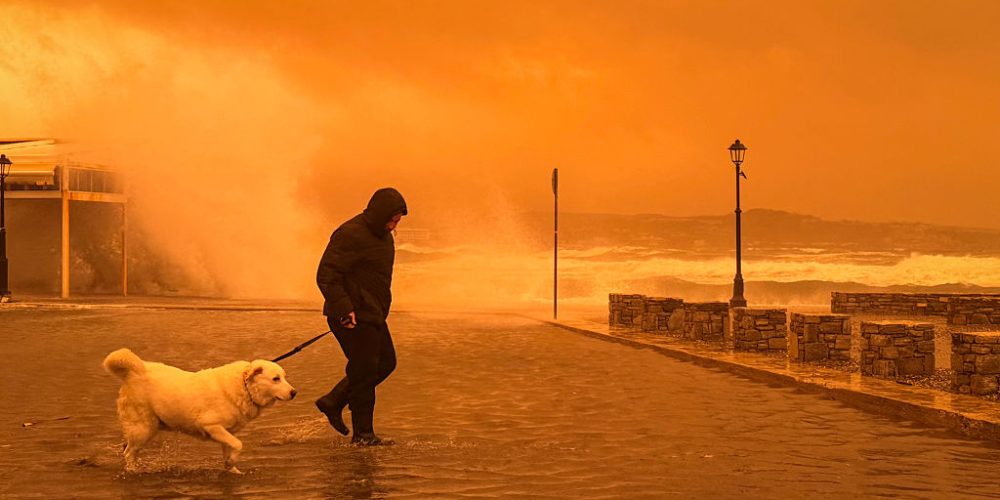
- Powerful winds blanketed the island of Crete in dense Saharan dust, turning skies an eerie orange-red.
- Severe flooding in eastern Afghanistan has claimed over 50 lives and destroyed hundreds of homes this week.
A powerful weather system named Storm Erminio has caused widespread devastation across the Mediterranean and Central Asia this week. The storm brought a lethal combination of torrential rain, thunderstorms, and gale-force winds to much of Greece. In the Attica region surrounding Athens, one weather station recorded 132mm of rainfall within a single 24-hour period.
The intense downpours proved fatal in the coastal town of Nea Makri, located northeast of the Greek capital. Authorities discovered a man dead beneath a vehicle after he was reportedly swept away by fast-moving floodwaters. Emergency services in the region received over 600 calls for assistance as streets transformed into rivers. Crews spent Thursday pumping water from flooded basements and clearing debris from damaged roads.
While the mainland battled floods, the island of Crete experienced a surreal atmospheric phenomenon. Strong southern winds of up to force 9 on the Beaufort scale carried massive quantities of Saharan dust from Africa. The resulting dust storm blanketed the island in thick orange and red clouds, severely reducing visibility. Officials issued red weather warnings as dust concentrations exceeded 1,000 micrograms per cubic metre in some areas.
The extreme conditions in Crete caused significant disruption to travel ahead of the busy Easter holiday period. Multiple flights were diverted or cancelled, and authorities banned several ferry services from departing local ports. Similar orange skies and hazy conditions were reported on nearby islands, including Santorini and Paros. In Paros, the storm caused a small bridge to collapse and swept several vehicles away.
The impact of this unstable weather extended into southeastern Italy, where heavy rain caused multiple rivers to burst their banks. At higher altitudes in the southern Apennines, the moisture fell as heavy snow, with some areas recording 1.5 metres of fresh accumulation. Avalanche warnings remain in effect for the mountains in the Marche region as strong winds continue to create dangerous snowdrifts.
Further east, prolonged heavy rainfall has triggered a humanitarian crisis in eastern Afghanistan and parts of Pakistan. More than 50 people are reported dead in Afghanistan after widespread flash flooding destroyed approximately 400 homes. The rainfall combined with seasonal snowmelt to overwhelm local infrastructure and destroy over 1,000 acres of agricultural land. Damage to the road network has left several remote districts isolated from emergency aid.
In neighboring Pakistan, at least 30 districts have experienced intense flash flooding and severe thunderstorms. Local reports confirm several deaths, including a young girl struck by lightning during the height of the storm. The extreme weather has cut off major highways and forced many residents to abandon their vehicles.
Meteorologists expect the unstable conditions to persist across much of the region through the end of the week. Emergency agencies continue to monitor rising river levels and provide assistance to displaced families in the hardest-hit provinces. The scale of the destruction highlights the increasing frequency of extreme weather events affecting both Europe and Asia.









