

KEY POINTS
- Major storms forced airlines to cancel or delay over 8,000 flights nationwide on Monday.
- Hubs in the Northeast and Midwest faced the heaviest impact from heavy rain and high winds.
- Travel experts warn that the scheduling backlog could affect passengers throughout the remainder of the week.
A powerful storm system sweeping across the United States caused widespread chaos for air travelers on Monday. Thousands of passengers found themselves stranded as airlines struggled to manage deteriorating weather conditions. Flight tracking data indicated that the total number of disrupted trips exceeded 8,000 by late evening.
Heavy rain, dense fog, and powerful wind gusts moved through critical aviation corridors during the morning rush. These conditions forced the Federal Aviation Administration to implement ground stops at several major international airports. Pilots and ground crews faced significant safety challenges as the front moved from the Midwest toward the Atlantic coast.
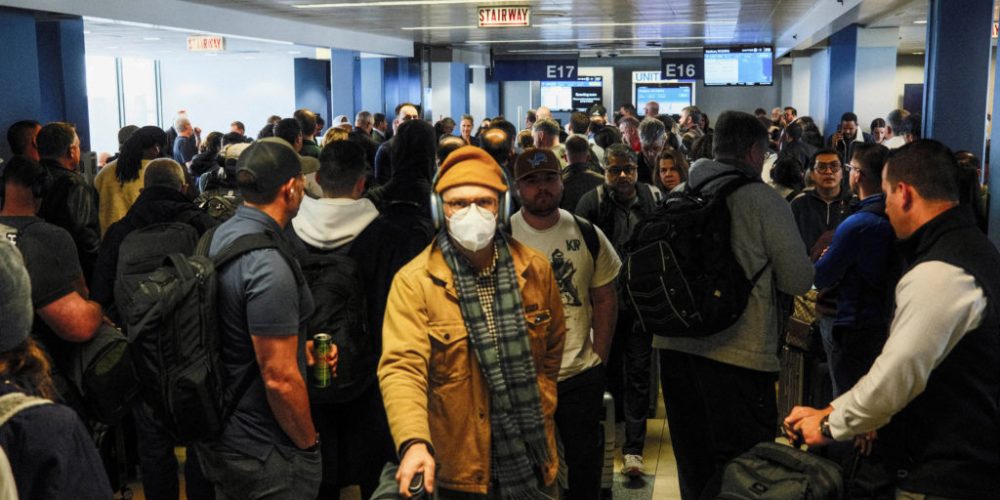
Chicago O’Hare and Newark Liberty were among the hardest-hit facilities during the peak of the storm. Both airports reported hundreds of outright cancellations before noon. Delays at these major hubs often trigger a domino effect that impacts flights in distant cities.
Airlines worked throughout the day to rebook passengers on alternative flights later in the week. However, many available seats remained scarce due to the high volume of impacted travelers. Customer service lines at several terminals grew long as frustrated travelers sought hotel vouchers and meal tickets.
Meteorologists noted that the intensity of the storm caught some scheduling departments by surprise. While rain was expected, the sustained wind speeds made takeoffs and landings impossible for several hours. Safety remained the primary concern for carriers as they grounded their fleets in the affected regions.
The disruption extended beyond commercial passenger service to impact air cargo and mail delivery. Logistics companies warned that shipping delays might occur for packages traveling through the impacted zones. Ground transportation also slowed significantly as local roads near airports flooded during the heavy downpours.
Major carriers such as United Airlines and American Airlines issued travel waivers for affected regions. these policies allow customers to change their itineraries without paying traditional change fees. Passengers are encouraged to monitor their flight status through mobile apps before heading to the airport.
Ground crews at many terminals spent the day managing the logistical nightmare of displaced aircraft and personnel. Flight attendants and pilots often timed out of their legal working hours due to the long wait times. This shortage of available crew members further complicated the efforts to resume normal operations.
By Monday night, the storm front began to move offshore into the Atlantic Ocean. While conditions improved in some areas, the backlog of flights remained a significant hurdle for Tuesday morning. Most airlines expect to operate at reduced capacity until they can reposition their planes.
Industry analysts suggest that this event highlights the vulnerability of the national grid to extreme weather. Modern airports require perfect conditions to maintain the high frequency of modern flight schedules. Even a brief window of severe weather can take days to fully resolve.









