

KEY POINTS
- Economic chiefs from the United States and China met in France for high-level trade discussions.
- The diplomatic talks aim to establish a framework for an upcoming meeting between the two presidents.
- Both nations expressed a desire to stabilize global markets despite ongoing disagreements over industrial subsidies.
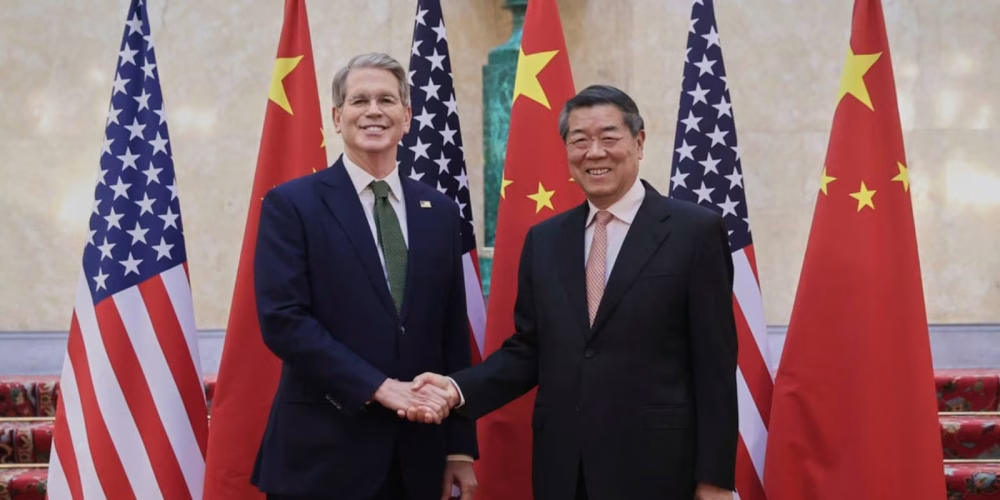
High-ranking economic officials from Washington and Beijing gathered in Paris on Sunday for crucial negotiations. These discussions serve as a foundational step toward an anticipated summit between President Donald Trump and President Xi Jinping. The meeting comes at a time of heightened global economic uncertainty and shifting trade policies.
U.S. Treasury Secretary Janet Yellen led the American delegation during the closed-door sessions at the historic Hotel de Talleyrand. Her Chinese counterpart, Vice Premier He Lifeng, represented the interests of the world’s second-largest economy. The two leaders focused on creating a clear roadmap for the upcoming presidential encounter.
The Paris talks centered on several sensitive topics including market access and technological competition. U.S. representatives raised concerns regarding Chinese industrial overcapacity and its impact on American workers. Conversely, the Chinese delegation sought clarity on recent U.S. investment restrictions and tariff structures.
Despite the complexities, both sides characterized the initial dialogue as professional and constructive. A spokesperson for the Treasury Department noted that maintaining open lines of communication remains a top priority. They aim to prevent misunderstandings that could lead to unintended economic escalation between the superpowers.
The timing of this diplomatic push is significant for international financial markets. Investors have been watching for signs of stability in the relationship between the two largest economies. A successful presidential summit could reduce volatility and provide a more predictable environment for global trade.
France acted as a neutral host for these discussions to facilitate a more relaxed atmosphere. French officials welcomed the engagement and emphasized the importance of multilateral cooperation on climate and debt. The choice of Paris reflects a broader effort to involve European partners in the de-escalation process.
Detailed planning for the Trump-Xi summit will continue through the end of the month. Working groups from both nations are scheduled to meet virtually to finalize the specific agenda items. They hope to address long-standing grievances while identifying areas where the two countries can cooperate.
Agriculture and energy exports were also briefly discussed as potential areas for immediate agreement. Expanding these trade sectors could serve as a goodwill gesture before the top-level leaders meet. However, neither side has committed to specific purchase targets or policy changes at this stage.
The world remains focused on whether these diplomatic efforts will lead to a lasting thaw. Previous attempts at reconciliation have often been derailed by sudden shifts in domestic or foreign policy. For now, the Paris meeting offers a glimmer of hope for a more managed economic rivalry.









