

KEY POINTS
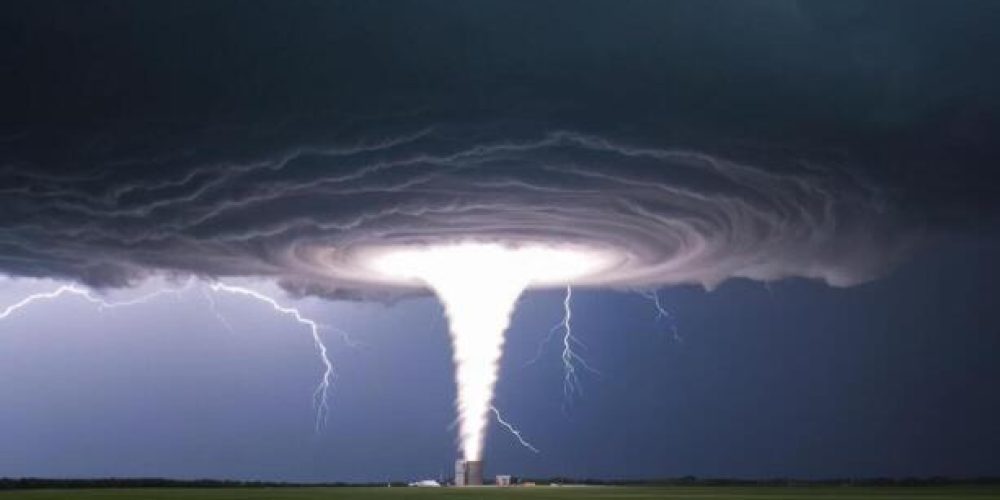
- Intense lightning strikes provided a rare, clear view of a large tornado moving through rural Indiana during a wave of severe nighttime storms.
- The visual evidence confirms the presence of a “wedge” tornado, a particularly dangerous and wide category of funnel cloud.
- Meteorologists are using the footage to study the structure of nocturnal tornadoes, which are notoriously difficult to track without the aid of natural or artificial illumination.
Striking new video footage has emerged from Indiana, showing a powerful tornado tearing across the landscape under the cover of darkness. In the video, frequent and intense cloud-to-ground lightning flashes act as a strobe light, revealing the massive scale of the funnel as it churns through the countryside. This rare visual confirmation of a “nocturnal tornado” has become a vital piece of evidence for weather researchers and local emergency services assessing the impact of the recent storm front.
Nocturnal tornadoes, such as the one captured in this video, are considered significantly more dangerous than those that occur during the day. Because they are shrouded in darkness, residents often cannot see the danger approaching, making them entirely dependent on sirens and smartphone alerts. In this specific instance, the rapid-fire lightning strikes provided a brief but terrifying look at a “wedge” tornado—a term used by meteorologists to describe a funnel that is at least as wide as it is tall. These storms are often associated with higher wind speeds and more extensive damage paths.
The atmospheric conditions that led to this event involved a sharp cold front clashing with a warm, moist air mass moving up from the Gulf of Mexico. This interaction created high “wind shear,” which is the change in wind speed and direction with height that allows storms to begin rotating. When these rotating updrafts, known as supercells, interact with the ground, they can drop tornadoes that move at speeds of 50 to 60 miles per hour, leaving very little time for those in their path to seek shelter.
The footage also highlights the phenomena known as “power flashes”—bright, often blue or green bursts of light seen on the horizon. These occur when a tornado’s winds snap high-voltage power lines or explode transformers. Combined with the lightning, these flashes helped storm chasers and local residents identify the exact location of the tornado’s path in real-time. Emergency management teams in Indiana are currently conducting ground surveys to determine the tornado’s rating on the Enhanced Fujita (EF) scale based on the structural damage left behind.
Researchers at the National Weather Service (NWS) emphasize that while the video is visually captivating, it underscores the importance of the “Integrated Warning Team” concept. This involves coordination between radar technicians, ground spotters, and the public. Even with advanced dual-polarization radar, visual confirmation from videos like this helps meteorologists “ground-truth” their data, improving the accuracy of future warnings for similar nighttime events.
As the storm system moves east, authorities are reminding the public that “rain-wrapped” and “nighttime” tornadoes remain the most lethal types of severe weather. The recommendation for anyone in a warned area is to move to the lowest possible floor of a sturdy building, putting as many walls between themselves and the outside as possible. This Indiana footage serves as a stark reminder of the power of these storms and the critical role that lightning plays in revealing hidden threats during the night.









