KEY POINTS
- Iran’s newly appointed leader remains largely out of the public eye following a significant power shift within the nation.
- Expert analysis suggests the Islamic Revolutionary Guard Corps played a central role in the rapid elevation of the new leadership.
- The silence from the top office has sparked international debate regarding future domestic policies and regional diplomatic strategies.
A period of notable quiet has descended upon Tehran’s highest political office following the recent transition of power. The newly established leader of the Islamic Republic has yet to make a major public address or outline a specific legislative agenda since taking office. This prolonged silence is drawing intense scrutiny from global political analysts and local citizens alike. While the official state media continues to broadcast routine administrative updates, the lack of a clear personal platform from the leadership is seen as an unusual departure from traditional Iranian political transitions.
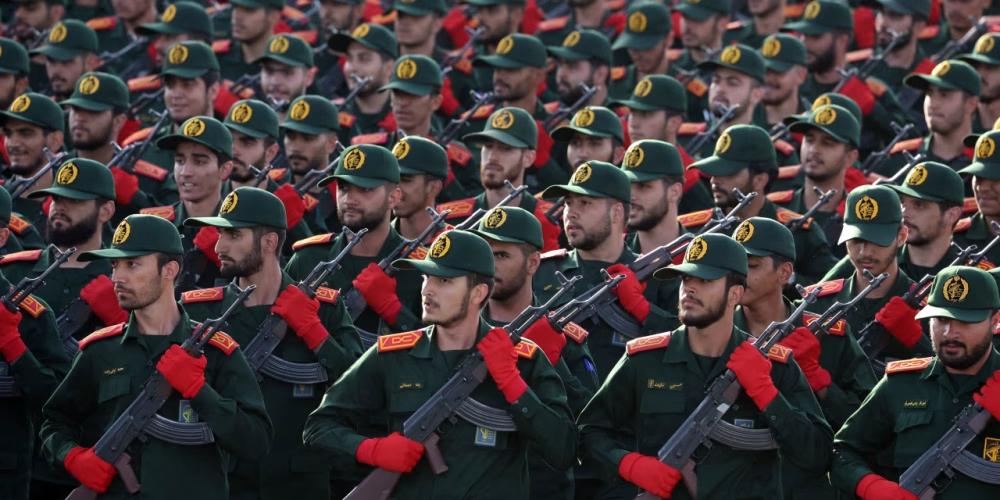
Behind this emerging leadership structure, observers point to the decisive influence of the Islamic Revolutionary Guard Corps (IRGC). The elite military and political organization appears to have been instrumental in managing the succession process, ensuring stability during a sensitive period for the government. Reports indicate that the new leader’s rise was heavily supported by high-ranking officials within the Guards, suggesting that the organization will maintain, if not expand, its significant role in national governance and economic management moving forward.
The current political climate in Iran is marked by a delicate balance between maintaining institutional continuity and addressing internal pressures. International observers are closely watching for any signs of a shift in foreign policy, particularly concerning ongoing regional tensions and nuclear negotiations. However, the current lack of communication makes it difficult to determine if the administration will pursue a more isolationist path or engage in new diplomatic dialogues. The IRGC’s involvement typically signals a commitment to the established revolutionary principles and a cautious approach to Western engagement.
Domestically, the Iranian public is waiting for clarity on how the new administration intends to handle pressing economic challenges. Inflation and infrastructure needs remain top priorities for the population, yet the leadership’s current focus seems to be centered on internal consolidation and security. The relationship between the civilian government and the military elite is expected to be a defining characteristic of this era. As the Revolutionary Guards solidify their position as the primary power brokers, the space for independent political movement within the country may become increasingly narrow.
Historically, Iranian leaders have used early public speeches to signal their intent to the world and their supporters. The decision to remain silent suggests a strategy of cautious deliberation or perhaps an ongoing negotiation between various power factions within the capital. This atmospheric uncertainty has led to various interpretations regarding the actual level of autonomy the new leader will possess. If the Revolutionary Guards continue to dictate the pace and tone of the transition, the office of the leader may function more as a unified front for the military’s broader strategic goals.
As the days pass without a definitive statement, the international community remains in a state of watchful anticipation. The outcome of this transition will have profound implications for the Middle East’s geopolitical landscape and global energy markets. For now, the image of the new Iranian leadership remains one of mystery, defined more by the powerful institutions that facilitated the rise than by the individual at the center of the change.