

KEY POINTS
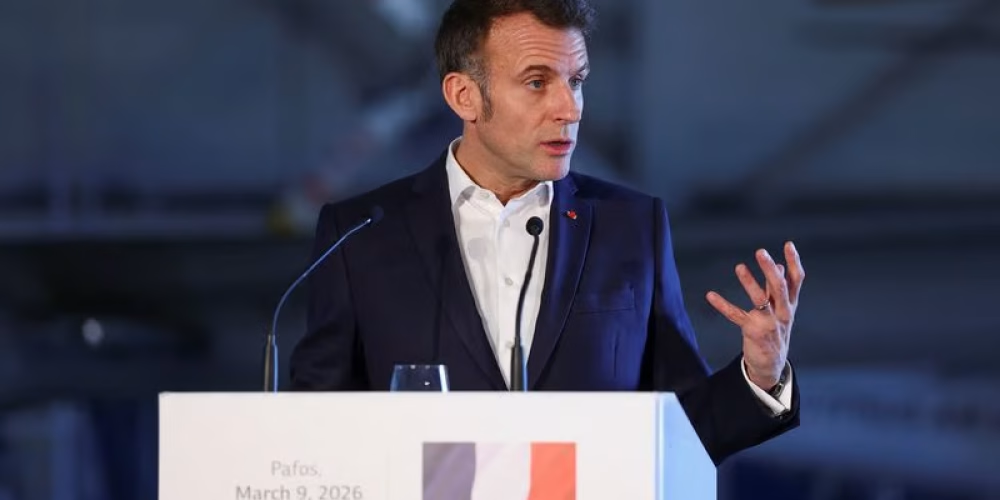
- President Emmanuel Macron confirmed the dispatch of two French frigates to the Middle East.
- The naval mission aims to protect commercial shipping from increasing regional missile threats.
- France maintains its independent command structure while coordinating with international partners.
France has officially increased its military presence in the Middle East following a strategic announcement from the Elysee Palace. President Emmanuel Macron confirmed on Monday that the French Navy will deploy two advanced warships to the Red Sea. This decision responds directly to the escalating security crisis currently disrupting global maritime commerce.
The primary objective of the French mission is the protection of merchant vessels traveling through the Bab el-Mandeb strait. Recent hostilities in the region have led to a sharp increase in drone and missile attacks on cargo ships. Many international shipping companies have already diverted their fleets around the southern tip of Africa. These detours have added significant costs and delays to the global supply chain.
President Macron emphasized that the deployment is a necessary step to maintain the freedom of navigation. He noted that the French vessels possess advanced anti-air capabilities to intercept incoming aerial threats. This technical edge is crucial for defending unarmed tankers and container ships in the narrow waterway. The mission underscores France’s commitment to protecting its economic interests and those of its European allies.
While France is coordinating with other Western nations, the Ministry of Defense clarified its operational status. The French frigates will remain under national command rather than joining a broader US-led coalition. This independent approach allows Paris to manage its diplomatic relations while still contributing to regional stability. French officials believe this strategy provides more flexibility during the rapidly evolving conflict.
The deployment comes as European nations face mounting pressure to secure energy and goods shipments. High insurance premiums and fuel surcharges have already begun to impact domestic prices across the continent. By providing a military escort, France hopes to encourage shipping firms to return to the shorter Suez Canal route. Success in this area could help stabilize the volatile energy markets currently affecting the global economy.
Military experts suggest that the French Navy is well-prepared for this specific type of maritime surveillance. The crews have undergone extensive training in electronic warfare and rapid response tactics. One of the deployed ships recently completed a similar patrol in the Mediterranean, providing the team with fresh operational experience. This readiness is vital as the frequency of regional attacks continues to fluctuate.
The French government also remains engaged in high-level diplomatic discussions to find a political solution to the crisis. Macron reiterated that military force alone cannot solve the underlying causes of the regional instability. However, he maintained that the immediate safety of sailors and cargo must be guaranteed by force if necessary. France plans to keep the warships in the area for an initial period of four months.
International observers are monitoring the impact of the increased naval presence on the ongoing conflict. The arrival of the French frigates adds a significant layer of deterrence against further maritime aggression. As the ships enter the Red Sea, the world waits to see if trade flow returns to normal levels.









