

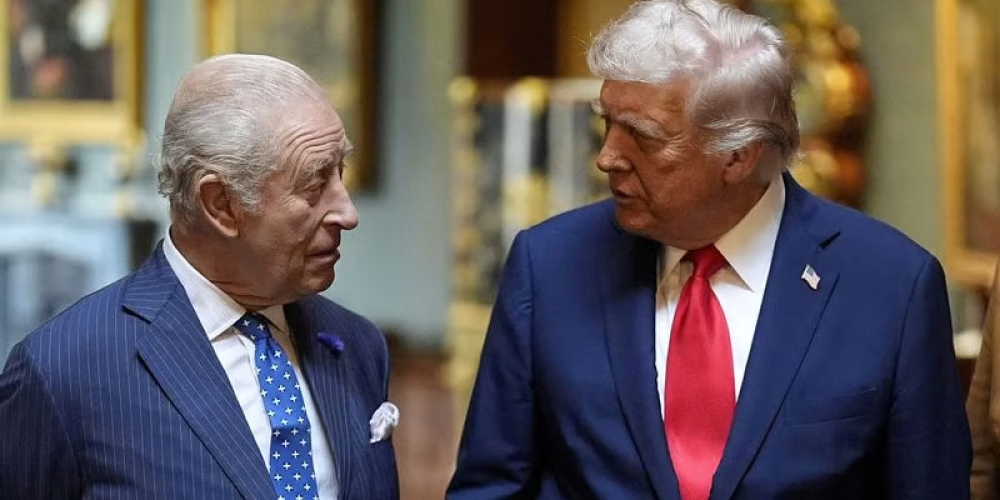
KEY POINTS
- Ed Davey called for the government to scrap the upcoming royal trip to Washington.
- The Liberal Democrat leader cited recent aggressive rhetoric from the U.S. President as the cause.
- Buckingham Palace and the Prime Minister have not yet altered the scheduled diplomatic visit.
A prominent British politician has formally requested the cancellation of King Charles III’s upcoming state visit to the United States. Sir Ed Davey, leader of the Liberal Democrats, issued the demand during a public address on Monday. He argued that current diplomatic conditions make the high-profile trip inappropriate for the British monarch.
The controversy stems from recent public statements made by the American President regarding international relations and trade. Davey described these comments as deeply offensive and inconsistent with the values of the United Kingdom. He suggested that proceeding with the visit would signal an endorsement of divisive American policies.
The planned trip was intended to strengthen the “special relationship” between the two historical allies. State visits represent the highest level of diplomatic engagement and involve significant ceremonial honors. However, Davey maintains that the current political climate in Washington has turned the event into a liability.
The Liberal Democrat leader specifically pointed to threats of trade retaliations against European nations as a primary concern. He noted that the U.S. administration has taken an increasingly hostile tone toward long-standing security partners. In his view, a royal visit should only occur when there is mutual respect between the two governments.
Downing Street has faced growing pressure to respond to these calls for a diplomatic boycott. Prime Minister Keir Starmer has so far resisted demands to withdraw the invitation or cancel the King’s travel plans. Government officials emphasized that maintaining open lines of communication with Washington remains a top national priority.
Buckingham Palace traditionally remains neutral in political disputes and follows the advice of the sitting government. A spokesperson for the Palace declined to comment on the specific remarks made by the Liberal Democrat leader. For now, preparations for the royal departure continue behind the scenes in London and Washington.
Public opinion in the UK appears divided over how to handle the escalating tensions with the American administration. Some citizens believe the King should act as a bridge-builder to de-escalate the current global friction. Others agree with Davey, fearing that the monarch could be used as a political prop during the visit.
The timing of the visit is particularly sensitive given the ongoing military conflicts in the Middle East. Any royal appearance alongside the U.S. President would likely draw global scrutiny from both allies and adversaries. This puts the British government in a difficult position as they weigh security interests against diplomatic protocol.
If the trip proceeds, it will be the first time King Charles meets the current U.S. President in a formal state capacity. Security experts suggest that protests are likely to occur in both London and the American capital. The final decision rests with the Prime Minister’s office, which continues to monitor the situation daily.









