KEY POINTS
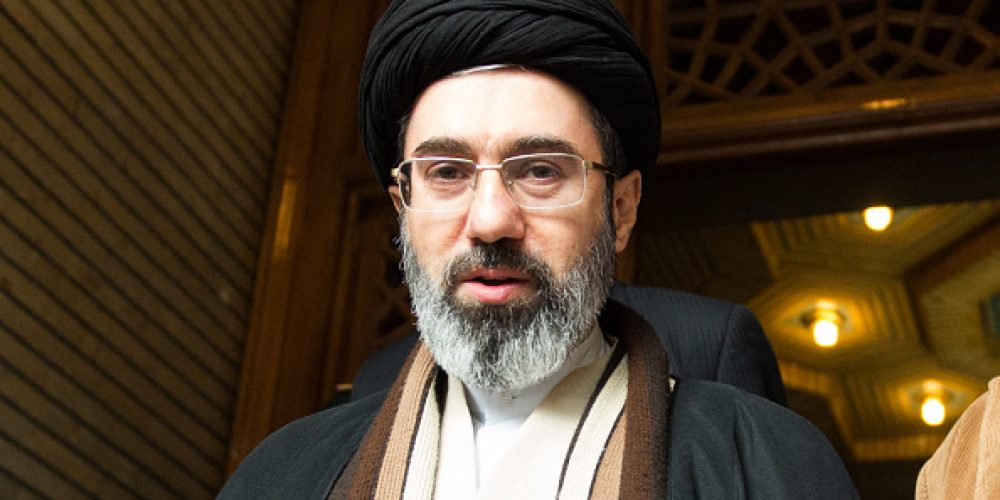
- The Assembly of Experts has officially named Mojtaba Khamenei, the 56-year-old son of the late Ayatollah Ali Khamenei, as Iran’s new Supreme Leader.
- The appointment marks the first time since the 1979 Revolution that the nation’s highest authority has passed from father to son, effectively establishing a dynastic succession.
- The leadership transition occurs during the 10th day of a high-intensity war involving the U.S. and Israel, which claimed the life of the elder Khamenei on February 28, 2026.
In a move that signals a hardening of the Islamic Republic’s stance, Iran has appointed Mojtaba Khamenei to succeed his father as Supreme Leader. The decision, announced by the Assembly of Experts just after midnight on Monday, March 9, 2026, places the secretive cleric at the helm of the country’s armed forces and nuclear program during its most significant military challenge in decades. Despite threats of airstrikes on their headquarters in Tehran and Qom, the 88-member clerical body held an emergency session—reportedly virtual in some parts—to confirm the succession through what they termed a “decisive vote.”
Mojtaba Khamenei’s rise is a historic departure from the anti-monarchical foundations of the 1979 Revolution. For years, the younger Khamenei operated as a powerful “gatekeeper” within his father’s office, building deep-seated ties with the Islamic Revolutionary Guard Corps (IRGC). His appointment was immediately met with pledges of “complete obedience and self-sacrifice” from the IRGC leadership. While he has never held an elected office or a formal government role, he is viewed as a hardline ideological successor who is likely to maintain or even intensify the current military confrontation.
The transition comes at a moment of extreme regional volatility. The war has already resulted in the deaths of several senior Iranian figures, including Mojtaba’s wife, Zahra Haddad-Adel, who was killed in the same strike that took his father’s life. In his first hours as leader, Iranian state media showcased missiles bearing the slogan “At your command, Sayyid Mojtaba,” and the military launched a new wave of strikes toward Israel. Meanwhile, global energy markets have reacted violently, with oil prices surging past $114 per barrel amid fears of prolonged disruptions in the Strait of Hormuz.
The international response has been sharp and divided. U.S. President Donald Trump has called Mojtaba Khamenei an “unacceptable” choice and a “lightweight,” suggesting that any leader who does not have Washington’s approval “is not going to last long.” Conversely, regional allies such as Yemen’s Houthi rebels have hailed the appointment as a “major blow” to Iran’s enemies. Israel, which has already designated the new leader as a potential target, responded to the announcement with fresh strikes on “regime infrastructure” in central Iran.
Domestically, the move toward hereditary rule is expected to ignite intense debate among Iranians, many of whom remember the revolution’s promise to end dynastic power. However, with the country under active bombardment and the theocracy’s survival at stake, the regime appears to be prioritizing continuity and security over internal reform. Analysts suggest that the IRGC’s heavy influence in the selection process ensures that the military’s interests will remain paramount in the new leader’s agenda.
As Mojtaba Khamenei takes charge, he inherits a nation reeling from over a week of heavy U.S. and Israeli bombardment, a crippled nuclear infrastructure, and a surging civilian death toll. His ability to consolidate power while managing a multi-front war will determine the future of the Islamic Republic. For now, the “shadowy” figure of the past has stepped into a very bright and dangerous spotlight, and the world is watching to see if he will pursue a path of total escalation or eventually seek a way out of the conflict.