

KEY POINTS
- Strategic Independence: President Trump informed British Prime Minister Keir Starmer that the United States does not require UK military participation to achieve its objectives in Iran.
- Tensions with Allies: The declaration highlights a growing rift in the “Special Relationship” as the U.S. pivots toward a unilateral military strategy in the Middle East.
- Operational Shift: Pentagon officials suggest the U.S. is confident in its solo capabilities to dismantle Iranian strategic assets without coalition constraints.
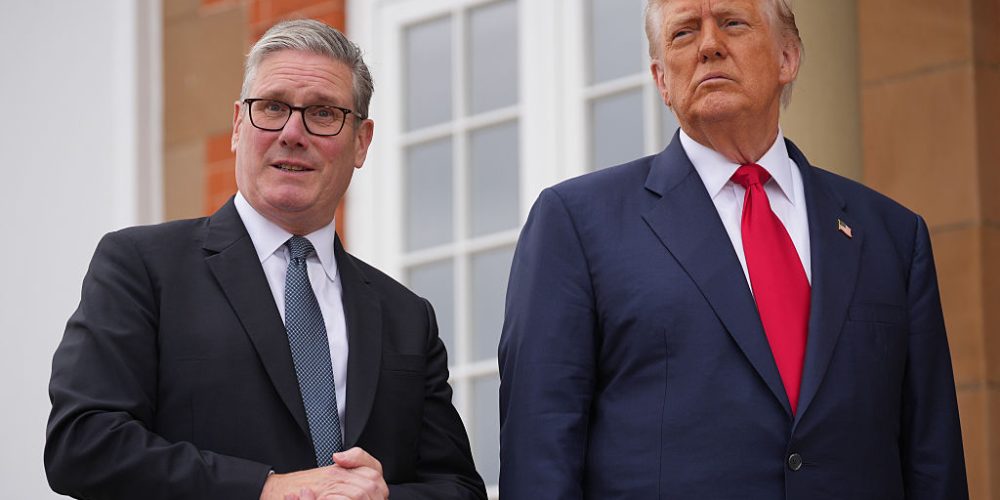
In a move that has sent shockwaves through the halls of Westminster, President Donald Trump has pointedly told the United Kingdom that its military assistance is not required for the United States to win the ongoing war with Iran. The exchange, which occurred during a high-stakes diplomatic call on Saturday, marks one of the most significant public divergences in U.S.-UK defense policy in decades.
The President’s message was reportedly clear: the United States possesses the overwhelming technological and logistical superiority necessary to conclude the conflict on its own terms. By sidelining one of its closest historical allies, the administration is signaling a “U.S.-First” approach to regional security that prioritizes speed and unilateral decision-making over the traditional, often slower, coalition-building process.
Downing Street responded with a measured statement, emphasizing the UK’s commitment to regional stability and the safety of British interests in the Gulf. However, behind the scenes, British defense officials are reportedly concerned about being “frozen out” of critical intelligence sharing and post-war planning. The snub comes at a time when the Royal Navy has already increased its presence in the region to protect commercial shipping.
Military analysts suggest that the President’s stance is designed to avoid the “red tape” and differing Rules of Engagement (ROE) that often complicate multi-national operations. By operating independently, the U.S. Air Force and Navy can execute high-intensity strikes against Iranian nuclear and missile facilities with maximum flexibility. This “solo-strike” philosophy is a cornerstone of the administration’s current military doctrine.
The geopolitical implications of this rift are profound. European allies, led by France and Germany, have viewed the U.S. dismissal of British aid as a sign that the trans-Atlantic security architecture is undergoing a fundamental shift. Some observers worry that if the U.S. continues to act alone, it may face greater difficulties in securing international legitimacy for its long-term goals in a post-conflict Middle East.
Domestically, the President’s supporters have praised the move as a demonstration of American strength and a refusal to be bogged down by “endless consultations.” Critics, however, warn that alienating key allies during an active war increases the risk of strategic isolation if the conflict takes an unexpected turn. For now, the U.S. military is proceeding with its autonomous campaign, leaving the UK and other traditional partners to watch from the sidelines.









