

KEY POINTS
- A massive Saharan dust cloud is sweeping across Europe, threatening to bring “blood rain”—a phenomenon where desert sand mixes with precipitation to create reddish, muddy showers.
- The weather event has already impacted the Iberian Peninsula and is forecast to reach southern England and parts of Northern Europe by Thursday evening.
- While the name sounds ominous, meteorologists confirm the rain is harmless to health, though it is expected to leave a significant layer of residue on vehicles and outdoor surfaces.
A rare and visually striking atmospheric event is currently unfolding across the European continent as a vast plume of Saharan dust migrates north from Africa. This weather phenomenon, often referred to as “blood rain,” occurs when high concentrations of reddish desert sand and mineral particles are lifted into the upper atmosphere by strong winds and subsequently washed out by falling rain. As these dust-laden droplets strike the ground, they leave behind a distinct, rust-colored film that has already begun coating streets and vehicles in several Mediterranean nations.
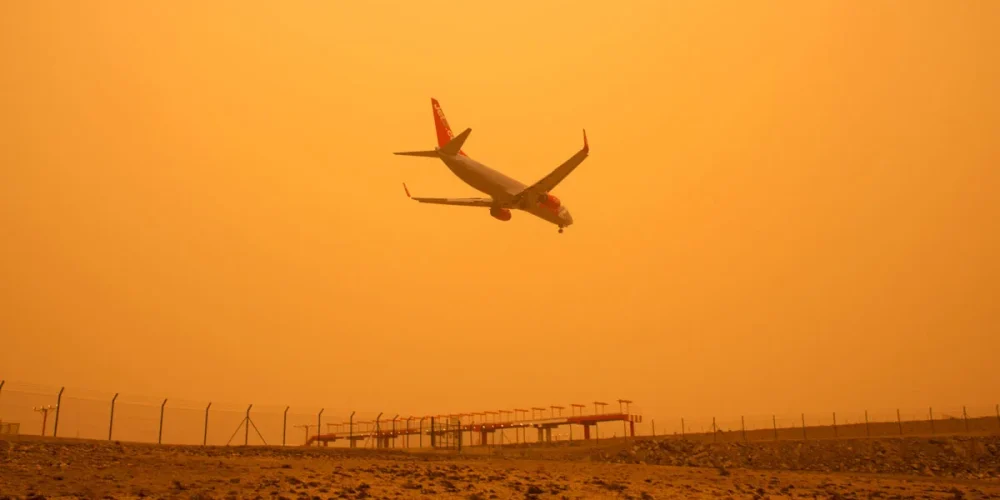
The arrival of the dust is being driven by a specific meteorological setup involving a high-altitude depression near North Africa and the Canary Islands. This system is effectively acting as a vacuum, sucking up immense quantities of sand from Morocco and Mauritania and funneling it toward the Iberian Peninsula. In Spain and Portugal, the dust has already collided with a storm system named Regina, resulting in muddy downpours that have turned skies an eerie orange and significantly reduced air quality in major urban centers.
By Thursday evening, the leading edge of this Saharan plume is expected to reach the United Kingdom and parts of Scandinavia. Forecasters at the Copernicus Atmosphere Monitoring Service (CAMS) have been tracking the movement of the aerosols, noting that the highest concentrations will likely pass over southern England. While the rain in these regions may not appear deep red, residents are likely to wake up to “muddy” residue on their cars and windows as the water evaporates, leaving the fine desert silt behind.
Beyond the physical residue, the presence of these particles in the atmosphere is creating spectacular visual effects during the “golden hours” of the day. As the sun rises and sets, the suspended dust scatters shorter blue light waves and allows longer red and orange waves to pass through, resulting in exceptionally vibrant, fiery skies. These hazy conditions are expected to persist through the end of the week, offering photographers unique opportunities while simultaneously posing a minor nuisance for those tasked with cleaning outdoor furniture and swimming pools.
Health officials have issued mild advisories for individuals with pre-existing respiratory conditions, such as asthma, as the increased particulate matter at lower altitudes can occasionally irritate the lungs. However, for the general population, the event is considered a harmless curiosity of nature. Experts emphasize that the term “blood rain” is purely descriptive of the color and does not imply any biological or hazardous components in the water.
This event serves as a reminder of the interconnectedness of global weather systems, where a windstorm in the Sahara can dictate the color of the rain thousands of miles away in London or Copenhagen. As the plume continues its northward trajectory, it is expected to gradually dissipate, with the most intense “blood rain” limited to areas where the dust intersects with active Atlantic storm fronts. Travelers and residents in the affected zones are encouraged to monitor local weather updates and perhaps delay car washes until the plume has fully passed.









