

KEY POINTS
- High-intensity tornadoes have caused catastrophic structural damage, with mobile homes being completely uprooted and wrapped around trees.
- Emergency responders are navigating debris-clogged roads to conduct search and rescue operations in the hardest-hit residential zones.
- Meteorologists confirm that the storm system produced rare, violent debris balls visible on radar, indicating extreme ground-level destruction.
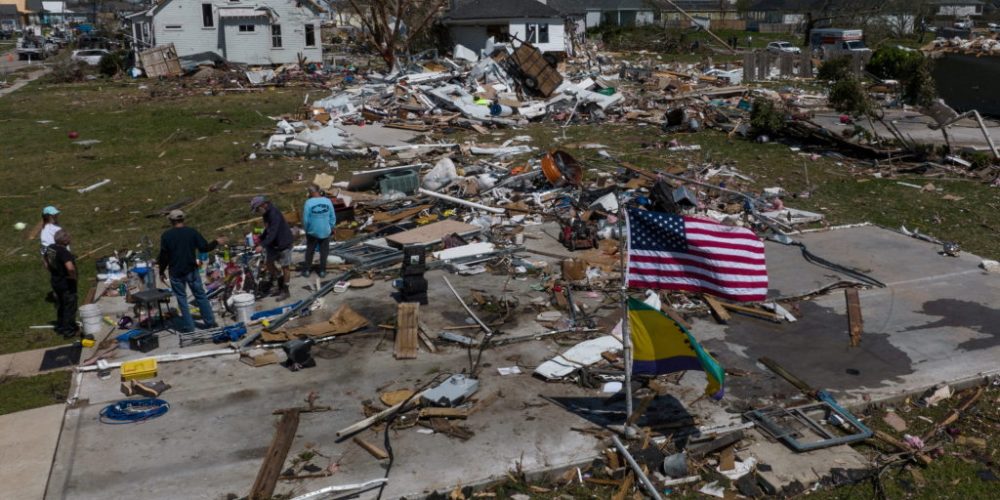
A violent weather system has left a trail of unimaginable destruction across the Southern United States, turning quiet neighborhoods into disaster zones. Aerial and ground-level footage from the aftermath shows the sheer power of the atmospheric vortex, which possessed enough force to lift heavy dwellings from their foundations. In one of the most jarring images of the storm’s fury, the remnants of mobile homes were found twisted like scrap metal around standing timber, highlighting the lethal wind speeds generated by the twister.
The localized impact of the storm has been described by survivors as sudden and total. Many residents had only minutes to seek shelter after sirens began to wail. Those living in manufactured housing were particularly vulnerable, as the winds easily overcame standard anchoring systems. In several communities, entire blocks of housing have been reduced to splinters, leaving families to scavenge through the rubble for personal belongings and essential documents.
National Weather Service survey teams are currently on the ground to determine the official rating of the tornado on the Enhanced Fujita scale. Preliminary observations suggest a high-end event, given the way the storm manipulated heavy objects and stripped bark from trees. Debris from the homes was reportedly lofted thousands of feet into the air, falling miles away from the point of impact. This “debris signature” on radar provided an early, grim warning to meteorologists that a life-threatening event was occurring in real-time.
Infrastructure in the affected regions has suffered a massive blow. Power lines were snapped like toothpicks, and utility poles were dragged across highways, cutting off electricity to tens of thousands of customers. Local authorities have issued a plea for residents to stay off the roads to allow heavy machinery and ambulances to reach the most isolated victims. The complexity of the cleanup is immense, as the tangled mess of metal, wood, and downed wires poses significant safety risks to recovery crews.
Community centers and local churches have opened their doors to provide temporary housing for those who lost everything. As the shock of the event begins to wear off, the focus is shifting toward the long-term recovery of these rural towns. Federal and state agencies are expected to conduct damage assessments to determine the level of financial aid required to rebuild. For many, however, the psychological toll of seeing their homes literally wrapped around the landscape will take much longer to heal.
With more severe weather predicted for the coming days, officials are urging the public to remain vigilant. The transition into the peak of the spring storm season often brings volatile conditions to this “Tornado Alley” extension. Residents are encouraged to review their safety plans and ensure they have multiple ways to receive weather warnings, especially during overnight hours when the danger is hardest to detect.









