

KEY POINTS
- Digital metadata in leaked government documents has identified several private architectural and engineering firms designing massive new ICE detention sites.
- The plans involve “mega centers”—converted industrial warehouses designed to hold upwards of 5,000 to 10,000 detainees each.
- Privacy advocates warn that the move toward massive, high-capacity facilities on military bases and in warehouses bypasses traditional oversight and safety standards.
A recent digital investigation has pulled back the curtain on the secretive expansion of the U.S. immigration detention system. By analyzing embedded metadata in documents related to the Detention Reengineering Initiative (DRI), researchers have identified the private-sector architects and engineers behind the government’s “mega center” plans. These companies are working with Immigration and Customs Enforcement (ICE) to rapidly scale up bed capacity to a target of over 92,000 by late 2026.
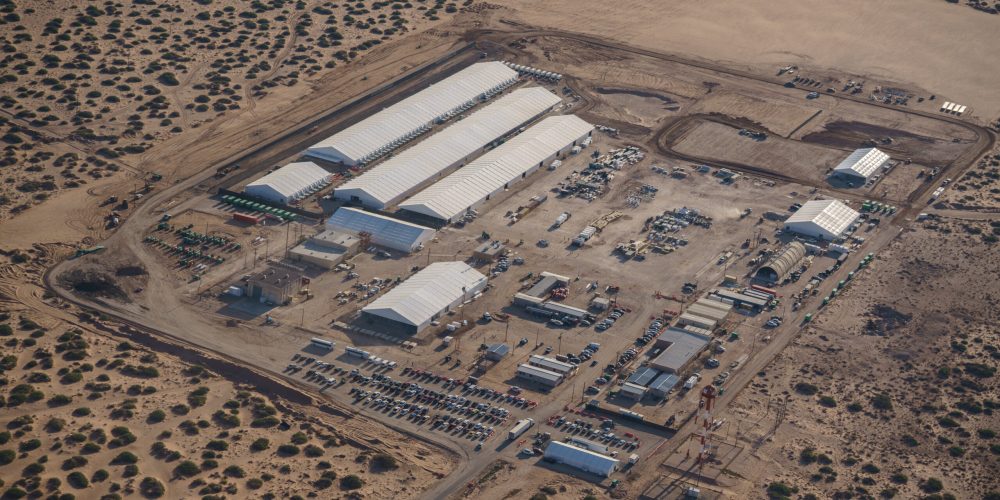
The documents detail a shift in detention strategy toward ultra-high-capacity facilities. Unlike traditional detention centers, these “mega centers” are often repurposed industrial warehouses or base camps on military property. Plans include four massive sites capable of holding 10,000 people each, along with 14 smaller satellite locations. These facilities are designed to support a projected surge in enforcement operations and mass deportations.
The use of metadata to identify the authors of these plans has sparked intense debate over corporate accountability. While the government often redacts the names of individuals and private firms from public filings, the digital footprints left in the document properties reveal the specific engineering groups designing wastewater systems and infrastructure for the sites. Critics argue that these firms are enabling a system that lacks proper ventilation, medical facilities, and legal access for detainees.
The expansion also involves the use of Department of Defense assets, including the potential use of Guantánamo Bay for thousands of ICE detainees. This integration of military and civil enforcement has raised alarms among civil rights organizations like the ACLU. They contend that housing civilians on military bases further obscures transparency and removes minimal existing oversight.
Local resistance to these plans is growing across the United States. In states like Virginia, North Carolina, and Pennsylvania, communities and local leaders have moved to block the conversion of warehouses and former correctional facilities into ICE centers. Property owners have refused to sell, and some state legislators are passing laws to prohibit the construction of private detention centers in their jurisdictions.
As the administration moves toward a November 2026 deadline for activating these new facilities, the legal and moral battle continues. Religious leaders and human rights advocates have labeled the mega-detention plan a “moral inflection point,” warning of the human toll of such large-scale incarceration. The unmasking of the private contractors involved adds a new layer to the conflict, as activists target the professional firms facilitating the expansion.









