KEY POINTS
- The Royal Navy recently completed a high-stakes mission tracking multiple Russian submarines navigating the strategic waters of the North Atlantic.
- British Type 23 frigates and Merlin helicopters were deployed to maintain constant surveillance on the vessels to ensure regional maritime security.
- This operation underscores heightened geopolitical tensions and the increasing frequency of underwater activity near critical European infrastructure.
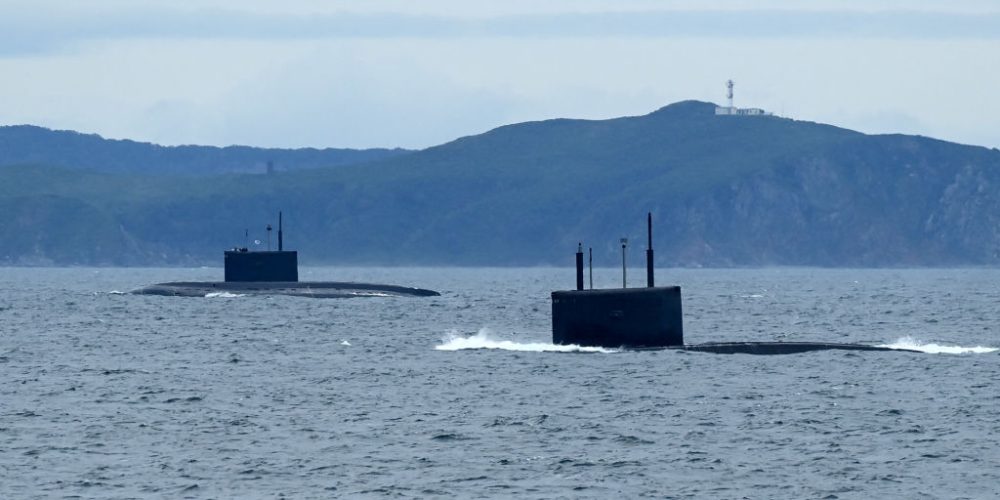
The British Royal Navy has confirmed a month-long operation to intercept and shadow several Russian submarines moving through the North Atlantic toward the Norwegian Sea. In a display of maritime vigilance, UK warships and aerial assets were mobilized to track the vessels as they transited through international waters close to the British Isles. For many in the West, this serves as a potent reminder of the silent but intense “shadow war” currently taking place beneath the surface of the world’s most vital shipping lanes.
What You Need to Know
The North Atlantic has historically served as the primary corridor for naval movements between Russia’s Northern Fleet and the open ocean. Since the escalation of the conflict in Ukraine, NATO members have reported a significant uptick in Russian naval activity, particularly involving advanced quiet-running submarines. These vessels are capable of carrying cruise missiles and are often suspected of conducting reconnaissance on the vast network of subsea cables that facilitate global internet and financial transactions.
The UK’s involvement in these tracking missions is part of a broader collective defense strategy. Monitoring the “GIUK Gap“—the naval chokepoint between Greenland, Iceland, and the United Kingdom—is essential for Western security. If hostile vessels were to pass through this area undetected, they could theoretically threaten the eastern seaboard of North America or disrupt the reinforcement routes used by NATO in the event of a wider European conflict.
This latest mission involved the HMS Richmond and other frontline frigates, which are specifically designed for anti-submarine warfare. These ships utilize advanced sonar arrays and carry helicopters equipped with dipping sonars and torpedoes. The goal of such operations is rarely direct confrontation; instead, it is about “persistent presence”—letting the opposition know that their movements are being watched in real-time, thereby deterring any potential sabotage or unauthorized intelligence gathering.
Monitoring Russian Submarines and Strategic Security
The recent tracking effort was not an isolated event but rather a sustained month of high-readiness operations. British crews worked in grueling North Atlantic conditions to maintain a “lock” on the Russian vessels, which included both nuclear-powered attack submarines and diesel-electric models. The Royal Navy highlighted the professionalism of its sailors, noting that the ability to find and follow these elusive targets is one of the most complex tasks in modern warfare.
The Merlin Mk2 helicopters played a decisive role, acting as the eyes and ears of the fleet from the sky. These aircraft can cover vast areas of the ocean far faster than a surface ship, using acoustic buoys to listen for the distinctive “signature” of Russian engines. Once a contact is established, the frigate takes over, using its own hull-mounted sonar to maintain a constant shadow. This “cat and mouse” game is a staple of Cold War-era tactics that have seen a dramatic resurgence in the 2020s.
Military analysts suggest that Russia’s increased presence in these waters is intended to test Western response times and acoustic capabilities. By sending multiple vessels simultaneously, the Russian Navy forces NATO to stretch its resources and reveal its tracking patterns. The UK’s successful interception of every vessel in this group sends a clear message to Moscow regarding the readiness of the Royal Navy’s specialized anti-submarine units, even as the British military faces broader debates over budget constraints and fleet size.
The operation also involved coordination with maritime patrol aircraft from allied nations, illustrating the integrated nature of Atlantic defense. While the Russian vessels remained in international waters throughout their transit, their proximity to territorial boundaries necessitates this level of response. The Royal Navy stated that these interactions were conducted professionally, though the frequency of such encounters is now at its highest level in over three decades.
Why This Matters
For Americans, the stability of the North Atlantic is directly linked to domestic economic security. Approximately 97% of global communications and trillions of dollars in daily financial transfers travel through undersea fiber-optic cables. Any disruption to these lines—whether through accidental damage or intentional sabotage—would cause an immediate and catastrophic “blackout” of digital services across the United States. The Royal Navy’s work in the Atlantic acts as a first line of defense against state actors who might seek to hold this infrastructure at risk.
Furthermore, this maritime activity impacts global energy markets. The North Atlantic is home to significant oil and gas pipelines that supply Europe and, by extension, stabilize global energy prices. In an era where “hybrid warfare” is a reality, the presence of Russian submarines near these assets creates market volatility and raises insurance costs for shipping companies. For the American consumer, a secure Atlantic means more stable prices at the pump and a more resilient global supply chain.
NCN Analysis
The Royal Navy’s successful month-long patrol is a tactical win, but it points toward a challenging long-term trend. As Russia continues to modernize its underwater fleet with “Severodvinsk-class” and “Kilo-class” vessels, the technological gap that once favored the West is narrowing. These newer Russian submarines are significantly quieter and harder to detect than their predecessors, requiring NATO to invest more heavily in autonomous underwater vehicles and permanent sea-floor sensor arrays.
Looking ahead, we expect to see an increase in permanent NATO deployments in the North Sea and North Atlantic. The integration of Sweden and Finland into the alliance has already changed the geography of northern defense, but the “blue water” of the Atlantic remains the UK and US’s primary responsibility. Readers should watch for upcoming defense budget announcements in London and Washington; the success of these missions will likely be used to justify the high cost of replacing aging frigate fleets with the new Type 26 and Type 31 ships.
The silent struggle for control of the deep is intensifying, and the Atlantic remains the most critical theater for Western naval power.
Reported by the NCN Editorial Team