KEY POINTS
- The Lakers’ game against the Warriors is vital for maintaining their position in a highly competitive Western Conference playoff race.
- Injuries to LeBron James and Anthony Davis have left the Lakers with a severely depleted roster and a lack of interior defense.
- A healthy Golden State squad is positioned to exploit the Lakers’ lack of depth with their trademark high-tempo offense.
The Los Angeles Lakers are entering one of the most precarious stretches of their 2025-26 campaign as they prepare to host the Golden State Warriors on Thursday night. With multiple starters sidelined and their postseason positioning hanging in the balance, the team must find a way to stabilize a roster decimated by recent physical setbacks. This matchup represents a critical juncture for a franchise that has struggled to maintain consistency throughout a grueling Western Conference schedule.
What You Need to Know
The rivalry between the Los Angeles Lakers and the Golden State Warriors has defined the modern era of professional basketball, serving as a perennial draw for global audiences. Entering the spring of 2026, both franchises find themselves in vastly different positions than their championship heydays, yet the intensity of their encounters remains unchanged. The Lakers, led by an aging yet still formidable core, have spent the season fighting for a top-six seed to avoid the unpredictability of the Play-In Tournament. However, the physical toll of the 82-game season has finally caught up to the roster, leaving head coach JJ Redick with a patchwork rotation.
Injuries have been the primary narrative surrounding the Lakers for much of this decade. The 2025-2026 season was intended to be a resurgence, built on a mix of veteran leadership and young, high-motor wings. While the team showed flashes of brilliance during the mid-season tournament and early winter, a string of lower-body injuries to key rotational players has stalled their momentum. The Western Conference standings are currently so tightly packed that a three-game losing streak can drop a team from home-court advantage to the eleventh seed, making every remaining contest a “must-win” scenario.
Conversely, the Golden State Warriors have managed to maintain a relatively healthy roster, leveraging their proprietary “motion” offense to stay competitive in an increasingly athletic league. Their visit to Los Angeles comes at a time when the Lakers are at their most vulnerable. Historically, the Lakers have relied on their size and interior dominance to neutralize the Warriors’ perimeter shooting, but with their frontcourt depth currently compromised, the tactical advantage has shifted toward Northern California.
The Lakers Injury Crisis and the Battle for the West
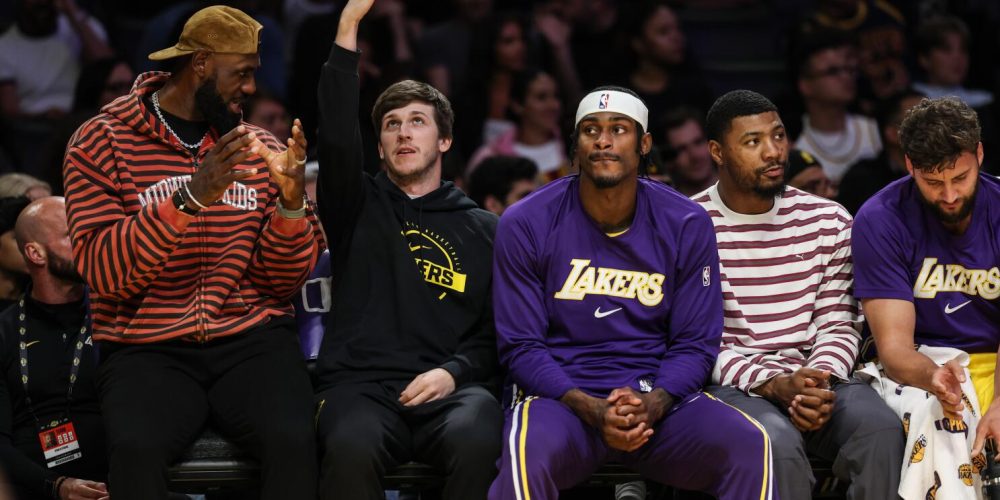
The current Lakers injury crisis reached a breaking point this week when the team’s medical staff confirmed that both Anthony Davis and LeBron James are dealing with lingering issues that will limit their effectiveness, if they play at all. Davis, who has been the defensive anchor of the team, is managing a calf strain that has sidelined him for the previous two games. Without his presence in the paint, the Lakers’ defensive rating has plummeted, forcing the perimeter defenders to over-rotate and leaving wide-open lanes for opposing guards. James, meanwhile, is battling a persistent ankle inflammation that has clearly affected his explosive first step in recent outings.
Beyond the superstars, the Lakers’ bench has been hollowed out. Several key role players, including their primary defensive specialist and a sharp-shooting backup guard, are currently in the league’s return-to-play protocol or recovering from soft-tissue injuries. This lack of depth forces the starters to play heavy minutes, which only increases the risk of further injury—a vicious cycle that the coaching staff is desperate to break. The Warriors, sensing this weakness, are likely to employ a high-tempo transition game designed to tire out the remaining Lakers veterans early in the first half.
The tactical battle on Thursday will likely center on how the Lakers can manufacture points in a half-court set without their primary playmakers at 100% capacity. In recent games, the team has attempted to pivot toward a more egalitarian offense, moving the ball quickly and relying on high-volume three-point shooting. However, against a disciplined Warriors defense that excels at switching and communicating, this strategy requires a level of precision the Lakers have struggled to maintain. The emergence of rookie talent has been a silver lining, but asking first-year players to carry the load against a savvy Golden State veteran squad is a tall order.
Adding to the tension is the looming shadow of the Western Conference playoff race. Every team from the fourth to the tenth seed is separated by only a handful of games. A victory over the Warriors would not only provide a massive psychological boost but also secure a head-to-head tiebreaker that could prove decisive in April. A loss, however, could see the Lakers tumble into a play-in spot, where a single bad shooting night could end their season prematurely. The pressure at Crypto.com Arena will be palpable as the local faithful watch a depleted squad fight for its competitive life.
Why This Matters
This situation underscores a growing debate within American professional sports regarding the length of the season and the physical sustainability of elite athletes. For fans and consumers, the “load management” era has been a source of frustration, as high ticket prices do not always guarantee that the stars will be on the court. The current predicament facing the Lakers is a microcosm of a larger issue in the NBA: the clash between commercial demands for a long season and the biological limits of the players. When marquee matchups are diluted by injuries, it impacts broadcast ratings, fan engagement, and the overall prestige of the league’s product.
From a business perspective, the health of the Lakers is intrinsically tied to the financial success of the NBA’s postseason. As one of the most valuable sports franchises in the world, a Lakers playoff run generates hundreds of millions of dollars in ancillary revenue, from jersey sales to increased advertising rates for domestic networks. For global readers, particularly in markets like Ireland and Sweden where interest in the NBA is surging, the “Lakers injury crisis” serves as a cautionary tale about roster construction in an era where availability is often the most important ability.
NCN Analysis
The Lakers’ current strategy of “surviving and advancing” is a high-stakes gamble that could redefine the franchise’s trajectory for the next several years. If they manage to weather this storm and enter the playoffs healthy, they remain a threat to any team in the league due to their high ceiling and veteran experience. However, the more likely scenario is that the heavy minutes being logged by their remaining healthy players will lead to a “diminishing returns” effect. We expect the front office to be extremely cautious with the return of Anthony Davis, even if it means sacrificing a few spots in the standings, as a healthy Davis is their only realistic path to a deep run.
Looking ahead, the Warriors matchup is a test of culture rather than just talent. It will reveal whether Redick has successfully implemented a system that can function independently of its stars. Fans should keep a close eye on the Lakers’ defensive communication; if they can stay disciplined and limit the Warriors’ second-chance points, they have a puncher’s chance. If the defense collapses under the weight of the Warriors’ movement, it may be time for the Lakers to start looking toward a significant roster overhaul in the 2026 offseason to address their lack of durable depth.
The Lakers’ postseason ambitions are currently at the mercy of a training room that is far too crowded for comfort.
Reported by the NCN Editorial Team