KEY POINTS
- Alphabet Inc.’s Google is reportedly in preliminary discussions with several Chinese thermal management firms, including Envicool, to procure advanced liquid cooling infrastructure.
- The move aims to address the massive heat generation of next-generation artificial intelligence chips, which traditional air-cooling methods can no longer effectively manage.
- Procurement talks face potential regulatory hurdles as international trade restrictions continue to impact the exchange of high-end technology between the US and China.
Google is actively seeking new supply chain partners to bolster its global data center infrastructure as the demand for generative artificial intelligence reaches unprecedented levels. Sources familiar with the matter indicate that the American technology giant has initiated talks with prominent Chinese cooling solution providers, most notably Shenzhen Envicool Technology. These discussions center on the acquisition of specialized liquid cooling systems, which are becoming a critical requirement for the massive server clusters used to train sophisticated AI models.
The shift toward liquid cooling is driven by the physical limitations of modern hardware. As industry leaders like Nvidia release more powerful processors, the thermal energy produced during heavy computation has scaled beyond the cooling capacity of standard fans and air conditioning. Liquid cooling systems, which circulate specialized fluids directly near the heat source, offer a significantly more efficient way to maintain stable operating temperatures. For a company like Google, optimizing this thermal management is essential to preventing hardware degradation and reducing the immense electricity costs associated with running global data centers.
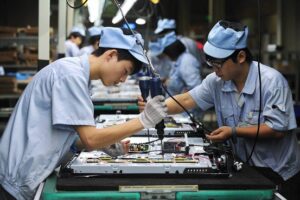
Shenzhen Envicool has emerged as a primary candidate for this partnership due to its established track record in high-density thermal control. The company already provides cooling solutions for several major Chinese cloud providers and has rapidly expanded its manufacturing capacity to meet the global surge in AI infrastructure spending. By tapping into Envicool’s expertise, Google could potentially secure a reliable source of high-efficiency cooling plates and distribution units at a time when the global supply chain for these components is becoming increasingly strained.
However, any potential deal between a major US tech firm and a Chinese hardware manufacturer currently exists within a complex geopolitical landscape. The United States government has implemented a series of export controls and trade restrictions designed to limit the flow of sensitive technology to China. While cooling systems are generally considered “dual-use” or industrial equipment rather than restricted semiconductors, legal experts suggest that such a high-profile procurement deal would likely face intense scrutiny from regulators in both Washington and Beijing.
The environmental impact of data centers is another factor driving Google’s interest in advanced cooling. The company has committed to ambitious carbon-neutrality goals, and the energy required to cool server farms is one of the biggest obstacles to achieving those targets. Liquid cooling technology is widely regarded as a greener alternative because it allows data centers to operate at higher densities with lower overall power consumption. Implementing these systems on a global scale would allow Google to expand its AI capabilities while theoretically curbing the growth of its environmental footprint.
Industry analysts note that Google is not alone in this search for specialized thermal management. Competitors such as Microsoft and Amazon are also racing to secure the hardware necessary to support their own AI ambitions. This has created a “bottleneck” in the market for high-end cooling components, prompting Western tech firms to look beyond traditional domestic suppliers to fulfill their massive orders. The outcome of Google’s talks with Envicool may serve as a bellwether for how other Silicon Valley firms navigate the need for Chinese manufacturing expertise amid ongoing trade tensions.
As the talks remain in the early stages, neither Google nor Envicool has issued an official comment regarding the potential partnership. If a deal is reached, it could represent one of the most significant cross-border hardware agreements in the AI sector this year. For now, the focus remains on the technical and regulatory feasibility of integrating Chinese cooling technology into the heart of the world’s most advanced digital infrastructure.