KEY POINTS
- Iran’s foreign ministry has formally proposed a “serious review” of its diplomatic relations with neighboring Arab Gulf states to reduce regional tensions.
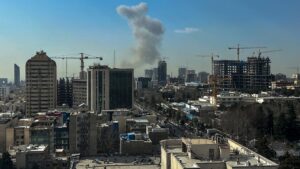
- The Iranian government issued a staunch denial regarding any role in recent strikes on Saudi Arabian oil facilities, dismissing the allegations as baseless.
- Diplomats in Tehran emphasized that stability in the Middle East must be achieved through internal regional dialogue rather than external military intervention.
Iran has signaled a potential shift in its regional foreign policy, expressing a desire to re-evaluate and strengthen its ties with Arab neighbors across the Persian Gulf. In an official statement released by the Ministry of Foreign Affairs, Tehran called for a comprehensive review of existing tensions, advocating for a new era of cooperation. This diplomatic overture comes at a time of heightened regional anxiety, as several neighboring nations have expressed concern over Iran’s growing influence and its missile program.
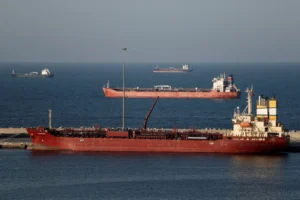
Central to this diplomatic push is a firm rejection of responsibility for recent attacks targeting energy infrastructure in Saudi Arabia. Iranian officials have dismissed claims linking them to the strikes, labeling such accusations as part of a “maximum pressure” campaign orchestrated by Western powers and their regional allies. Tehran maintains that its military posture is purely defensive and that it remains committed to the security of the maritime corridors that are vital to the global economy.
The proposal for a diplomatic reset suggests that Iran is looking to bypass international sanctions by fostering a more stable environment within its own neighborhood. By engaging directly with the Gulf Cooperation Council (GCC) members, Tehran hopes to build a security framework that excludes the presence of non-regional actors, specifically the United States. Iranian leaders have argued that the presence of foreign navies in the Persian Gulf is a primary source of instability and that regional states are fully capable of protecting their own waters through mutual agreements.
However, the path to reconciliation remains fraught with historical and ideological obstacles. For decades, the relationship between Iran and its Sunni-majority neighbors, led by Saudi Arabia, has been defined by a series of proxy conflicts and deep-seated mistrust. Previous attempts at rapprochement have often stalled due to disagreements over regional interventions. To move forward, Gulf Arab states have indicated that any “serious review” must include tangible proof of a change in Iran’s regional behavior, particularly regarding its support for various non-state actors.
Economic interests are also a significant driver behind this latest diplomatic maneuver. Iran is currently facing severe economic headwinds due to long-standing international trade restrictions. A thawing of relations with wealthy Gulf neighbors could open new avenues for trade, investment, and infrastructure projects. Joint ventures in oil and gas, as well as shared maritime security protocols, are among the topics Tehran has expressed interest in discussing as part of a broader regional summit.
International observers are watching the situation closely to see if this rhetoric will be followed by concrete actions. Some analysts believe that Tehran’s recent statements are a tactical move intended to drive a wedge between the U.S. and its regional partners. Others see it as a genuine recognition that the current state of perpetual tension is unsustainable for all parties involved. The successful resumption of high-level talks would mark a historic turning point for Middle Eastern stability.
As the diplomatic community weighs the sincerity of Tehran’s offer, the focus remains on the immediate security environment. Any further incidents in the region’s shipping lanes or near energy facilities could quickly derail these fragile efforts at dialogue. For now, the call for a “serious review” remains on the table, representing a rare, if cautious, opportunity for a de-escalation of one of the world’s most persistent geopolitical rivalries.