KEY POINTS
- Maritime traffic has plummeted by 97% since the conflict began on February 28.
- U.S. officials are weighing high-risk naval escorts through the 21-mile-wide “chokepoint.”
- Insurance firms have canceled war-risk coverage, effectively paralyzing commercial trade.
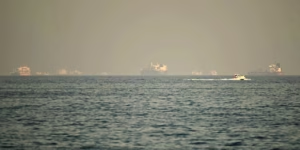
Securing the Strait of Hormuz has emerged as the most daunting logistical and military challenge of the current Middle East conflict. As of Tuesday, March 10, maritime traffic through this critical energy artery has ground to a near-total standstill, with United Nations data showing a 97% drop in vessel movement. The Pentagon and international shipping firms are now grappling with a “no-win” scenario in a waterway some intelligence sources have dubbed “Death Valley.”
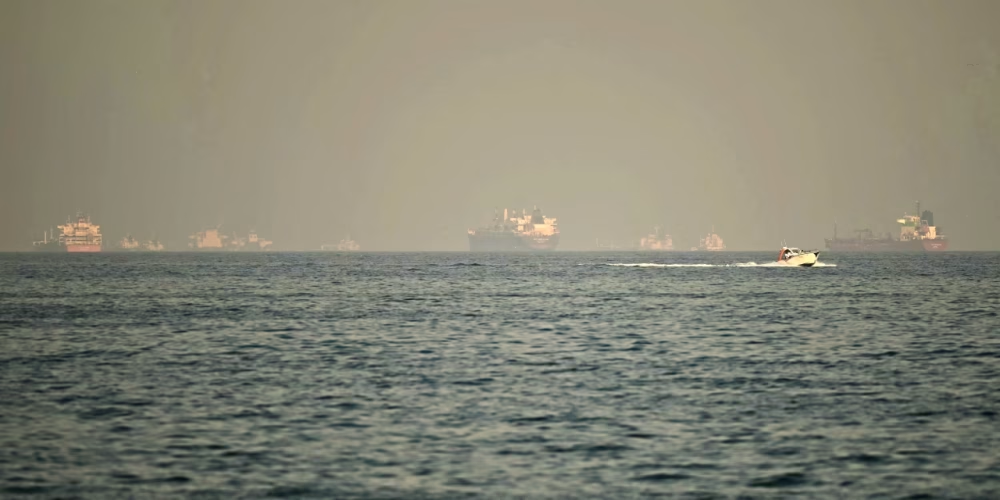
The primary challenge is the extreme geographic vulnerability of the strait. At its narrowest point, the passage is only 21 miles wide, placing every transiting vessel within easy reach of Iran’s coastal missile batteries and swarming drone fleets. Unlike open-ocean warfare, the confined space of the strait leaves little room for naval maneuvers or early-warning detection. U.S. Chairman of the Joint Chiefs of Staff, General Dan Caine, confirmed on Tuesday that the military is actively “looking at ways” to escort ships, but the risk of an “operational trigger” for Iranian sleeper cells remains a significant deterrent.
Economic barriers have proven just as effective as military ones in closing the strait. Major maritime insurers—including the London P&I Club and the American Club—have officially canceled war-risk coverage for the region. Without this insurance, shipping giants like Maersk, Hapag-Lloyd, and MSC have been forced to suspend all transits, rerouting their fleets around the Cape of Good Hope. This 4,000-mile detour adds weeks to delivery schedules and has sent shipping rates soaring for everything from crude oil to agricultural fertilizers.
The threat of “asymmetric” retaliation also complicates security efforts. Intelligence reports suggest that while Iran may allow some tankers to enter the Gulf, it is positioned to target them on the way out when they are fully laden with combustible cargo. This strategy turns every commercial tanker into a potential environmental and tactical disaster. Furthermore, the Iranian Revolutionary Guard Corps (IRGC) has explicitly vowed that “not one litre of oil” will leave the region if U.S. and Israeli strikes continue, creating a cycle of escalation where every attempt to secure the strait triggers a more aggressive counter-response.
For landlocked energy producers and import-dependent nations, the consequences of these challenges are already “catastrophic,” according to Saudi Aramco CEO Amin Nasser. While some oil is being diverted through Saudi Arabia’s East-West Pipeline to the Red Sea, its 7-million-barrel daily capacity cannot replace the 21 million barrels that typically flow through the strait. As long as the “Death Valley” risks persist, global energy inventories will continue to dwindle, placing immense pressure on the international community to find a diplomatic resolution.