KEY POINTS
- Iran’s Revolutionary Guard warned it will halt all regional oil exports if U.S. and Israeli airstrikes continue.
- President Trump responded by threatening to destroy Iranian infrastructure beyond recovery if the Strait of Hormuz is closed.
- Global oil markets experienced extreme volatility, with prices surging before retreating on hopes of a swift conflict resolution.
Tensions in the Middle East reached a critical flashpoint on Tuesday as Iran and the United States traded severe military threats. The Islamic Revolutionary Guard Corps declared that not a single liter of oil would leave the region if hostilities persist. This statement marks a significant escalation in the ongoing conflict involving the U.S., Israel, and Iran. Tehran insists it will dictate the terms and timing for the end of the war.
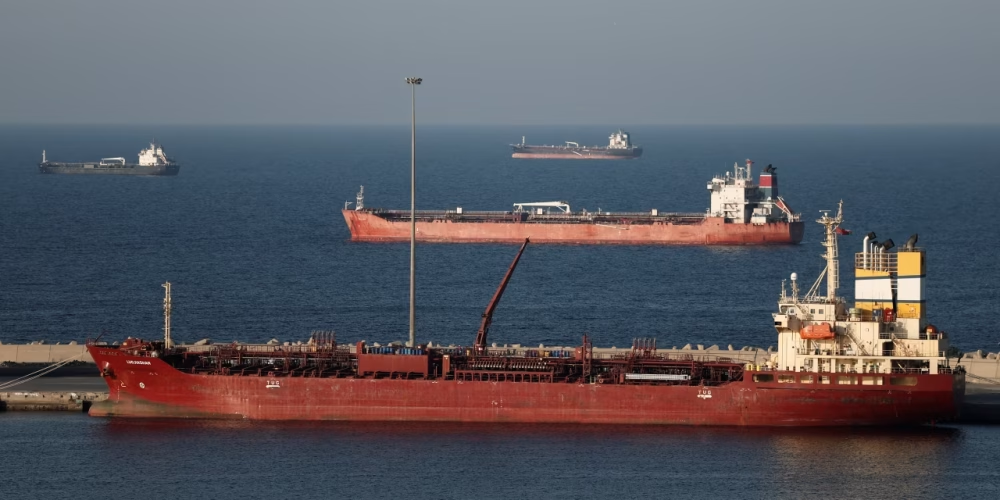
The Iranian threat specifically targets the Strait of Hormuz, a waterway essential for one-fifth of global energy supplies. Military officials in Tehran stated that regional security must exist for everyone or for no one at all. They argued that if Iran cannot export its resources, other neighboring producers will be prevented from doing so as well. This doctrine of “total blockade” has sent shockwaves through international shipping and energy sectors.
President Donald Trump issued a blistering response to the Iranian warning via social media and press conferences. He cautioned that any attempt to block the strait would trigger a massive U.S. military escalation. Trump stated the U.S. would strike Iran twenty times harder than it has during previous engagements. He further suggested that future strikes could permanently disable Iran’s ability to function as a modern nation.
Despite the aggressive rhetoric, the president claimed the military campaign is moving significantly ahead of schedule. He told reporters that the conflict might conclude much sooner than the initial four-week estimate. Trump asserted that Iranian naval and air capabilities have already been severely diminished by recent waves of airstrikes. However, he emphasized that the U.S. remains prepared to use incalculable force to keep energy lanes open.
The conflict has already forced several Gulf nations to reduce their oil production as storage facilities reach capacity. Tankers have largely avoided the area for over a week due to the risk of missile and drone attacks. Global markets reacted to the news with dramatic price swings, at one point seeing crude surge near $120. Prices later dipped as investors weighed Trump’s optimism against the reality of the ongoing blockade.
The White House is currently exploring several emergency measures to stabilize the global economy. These options include releasing strategic petroleum reserves and potentially easing sanctions on other oil-producing nations. Analysts warn that a prolonged closure of the Strait of Hormuz could trigger a historic energy crisis. International leaders continue to call for an immediate de-escalation to prevent a total collapse of maritime trade.
As the war enters its second week, the humanitarian and economic tolls continue to mount across the region. Iran has remained defiant, recently naming a new supreme leader and launching fresh missile barrages toward regional targets. The standoff remains a high-stakes test of global military and economic resolve. Both sides appear dug into their positions as the world watches the vital energy corridor.